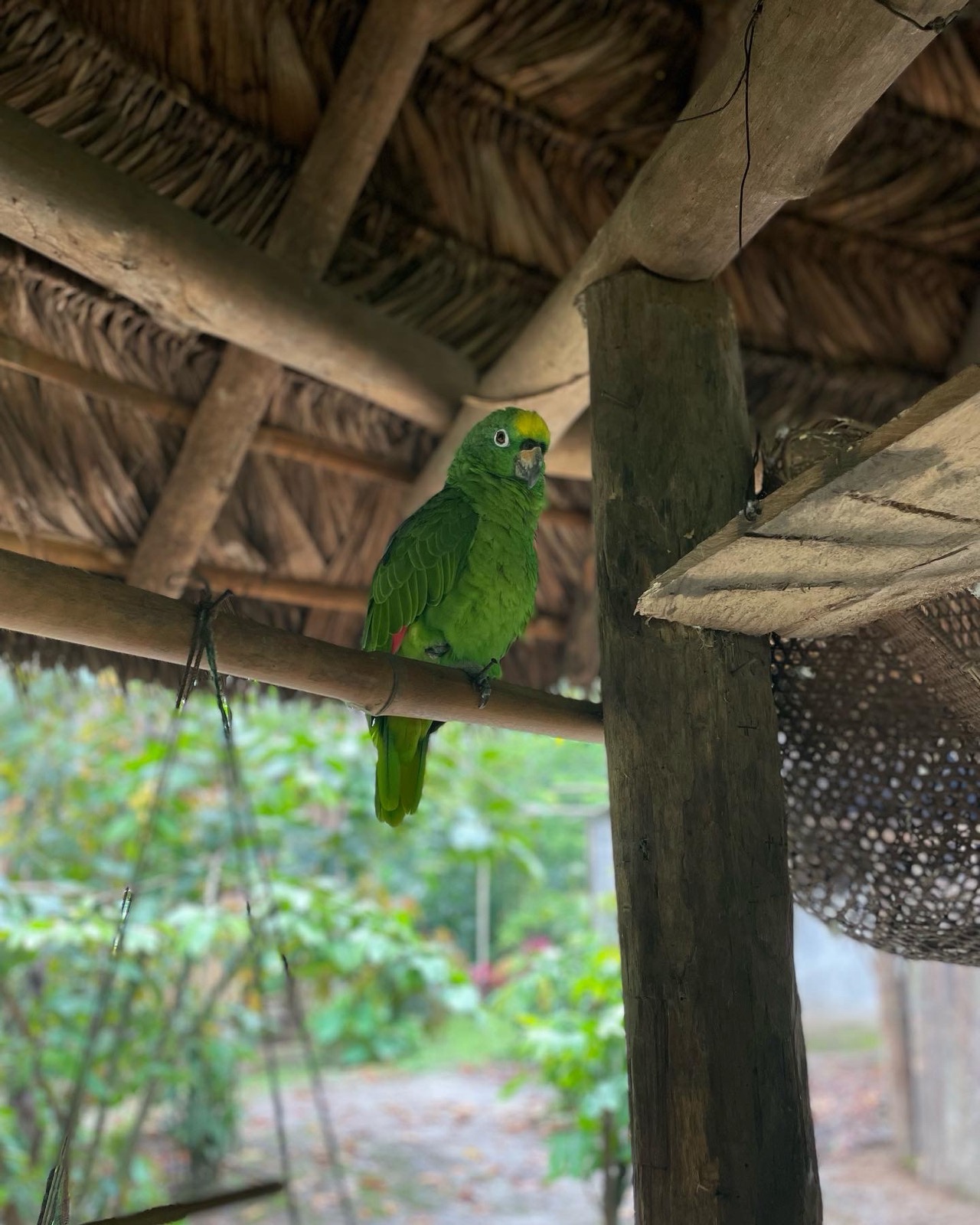
Yellow-crowned Amazon parrot perched on a wooden beam under a thatched roof with lush rainforest greenery behind it

Parrot in the Amazon Rainforest

📍 Amazon Rainforest Yellow-crowned Amazon (Amazona ochrocephala) A stocky, bright-green parrot with a signature yellow forehead patch and pale eye ring, this one is sheltering under a thatched palapa — a common sight where rainforest meets human settlement. Widespread and year-round across the Amazon basin, often seen in pairs or small flocks near forest edges and clearings. Modeled range · iNaturalist · CC BY 4.0 Wikipedia | iNaturalist | Range map | eBird
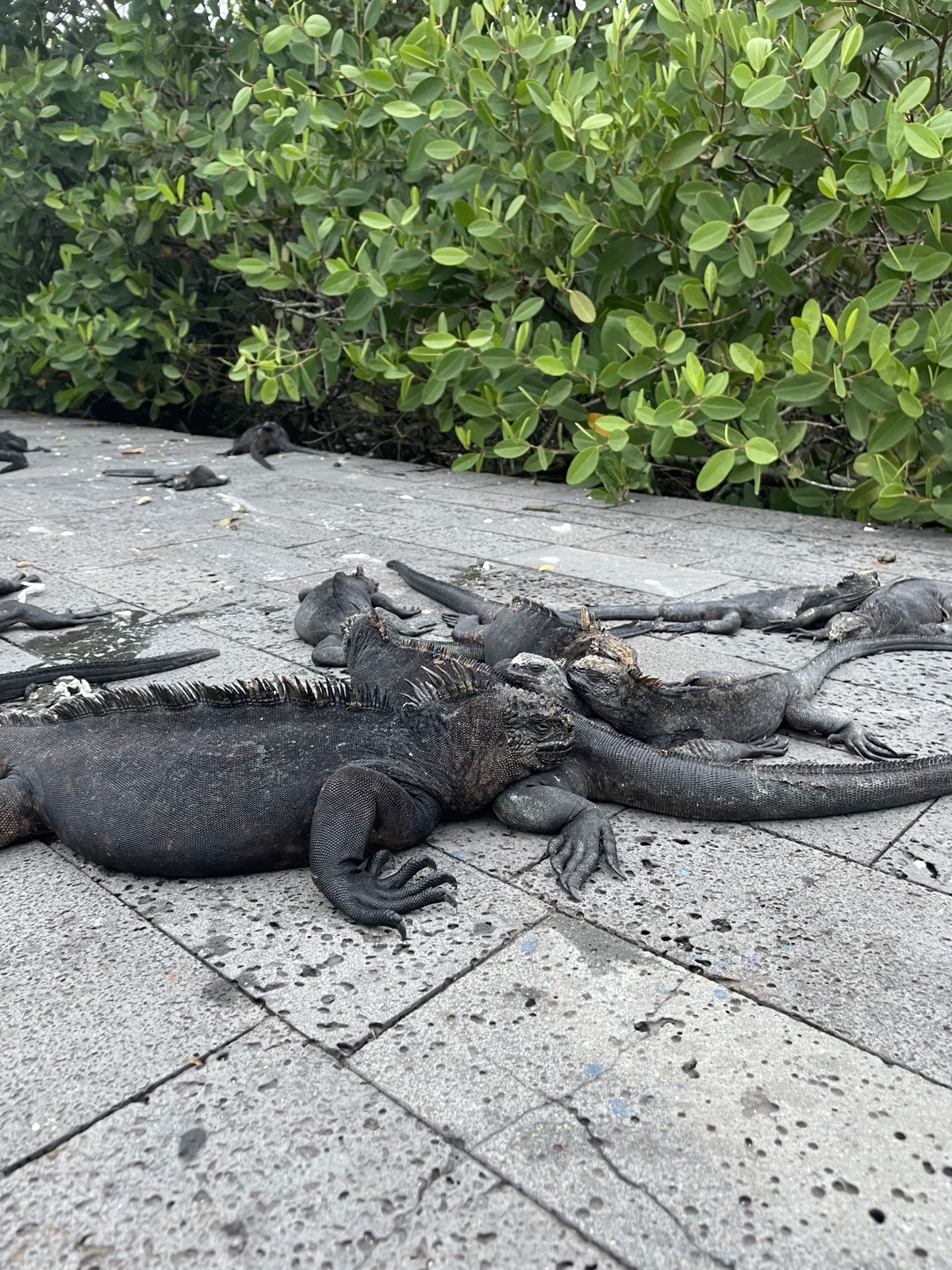
A heap of dark marine iguanas piled on top of each other on a concrete walkway, basking together beside green mangroves

Cuddle puddle of iguanas

📍 Galápagos Islands Marine Iguana (Amblyrhynchus cristatus) The only lizard on Earth that forages in the ocean, marine iguanas lose heat rapidly after diving in cold Pacific waters and pile together on land to warm back up — a behavior called “thermoregulatory huddling.” Endemic to the Galápagos and present on every island year-round, often gathering in dense colonies along the shore. Modeled range · iNaturalist · CC BY 4.0 Wikipedia | iNaturalist | Range map | IUCN Red List

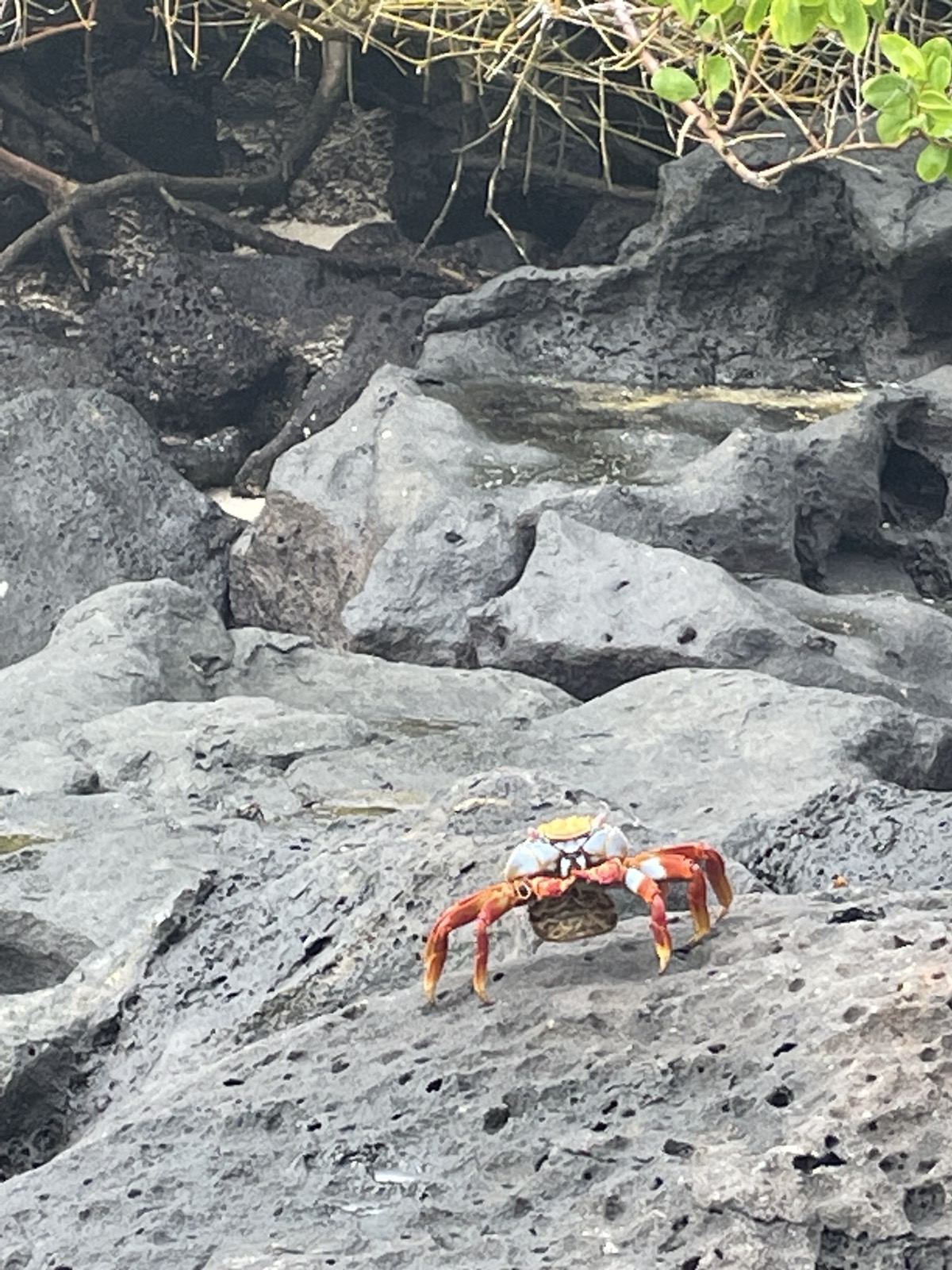
Adult Sally Lightfoot Crab in fiery red-orange stands its ground on black volcanic lava rock

Angry crab

📍 Galápagos Islands Sally Lightfoot Crab (Grapsus grapsus) One of the most vibrantly colored crabs in the world, juveniles start jet-black to camouflage against lava rock, then turn blazing red-orange as adults. Abundant year-round across the Galápagos shoreline, found on virtually every rocky coast in the archipelago. Modeled range · iNaturalist · CC BY 4.0 Wikipedia | iNaturalist | Range map

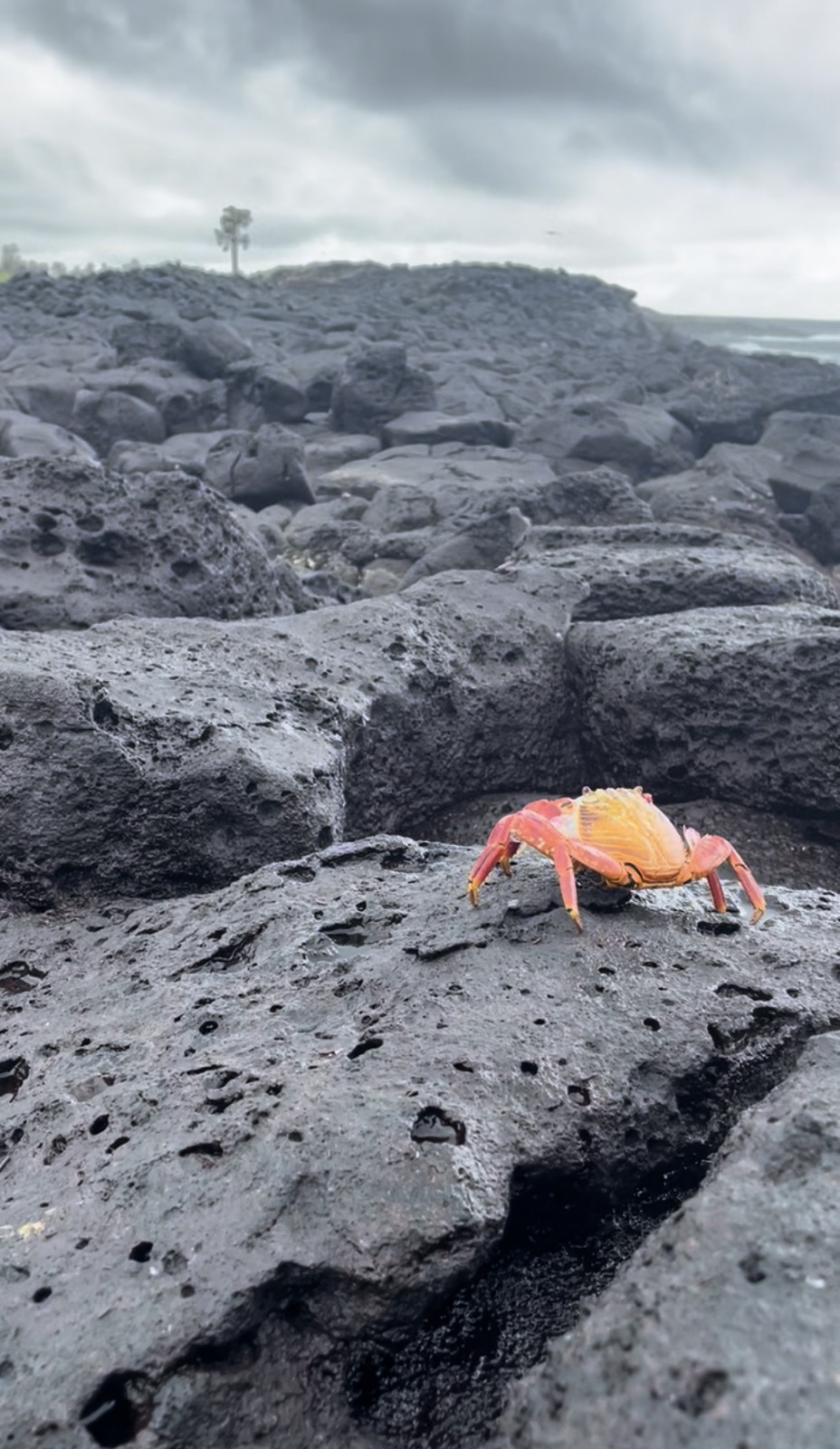
Adult Sally Lightfoot crab blazing red and orange against jet-black Galápagos lava rock under overcast skies.

Sally Lightfoot crab, Galápagos

📍 Galápagos Islands Sally Lightfoot Crab (Grapsus grapsus) Astonishingly nimble on wet rock, it darts sideways across the surf zone and can even skitter over short stretches of water to stay ahead of the waves and predators. Year-round residents of the Galapagos shoreline, found on nearly every rocky coast across the archipelago. Modeled range · iNaturalist · CC BY 4.0 Wikipedia | iNaturalist | Range map

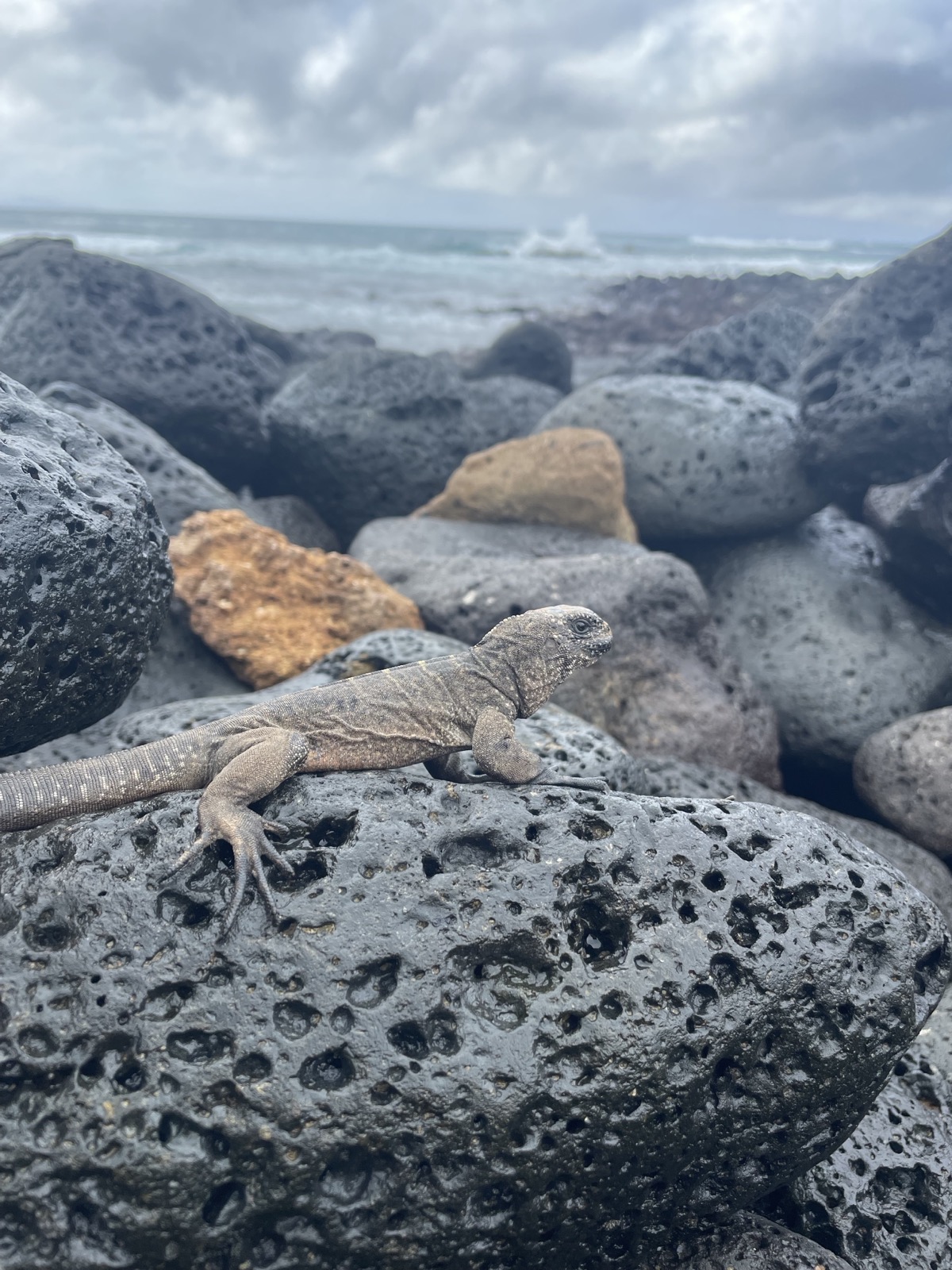
Juvenile marine iguana basking on porous black lava rock with ocean waves crashing behind it

Iguana, Galápagos

📍 Galápagos Islands Marine Iguana (Amblyrhynchus cristatus) The world’s only ocean-foraging lizard, this juvenile is soaking up heat on volcanic rock before its next dive into the cold Cromwell Current to graze on algae. Endemic to the Galápagos and found on every island in the archipelago, year-round. Modeled range · iNaturalist · CC BY 4.0 Wikipedia | iNaturalist | Range map | IUCN Red List

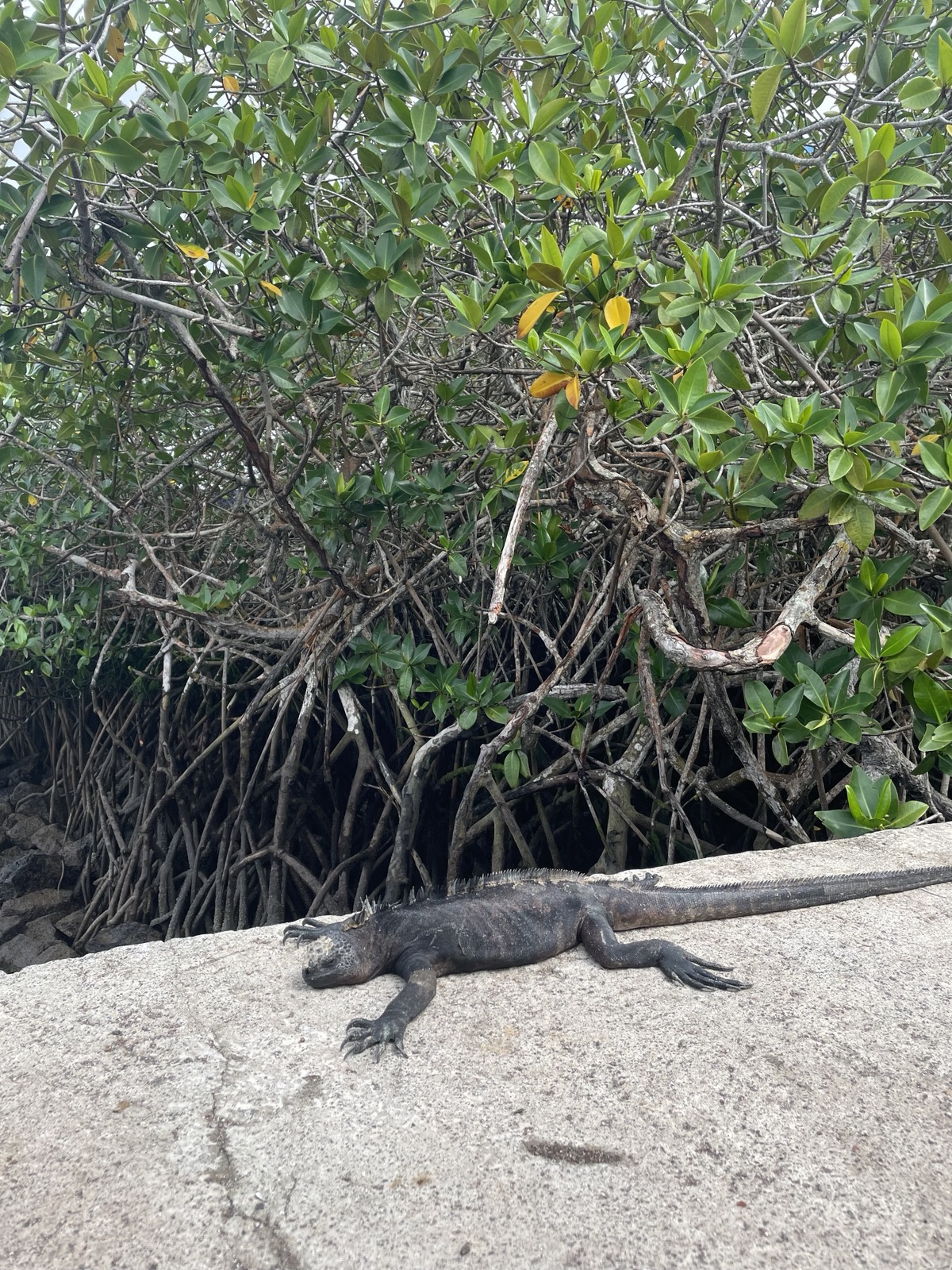
A marine iguana sprawled flat on sun-warmed rock, dead asleep beside a tangle of mangrove roots

Napping iguana

📍 Galápagos Islands Marine Iguana (Amblyrhynchus cristatus) To cope with a diet of seawater-soaked algae, it filters excess salt through specialized nasal glands and sneezes it out in fine crusty sprays — which is why basking iguanas are often dusted white around the snout. Abundant and year-round throughout the Galápagos archipelago, with the largest concentrations on Isabela and Fernandina. Modeled range · iNaturalist · CC BY 4.0 Wikipedia | iNaturalist | Range map | Galápagos Conservancy

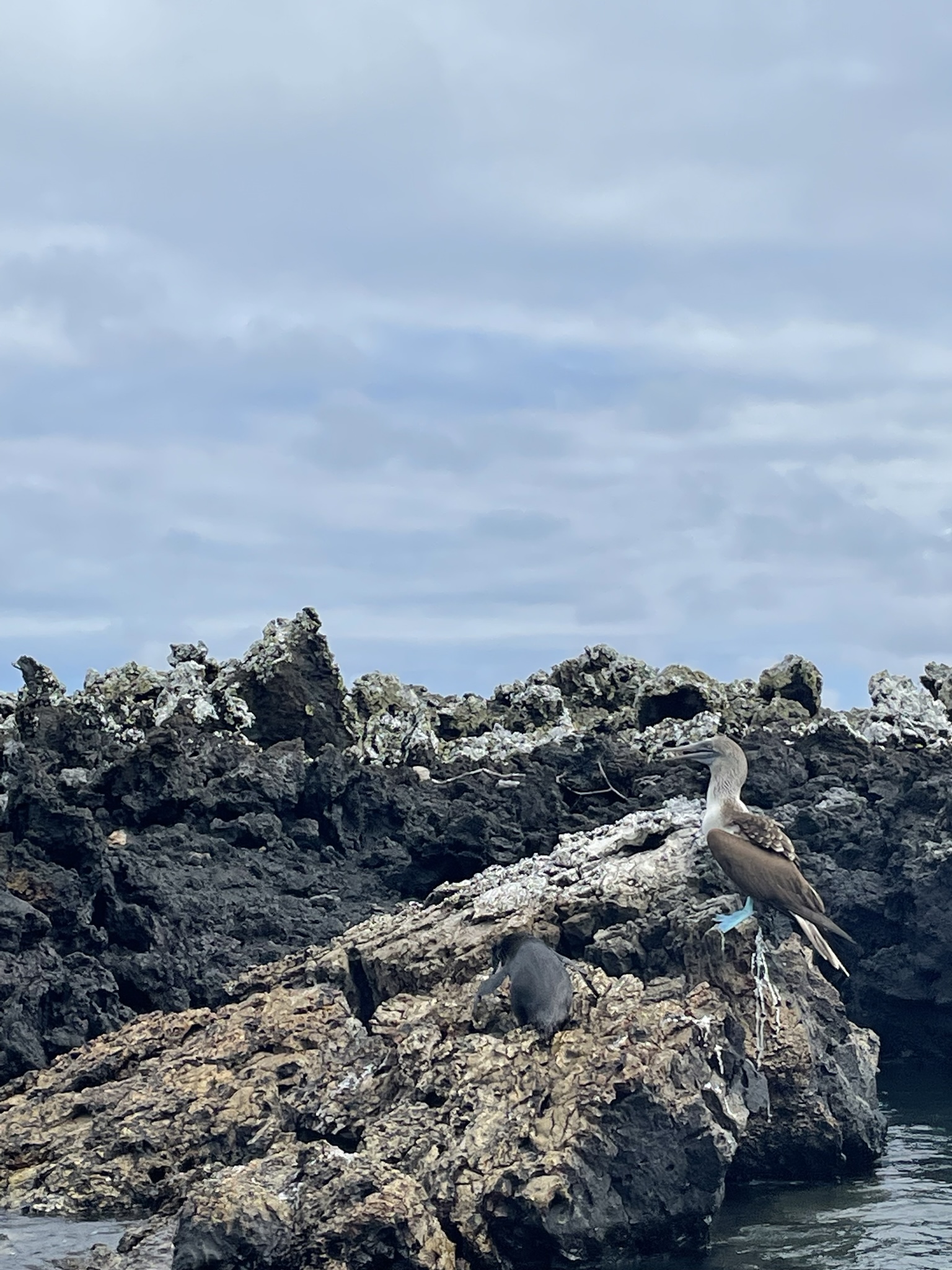
A blue-footed booby perched on volcanic rock above a Galápagos penguin at the water's edge

Blue-footed booby and Galápagos penguin

📍 Galápagos Islands Blue-footed Booby (Sula nebouxii) A powerful plunge-diver, it folds its wings and hits the water like an arrow from as high as 25 meters to spear schooling fish below the surface. Common throughout the Galápagos Islands year-round, nesting on rocky shores where males show off their bright feet in a high-stepping courtship dance. Modeled range · iNaturalist · CC BY 4.0 Wikipedia | iNaturalist | Range map | eBird ...
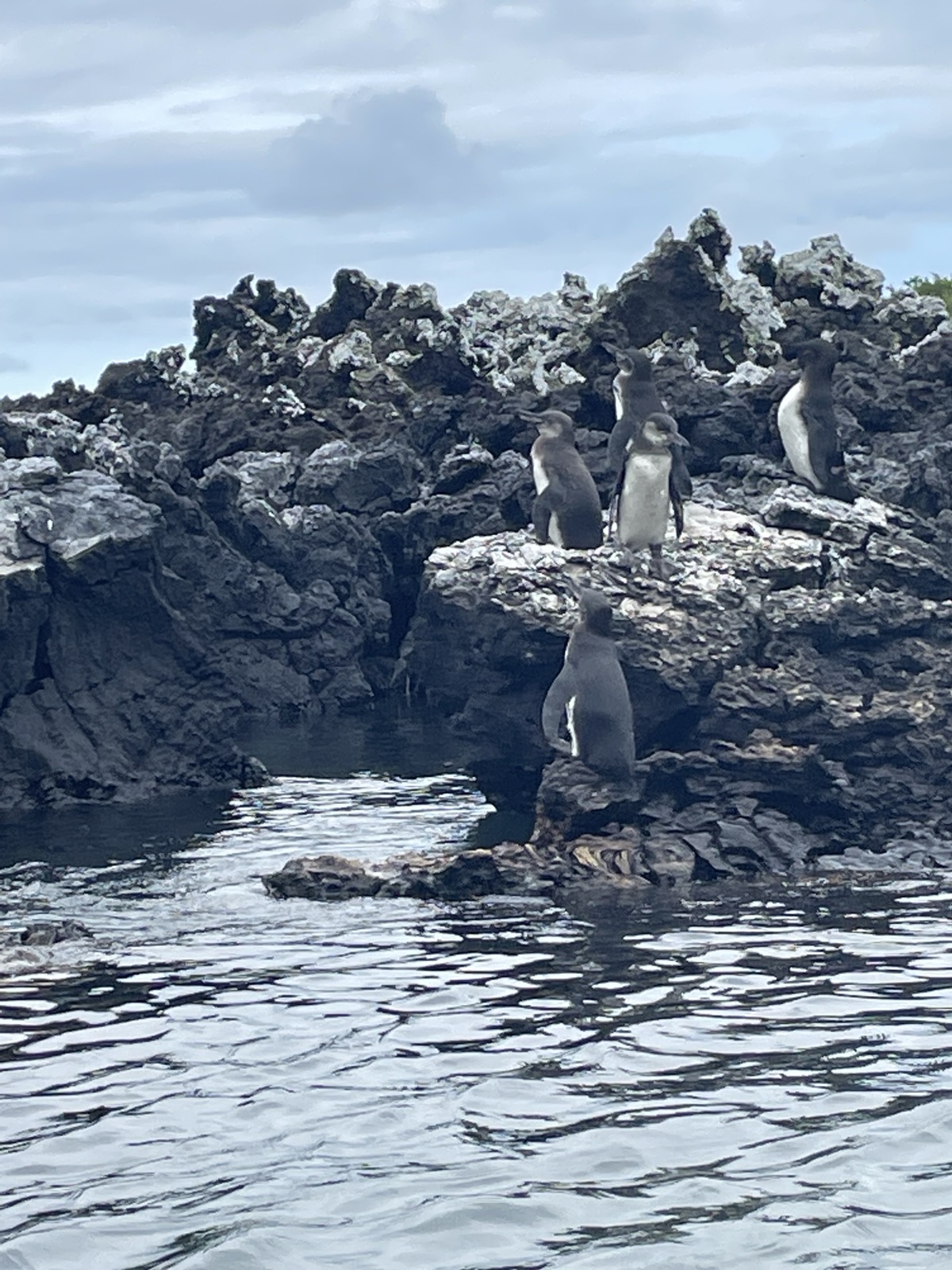
A small group of Galápagos penguins perched on jagged volcanic rock at the water's edge

Galápagos penguins on the lava shore

📍 Isla Isabela, Galápagos Islands Galápagos Penguin (Spheniscus mendiculus) The only penguin species found north of the equator, and the rarest penguin in the world — fewer than 2,000 remain, all within the Galápagos archipelago. Year-round residents of Isla Isabela, which hosts the majority of the global population thanks to the cold, nutrient-rich Cromwell Current that sweeps past the island’s western coast. Modeled range · iNaturalist · CC BY 4.0 Wikipedia | iNaturalist | Range map | eBird
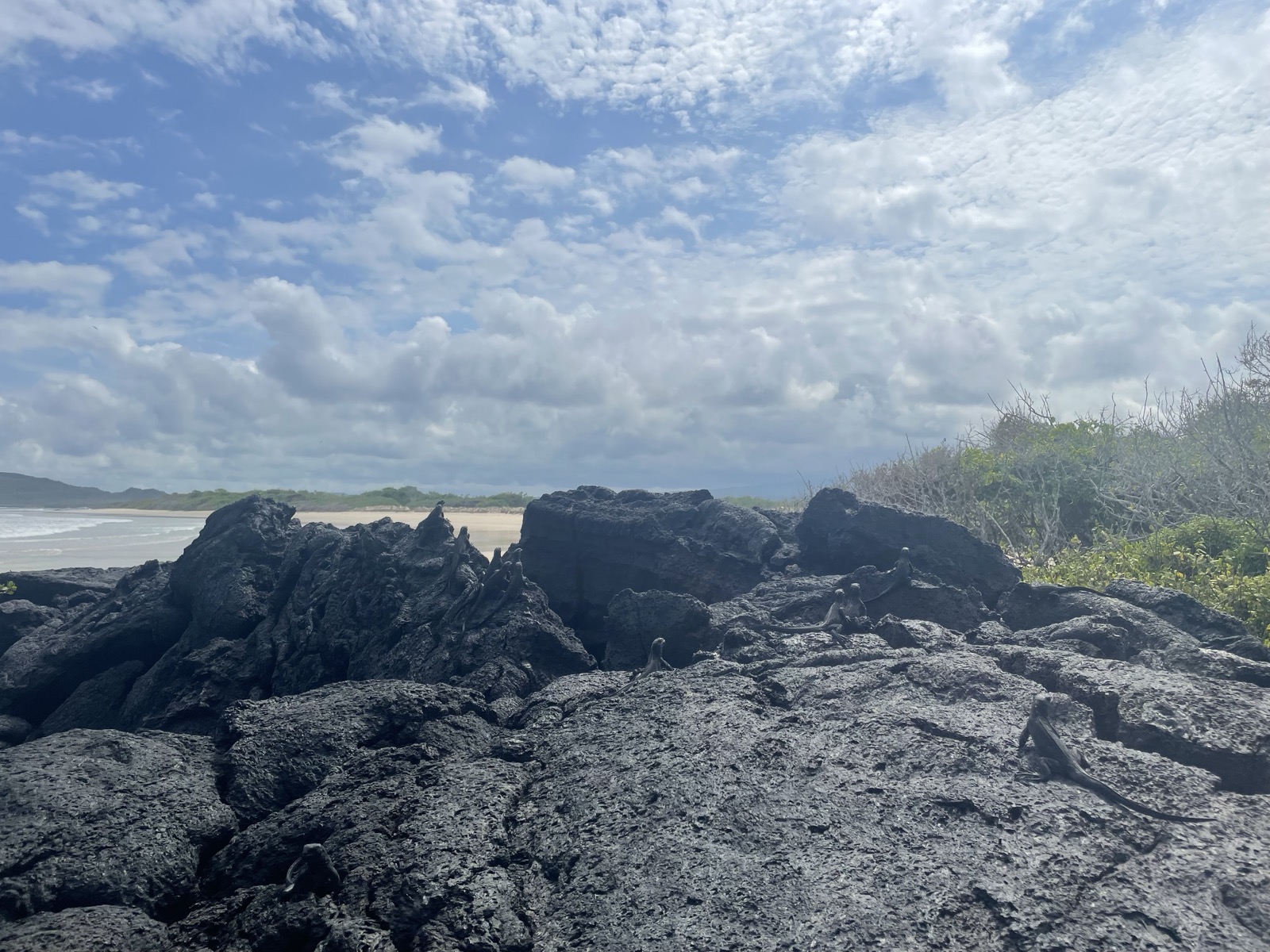
Marine iguanas nearly invisible against black lava rock on an Isabela shoreline under a dramatic sky

Dozens of iguanas blending into the volcanic rock

📍 Isla Isabela, Galápagos Islands Marine Iguana (Amblyrhynchus cristatus) Their soot-black hide is near-perfect camouflage against the volcanic rock, and they pack onto the lava in such numbers that a whole colony can go unnoticed until one moves. Abundant and year-round on Isla Isabela, where the island’s vast volcanic coastline provides prime basking and foraging habitat for some of the archipelago’s largest colonies. Modeled range · iNaturalist · CC BY 4.0 Wikipedia | iNaturalist | Range map | Galápagos Conservancy

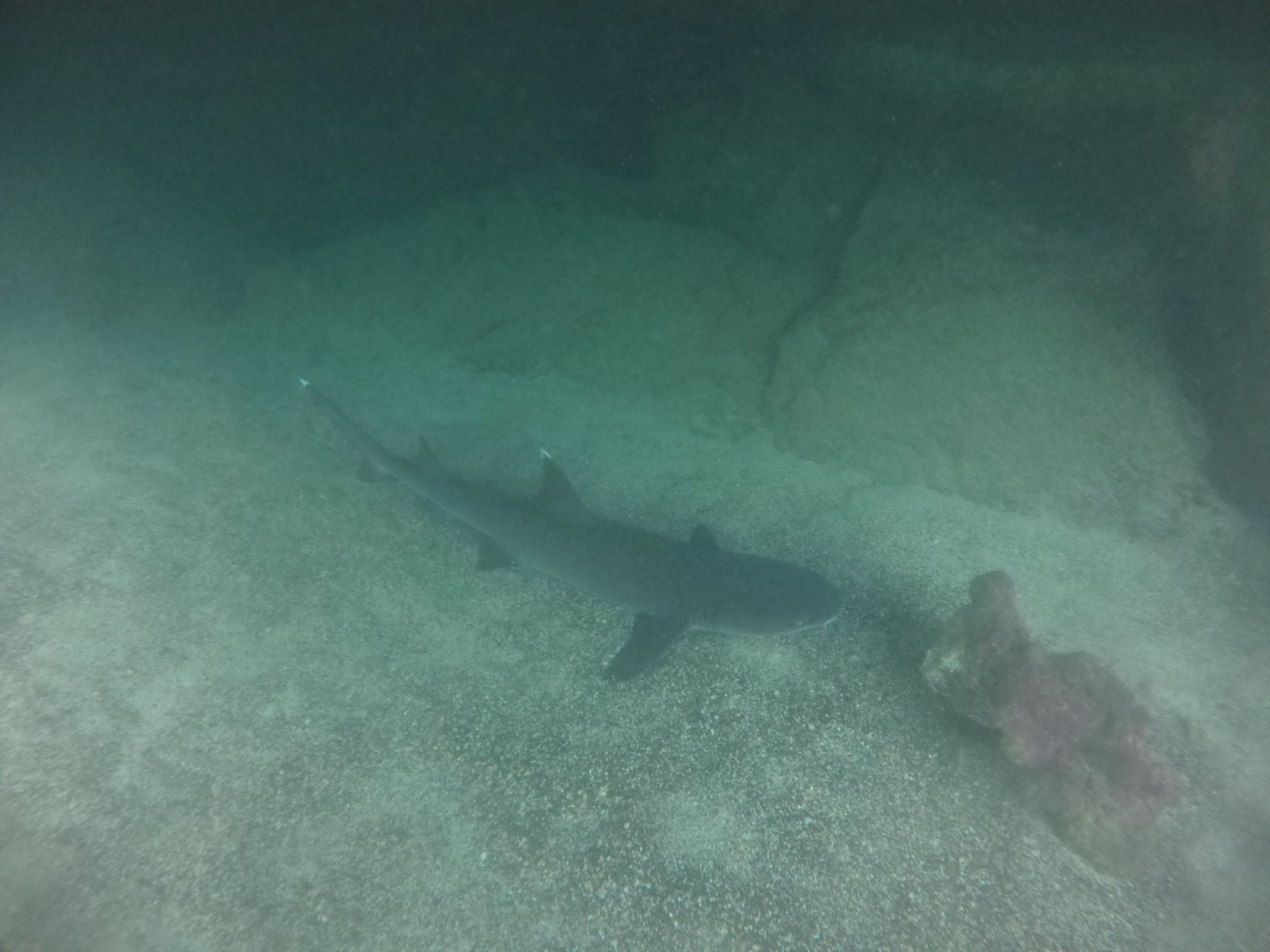
Whitetip reef shark resting on the sandy seabed beside a rocky outcrop

Whitetip reef shark

📍 Galápagos Islands Whitetip Reef Shark (Triaenodon obesus) One of the few shark species that can lie motionless on the bottom, pumping water over its gills instead of needing to swim to breathe. A year-round resident of the Galápagos archipelago, commonly found resting in caves and on sandy patches during the day before hunting reef fish at night. Modeled range · iNaturalist · CC BY 4.0 Wikipedia | iNaturalist | Range map

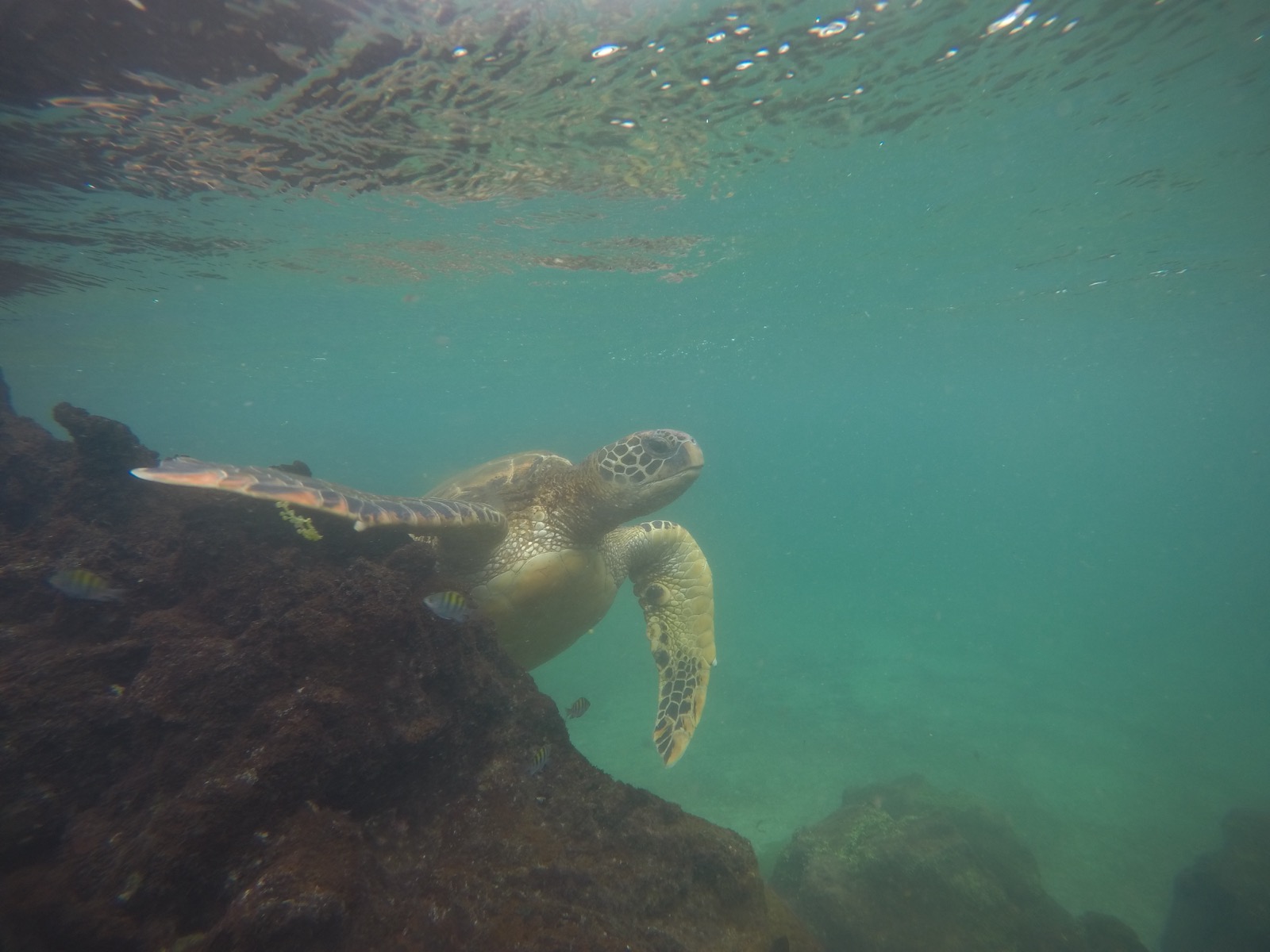
A green sea turtle glides over algae-covered rocks in the shallow turquoise waters of the Galápagos

Green sea turtle, Galápagos

📍 Galápagos Islands Green Sea Turtle (Chelonia mydas) The largest hard-shelled sea turtle in the world, named not for its shell but for the green color of its body fat — tinted by an adult diet of seagrass and algae. Resident year-round in the Galápagos, where the archipelago’s nutrient-rich upwelling supports one of the Eastern Pacific’s most important nesting and foraging populations. Modeled range · iNaturalist · CC BY 4.0 Wikipedia | iNaturalist | Range map | SWOT Map

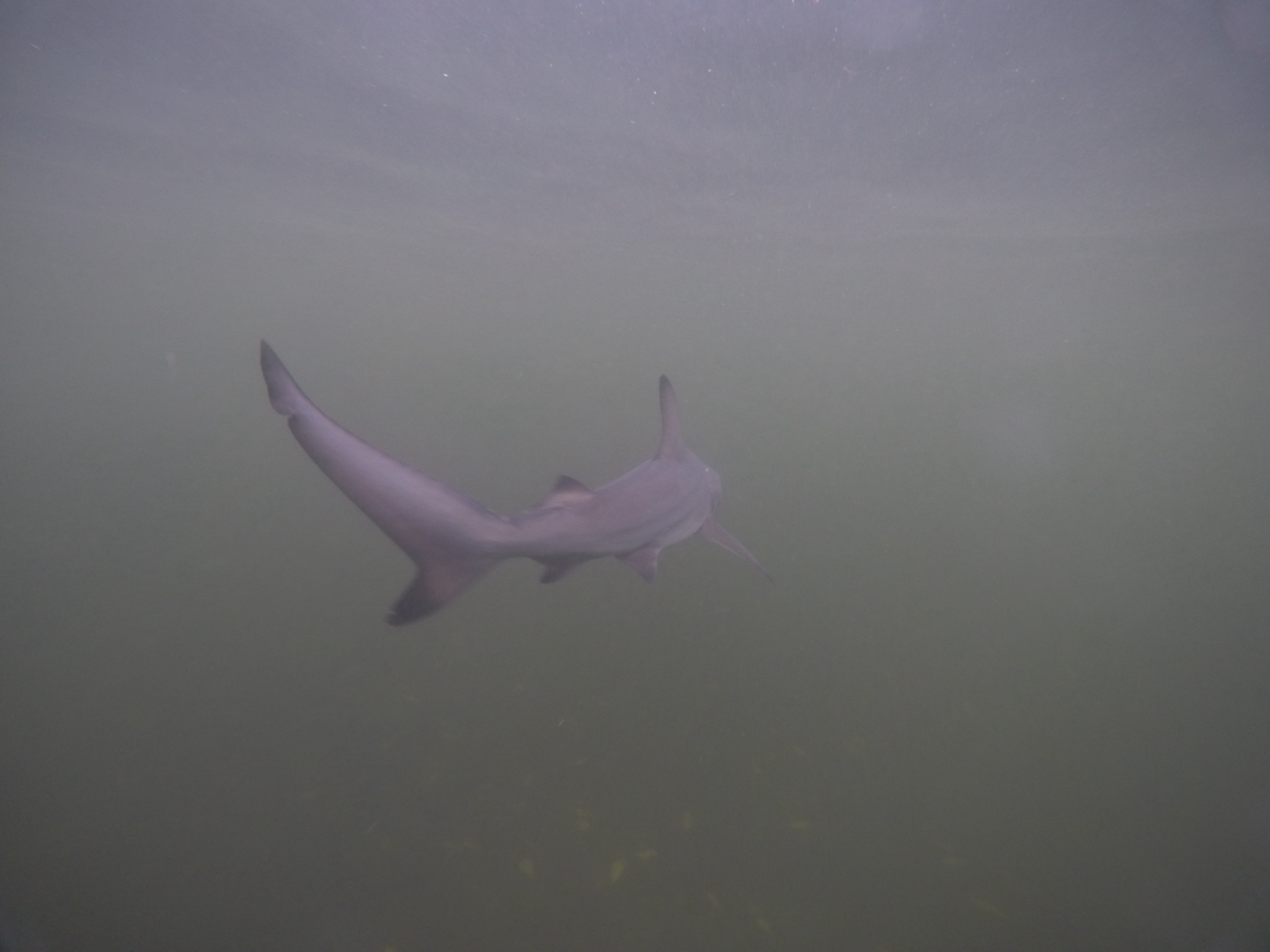
Blacktip reef shark gliding through murky water, dark fin tips visible against the haze

Blacktip reef shark, Galápagos Islands

📍 Galápagos Islands Blacktip Reef Shark (Carcharhinus melanopterus) One of the most recognizable reef sharks thanks to the bold black markings on its fin tips, this small, shy species rarely exceeds 1.6 m and is harmless to humans. Common year-round in the shallow waters around the Galápagos archipelago, often spotted cruising lagoons and reef flats in small groups. Modeled range · iNaturalist · CC BY 4.0 Wikipedia | iNaturalist | Range map