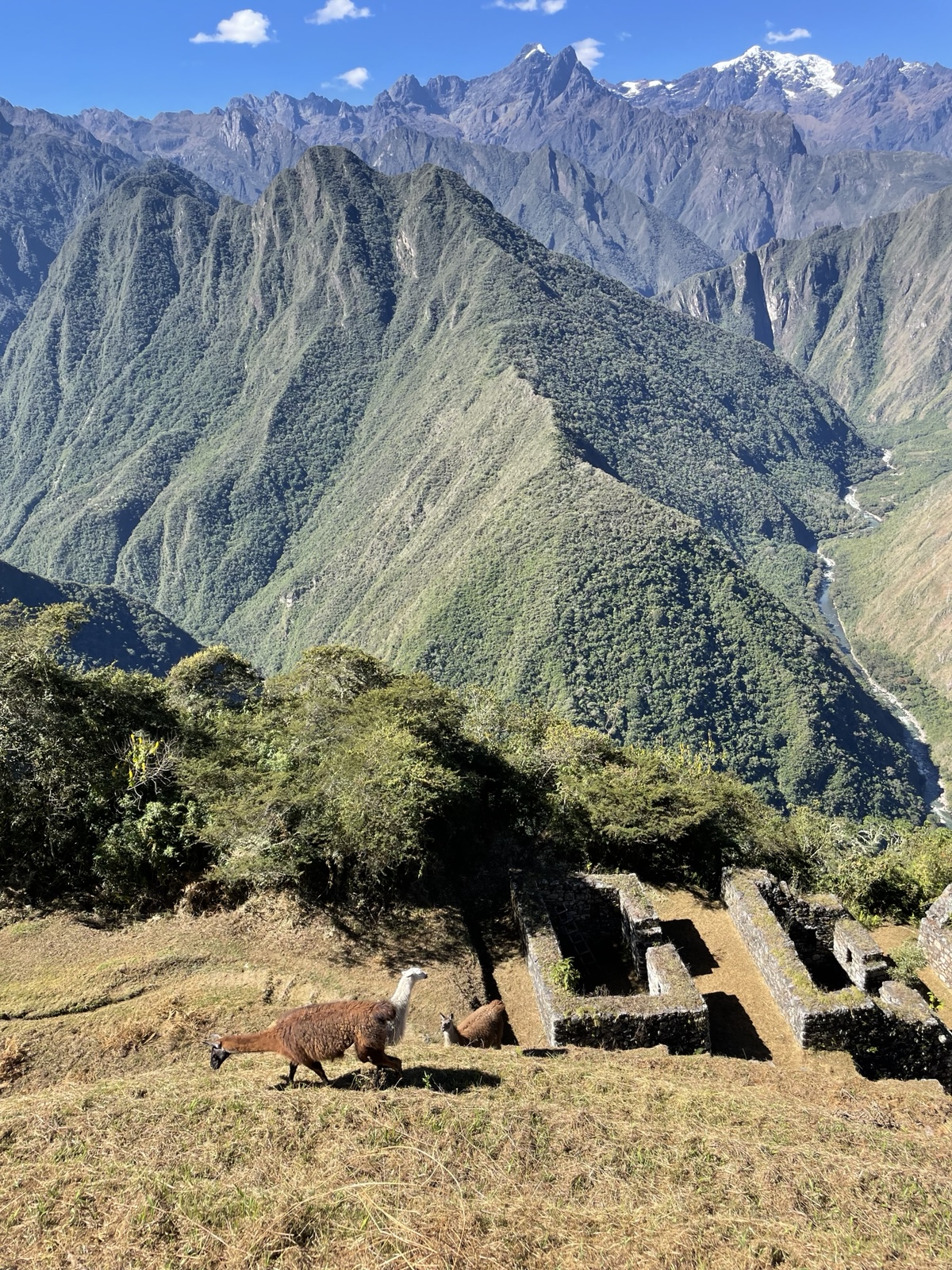
A llama grazes beside Inca stone ruins high above a steep green valley with snow-capped Andean peaks behind

More llamas in the Andes

📍 Andes, Peru Llama (Lama glama) Llamas were bred from the wild guanaco over 5,000 years ago, one of the earliest large animals domesticated anywhere in the Americas and the only one South America produced for carrying loads. They are found throughout the Andean highlands of Peru, Bolivia, and beyond, thriving year-round at elevations above 3,000 meters. Modeled range · iNaturalist · CC BY 4.0 Wikipedia | iNaturalist | Range map
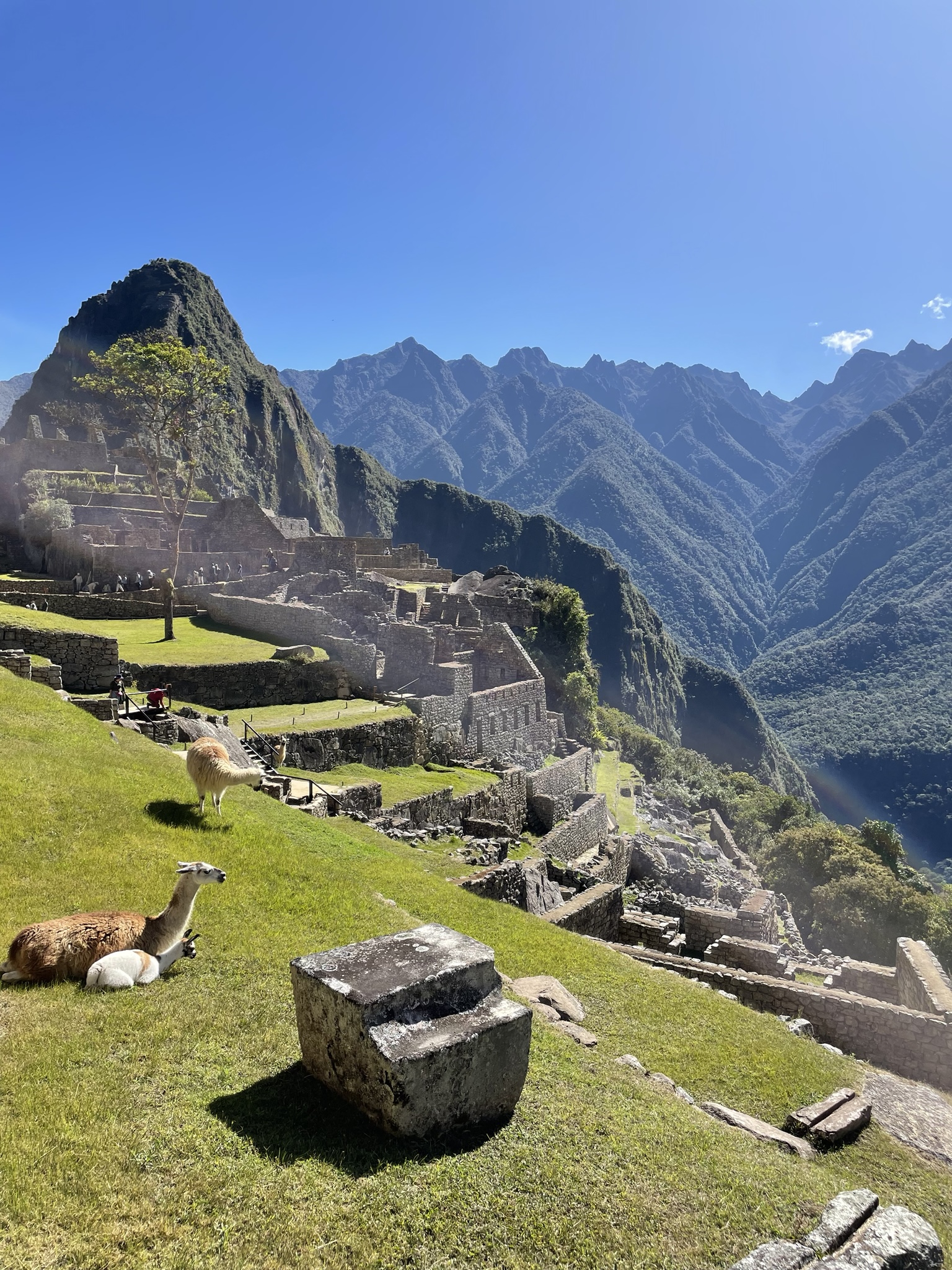
Llamas lounging on the ancient terraces of Machu Picchu with Huayna Picchu towering behind them

Llamas at Machu Picchu

📍 Machu Picchu, Peru Llama (Lama glama) As the Inca Empire’s primary pack animal, llamas hauled goods across a road network that stretched thousands of miles through the Andes, sustaining an empire that never used the wheel. A resident population lives year-round at the citadel, maintained by Peru’s Ministry of Culture as both a conservation nod and a living link to the site’s history. Modeled range · iNaturalist · CC BY 4.0 Wikipedia | iNaturalist | Range map

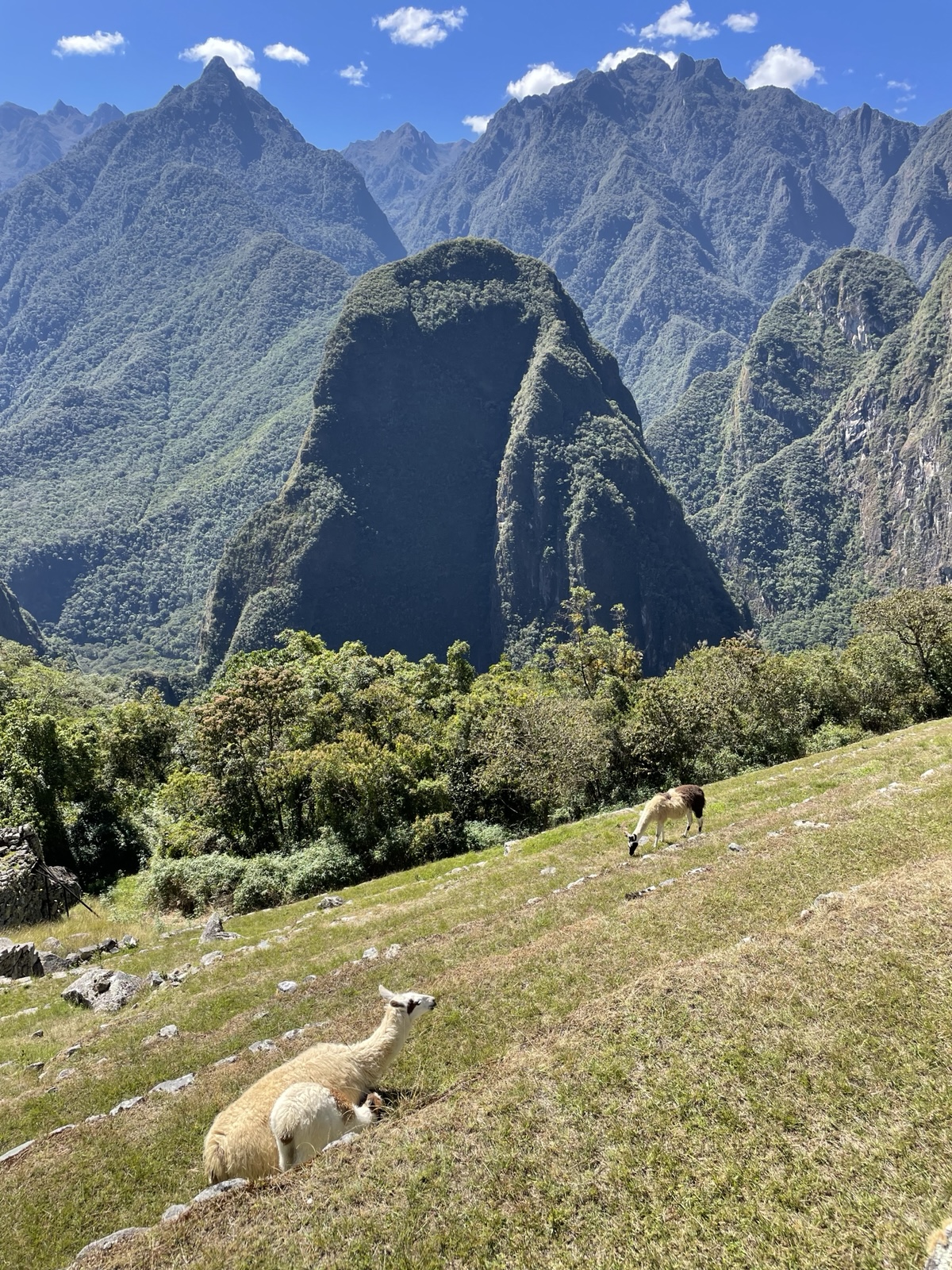
Two llamas graze on a green terrace at Machu Picchu with the jagged peak of Huayna Picchu towering behind them.

Llamas Deep in the Andes

📍 Machu Picchu, Peru Llama (Lama glama) The resident herd doubles as living lawnmowers, trimming the grass on Machu Picchu’s terraces without the hooves-and-blades damage that mowing machines would do to the ancient stonework. Their soft, padded feet and light browsing make them ideal groundskeepers, and visitors now expect to see them grazing among the ruins as much as the ruins themselves. Modeled range · iNaturalist · CC BY 4.0 Wikipedia | iNaturalist | Range map
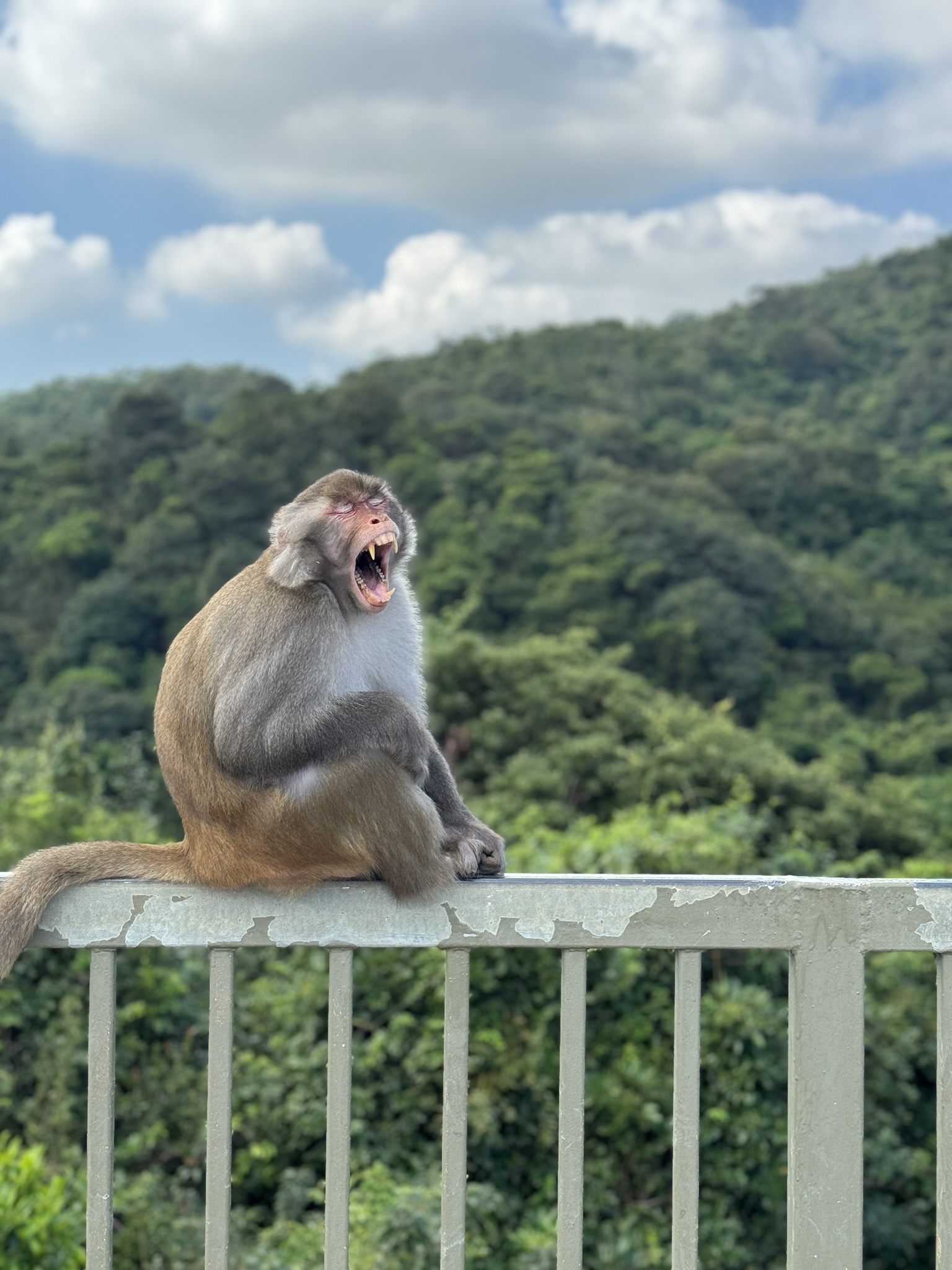
A rhesus macaque yawns wide on a bridge railing, flashing its canines against the green hills of Hong Kong.

Yawning macaque

📍 Hong Kong Rhesus Macaque (Macaca mulatta) Bold, adaptable, and not shy about showing teeth — yawning is a common stress-relief or dominance signal, but those canines say “keep your distance” all on their own. Habituated troops treat the bridges and railings of Hong Kong’s country parks as lookout perches, keeping a wary eye on passing hikers from just out of reach. Modeled range · iNaturalist · CC BY 4.0 Wikipedia | iNaturalist | Range map
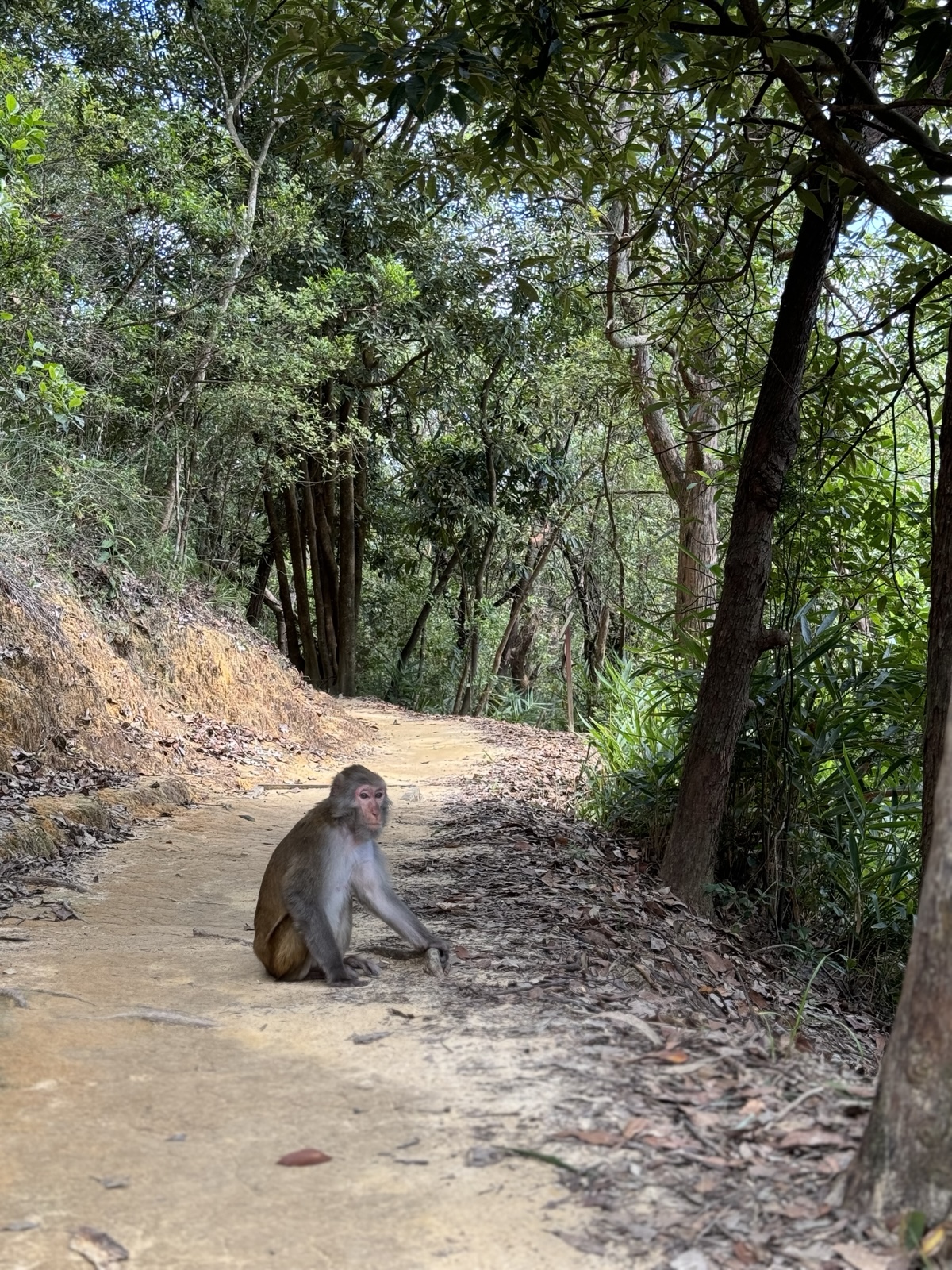
A rhesus macaque sits dead-center on a dirt trail through lush Hong Kong forest, staring down the photographer.

You shall not pass

📍 Hong Kong Rhesus Macaque (Macaca mulatta) Confident and unbothered by people, a lone macaque will plant itself in the middle of a trail and simply wait for you to give way. They range across Hong Kong’s forested country parks year-round, and encounters on the popular hiking routes near the reservoirs are all but guaranteed. Modeled range · iNaturalist · CC BY 4.0 Wikipedia | iNaturalist | Range map
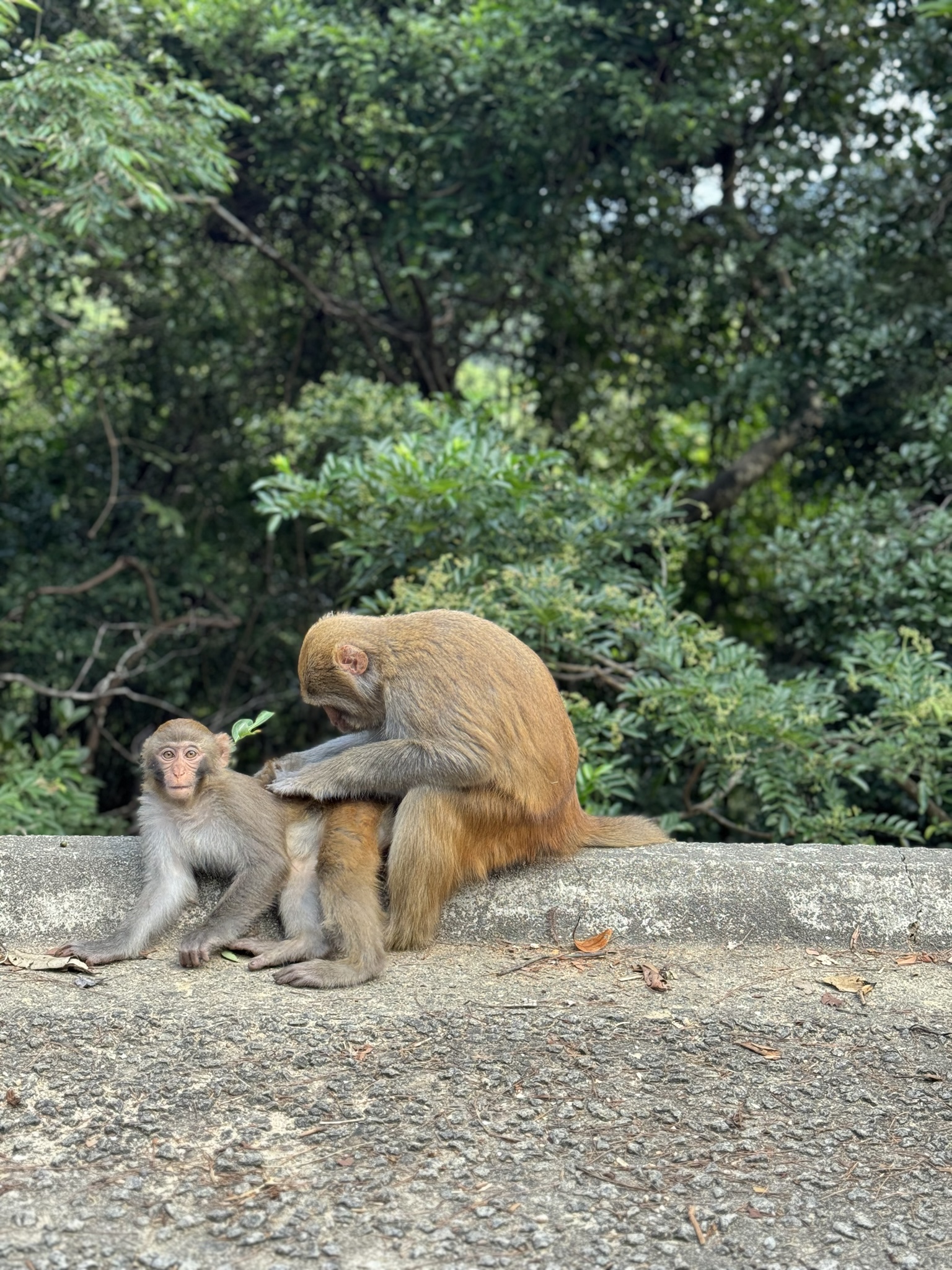
An adult rhesus macaque carefully grooms a young juvenile on a concrete ledge at Kam Shan, Hong Kong, backed by dense tropical greenery.

Grooming macaques, Kam Shan (金山)

📍 Kam Shan, Hong Kong Rhesus Macaque (Macaca mulatta) One of the most widespread primates on Earth, rhesus macaques are highly social Old World monkeys whose mutual grooming reinforces troop bonds and hierarchy. Around 1,800 wild rhesus macaques inhabit Hong Kong’s Kam Shan (金山) Country Park year-round, descendants of a population released in the 1910s that has thrived in the forested hills ever since. Modeled range · iNaturalist · CC BY 4.0 Wikipedia | iNaturalist | Range map
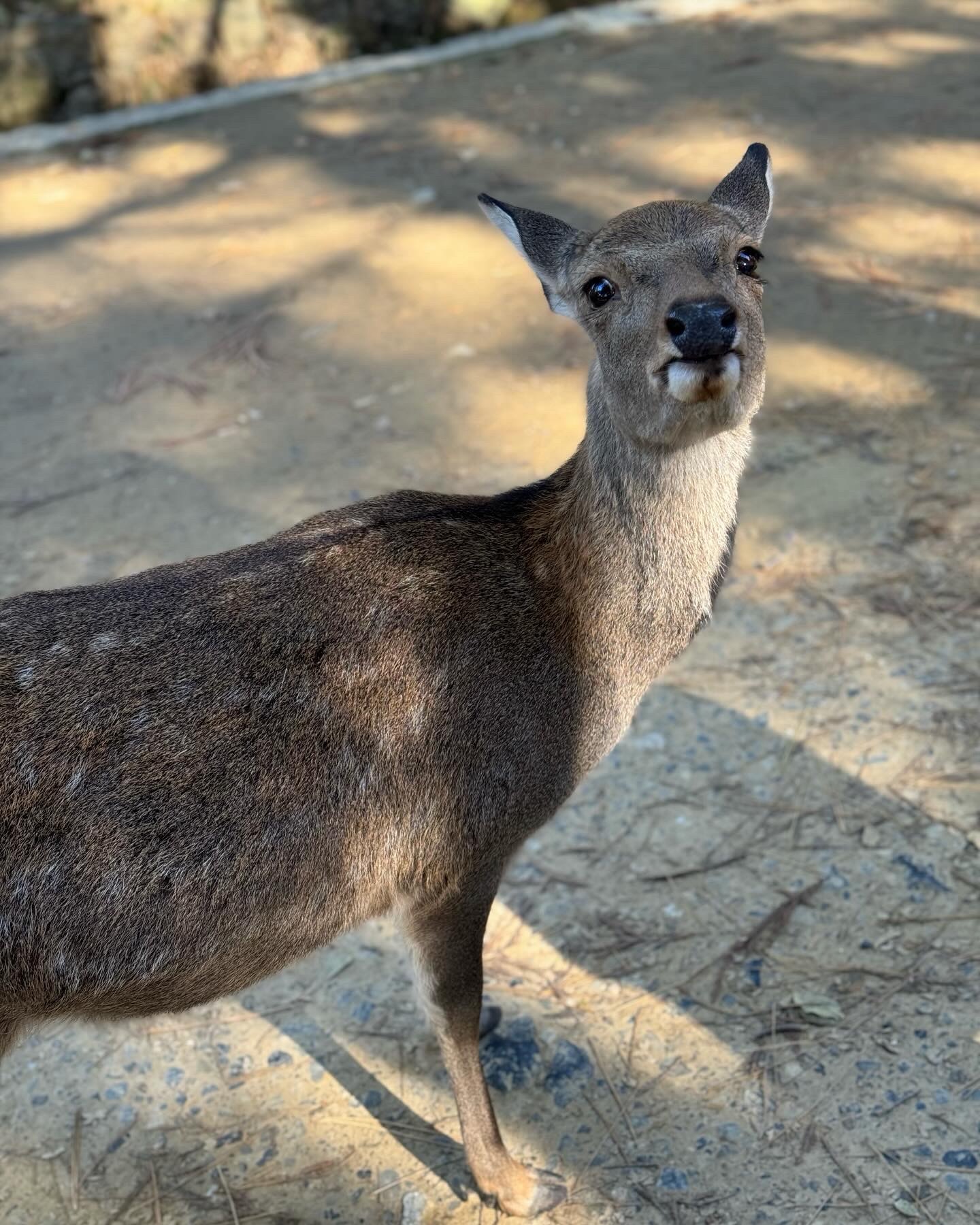
A female sika deer stares straight into the camera on a sun-dappled path in Nara Park, Japan.

Sika deer, Nara

📍 Nara Sika Deer (Cervus nippon) A medium-sized deer native to East Asia, named for the Japanese word for deer — and one of the few deer species that keeps its spots into adulthood. Over 1,000 sika deer roam freely through Nara Park year-round, protected since 1957 as national natural treasures; they famously bow to tourists in exchange for shika senbei crackers. Modeled range · iNaturalist · CC BY 4.0 Wikipedia | iNaturalist | Range map
An eastern gray squirrel perches on a bare branch against a thick tree trunk in a New York City park.

Squirrel, New York City

📍 New York City Eastern Gray Squirrel (Sciurus carolinensis) One of the most adaptable urban mammals in North America, thriving in city parks where it caches thousands of nuts each autumn — and forgets enough of them to plant trees. Ubiquitous year-round in New York City parks, sidewalks, and backyards; the city’s population is estimated in the tens of thousands. Modeled range · iNaturalist · CC BY 4.0 Wikipedia | iNaturalist | Range map
A white-nosed coati lounges on a concrete overlook with its long ringed tail stretched out behind it.

White-nosed coati, Panama City

📍 Panama City White-nosed Coati (Nasua narica) A raccoon relative with a long, flexible snout it uses to root through leaf litter for invertebrates and fruit — and a banded tail nearly as long as its body. Common year-round across Panama, especially around parks, forest edges, and urban green spaces where they scavenge boldly from visitors. Modeled range · iNaturalist · CC BY 4.0 Wikipedia | iNaturalist | Range map
Tiny bright-red frog with black spots perched on a stem among heart-shaped leaves on the forest floor of Isla Bastimentos

Strawberry poison-dart frog, Isla Bastimentos

📍 Isla Bastimentos, Bocas del Toro Strawberry Poison-dart Frog (Oophaga pumilio) Barely two centimeters long but impossible to miss — this jewel-toned frog wears its toxicity on its skin, sequestering alkaloid poisons from the ants and mites it eats to become one of the most unpalatable animals in the Neotropics. The Bastimentos red morph, with its vivid scarlet body and black spots, is one of dozens of strikingly different color forms this species takes across the Bocas del Toro archipelago — making the islands a living laboratory for studying rapid color evolution. ...

Stocky brown-and-white sheep with a black face standing alone on bright green pasture above the Cliffs of Moher

Sheep, Cliffs of Moher

📍 Cliffs of Moher, Ireland Domestic Sheep (Ovis aries) Black-faced and shaggy-coated, this is likely a Scottish Blackface cross — the breed that has grazed Ireland’s Atlantic cliffs for centuries, bred to handle wet, windy hillsides where other livestock won’t thrive. Scottish Blackface and their crosses are the most common sheep along the west coast of Ireland, grazing year-round on the exposed karst and cliff-top pastures of County Clare. Modeled range · iNaturalist · CC BY 4.0 Wikipedia | iNaturalist | Range map
Black-headed gull with mottled dark hood perched on a railing above Shinobazu Pond, Bentendo temple in the background

Black-headed gull at Shinobazu Pond, Tokyo

📍 Shinobazu Pond, Tokyo Black-headed Gull (Chroicocephalus ridibundus) A small, elegant gull recognized by its dark chocolate-brown breeding hood, red bill, and pinkish-red legs — this individual’s patchy hood marks the transition between winter and summer plumage. One of Tokyo’s most familiar winter gulls, abundant at Shinobazu Pond in Ueno Park from October through April; the Japanese name ユリカモメ (yurikamome) even lends its name to the city’s waterfront rail line. ...