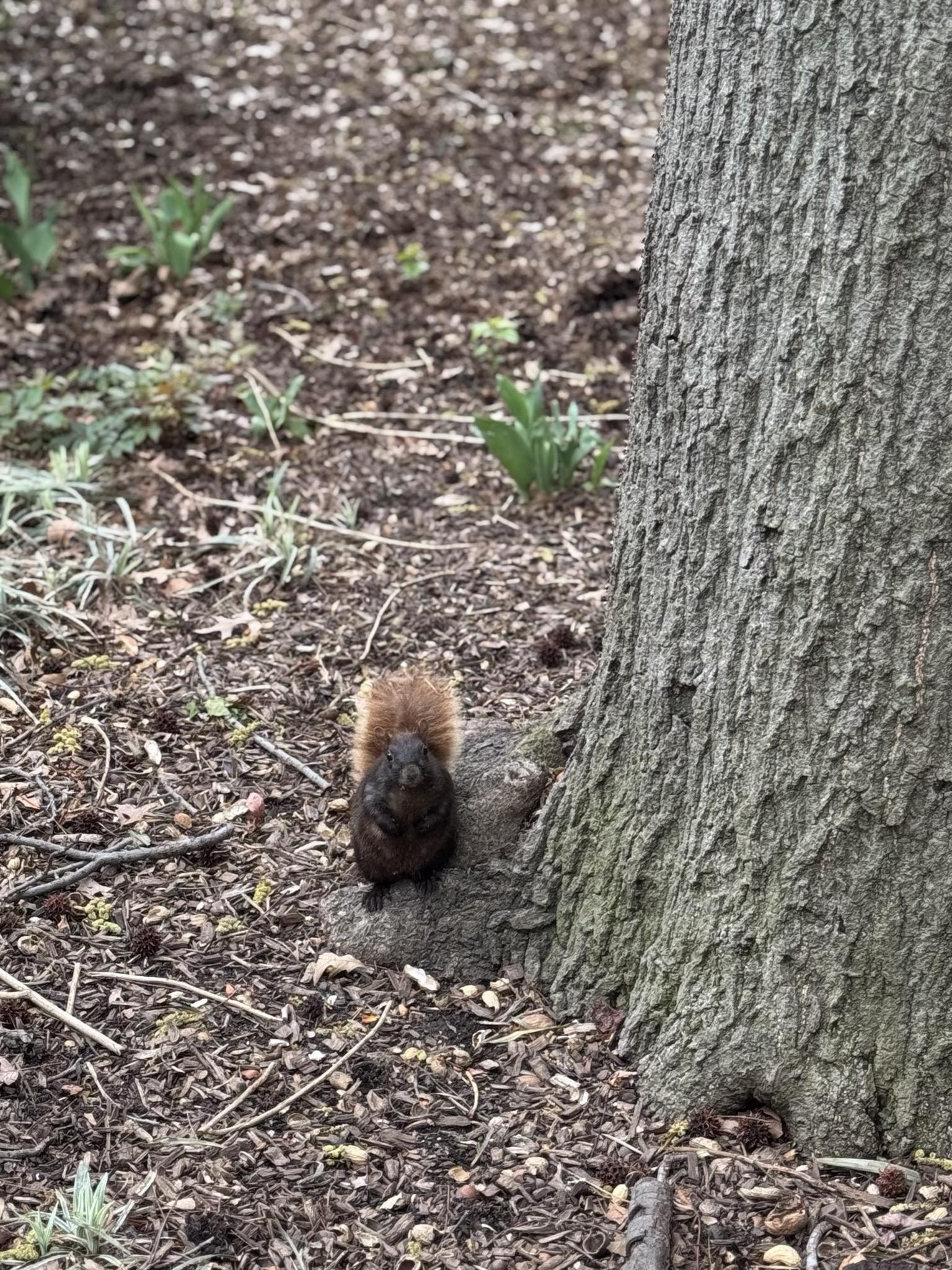
A dark, near-black squirrel with a rufous-brown tail sits upright on a rock beside a tree in a city park.

Melanistic Eastern gray squirrel: a two-toned black morph

📍 Stuyvesant Town, New York City Eastern gray squirrel (Sciurus carolinensis) — melanistic morph This is a melanistic Eastern gray squirrel, not a separate species. Melanism is an overproduction of the dark pigment melanin (the inverse of albinism), which turns the normally gray coat near-black; such animals are known informally as “black squirrels.” The two-toned appearance here — a black body with a tail retaining a warm rufous cast — reflects incomplete pigmentation of the tail rather than the animal’s age. ...
July 4, 2026
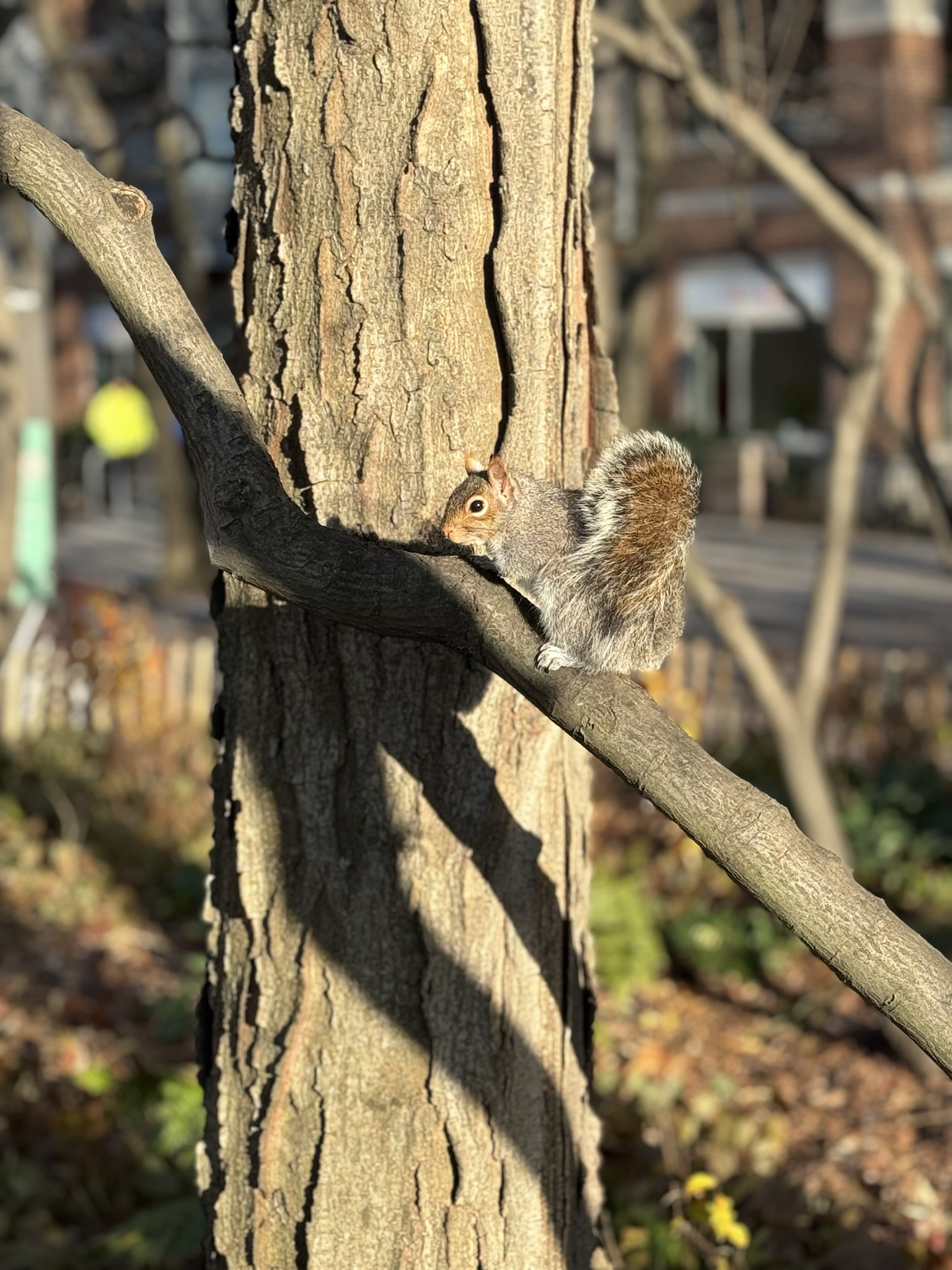
An eastern gray squirrel perches on a bare branch against a thick tree trunk in a New York City park.

Squirrel, New York City

📍 New York City Eastern Gray Squirrel (Sciurus carolinensis) One of the most adaptable urban mammals in North America, thriving in city parks where it caches thousands of nuts each autumn — and forgets enough of them to plant trees. Ubiquitous year-round in New York City parks, sidewalks, and backyards; the city’s population is estimated in the tens of thousands. Modeled range · iNaturalist · CC BY 4.0 Wikipedia | iNaturalist | Range map

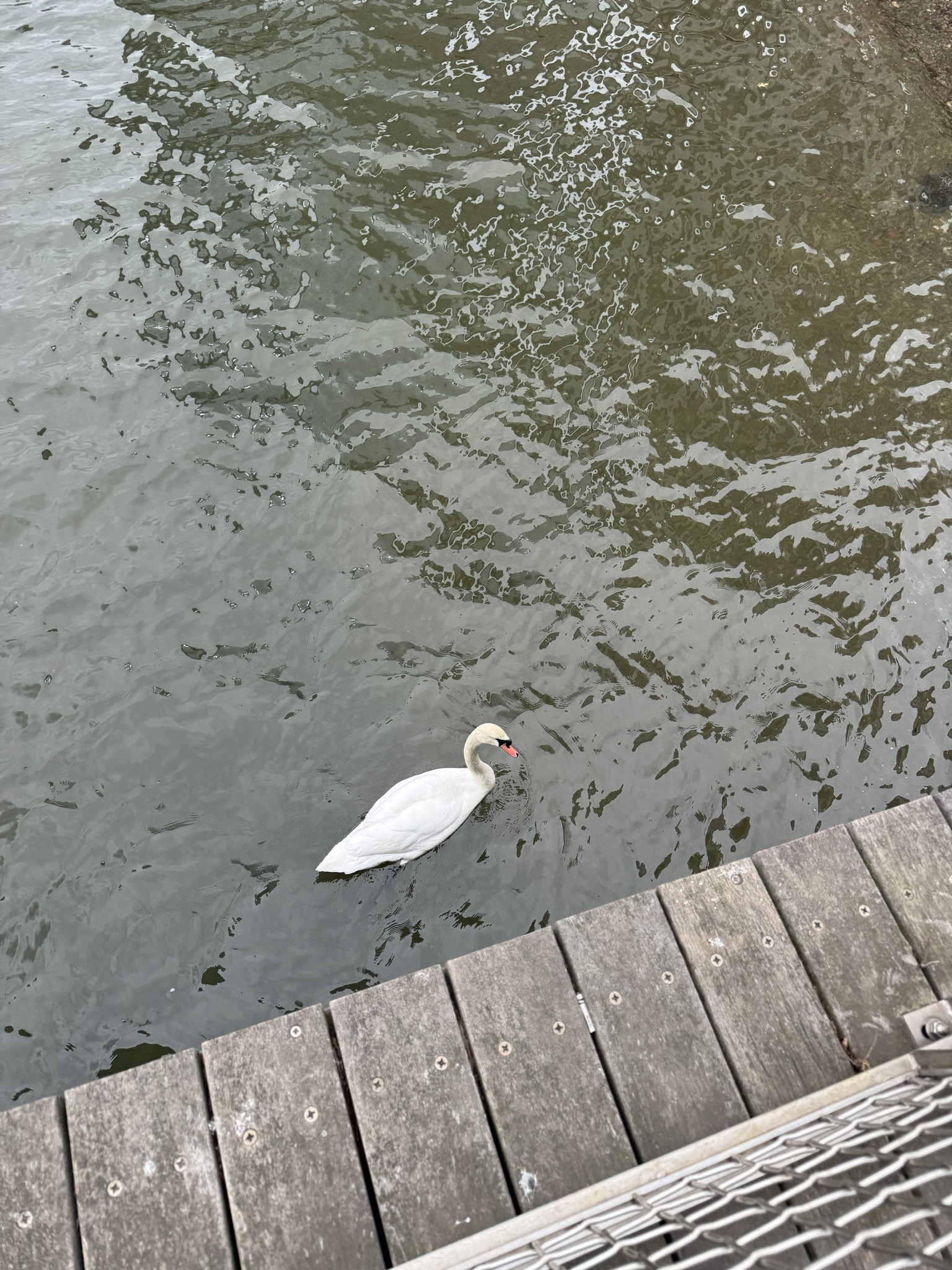
A massive white Mute Swan gliding alongside a wooden dock on the Hudson River

Mute swan on the river

📍 Hudson River, New York City Mute Swan (Cygnus olor) One of the heaviest waterfowl in North America — a Eurasian species identified by its all-white plumage, long S-curved neck, and orange bill with a distinctive black knob at the base. Mute swans are year-round residents along the Hudson River and throughout New York City’s waterways, introduced from Europe in the 19th century and now firmly established. Modeled range · iNaturalist · CC BY 4.0 Wikipedia | iNaturalist | Range map | eBird