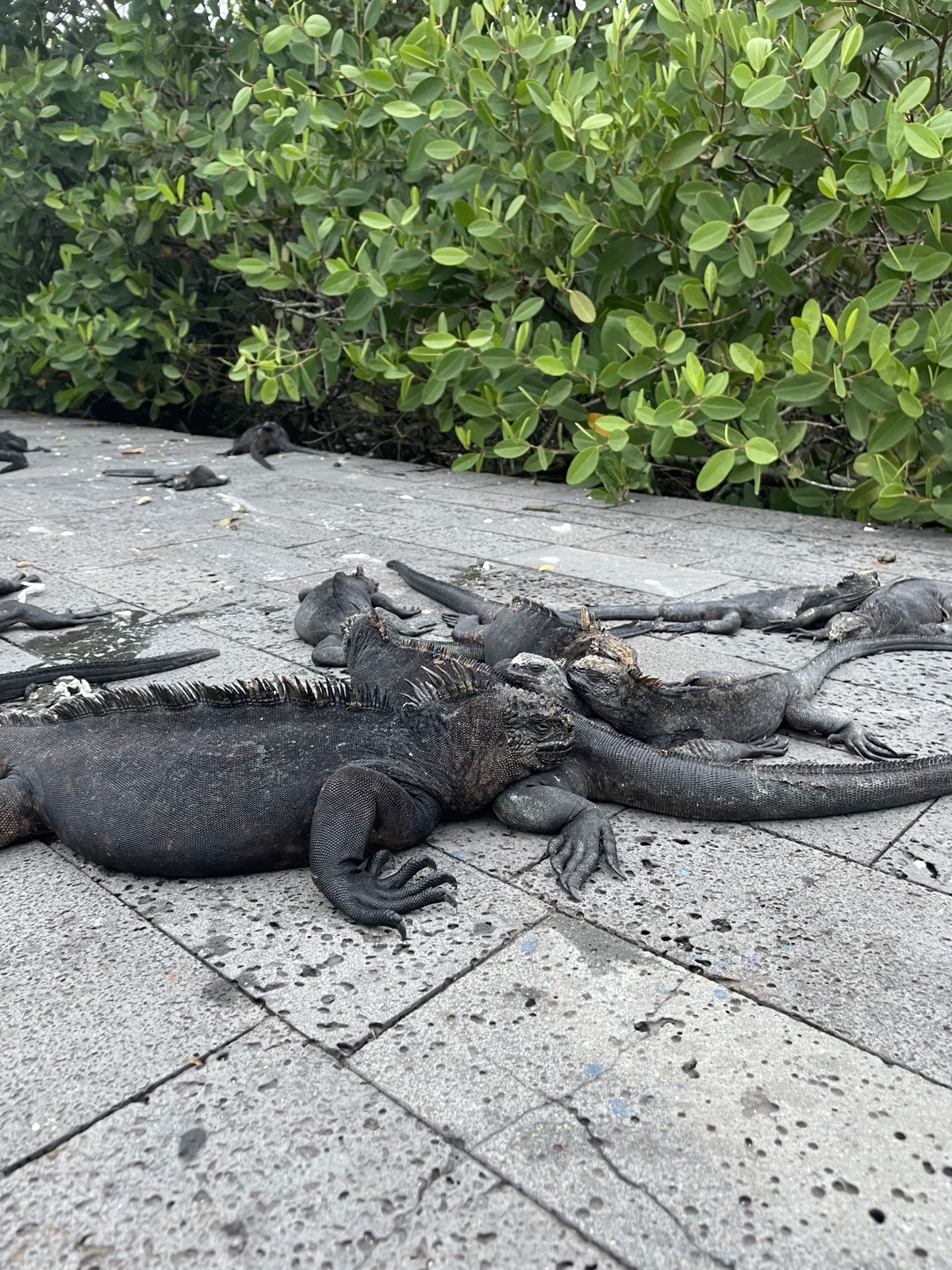
A heap of dark marine iguanas piled on top of each other on a concrete walkway, basking together beside green mangroves

Cuddle puddle of iguanas

Marine Iguana (Amblyrhynchus cristatus) The only lizard on Earth that forages in the ocean, marine iguanas lose heat rapidly after diving in cold Pacific waters and pile together on land to warm back up — a behavior called “thermoregulatory huddling.” Endemic to the Galápagos and present on every island year-round, often gathering in dense colonies along the shore. Wikipedia | iNaturalist | IUCN Red List

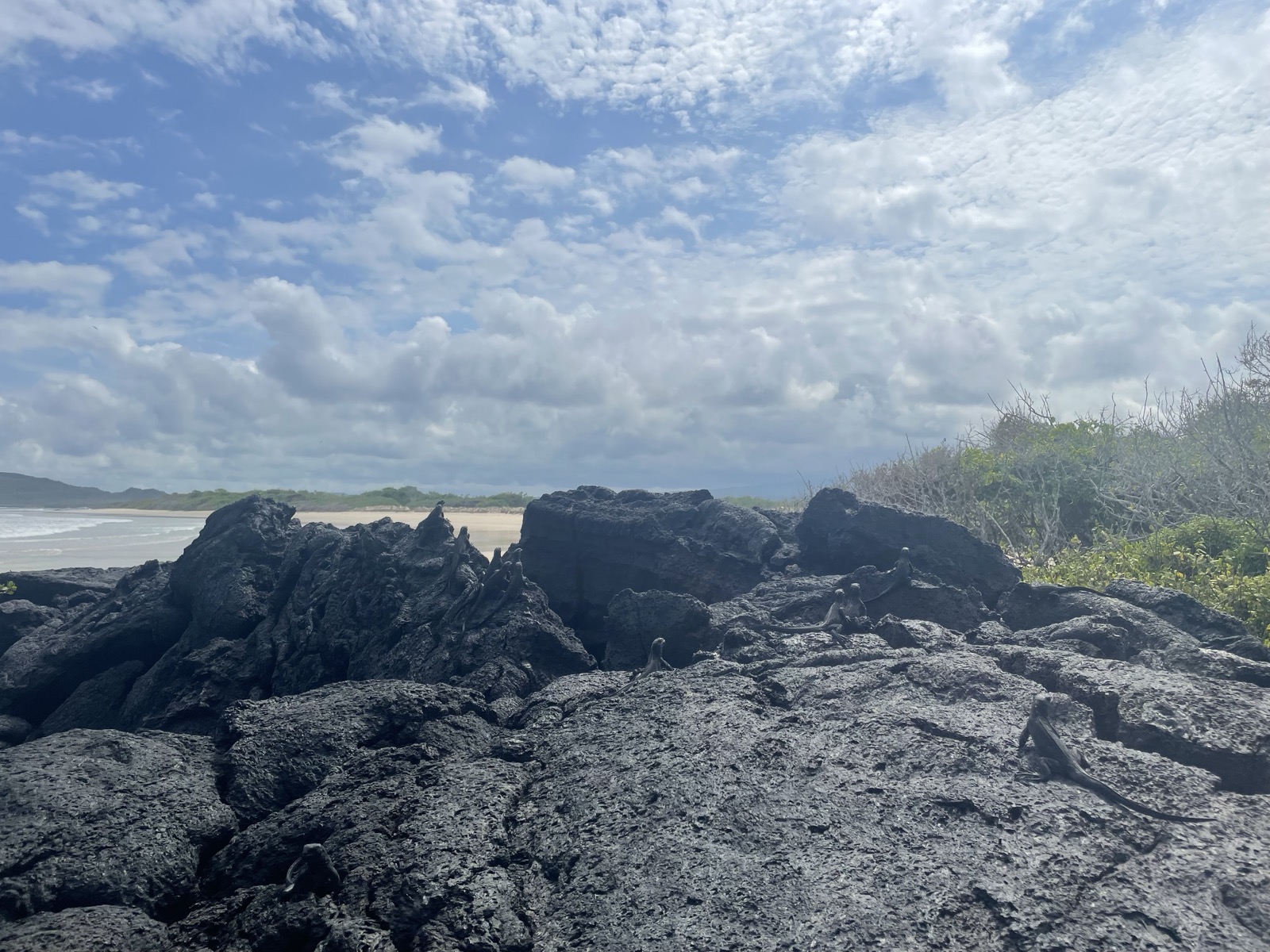
Marine iguanas nearly invisible against black lava rock on an Isabela shoreline under a dramatic sky

Dozens of iguanas blending into the volcanic rock

📍 Isla Isabela, Galápagos Islands Marine Iguana (Amblyrhynchus cristatus) The world’s only sea-going lizard, uniquely adapted to dive into cold Pacific currents and graze algae off submerged rocks — then bask on lava to reheat its dark, salt-crusted body. Abundant and year-round on Isla Isabela, where the island’s vast volcanic coastline provides prime basking and foraging habitat for some of the archipelago’s largest colonies. Wikipedia | iNaturalist | Galápagos Conservancy

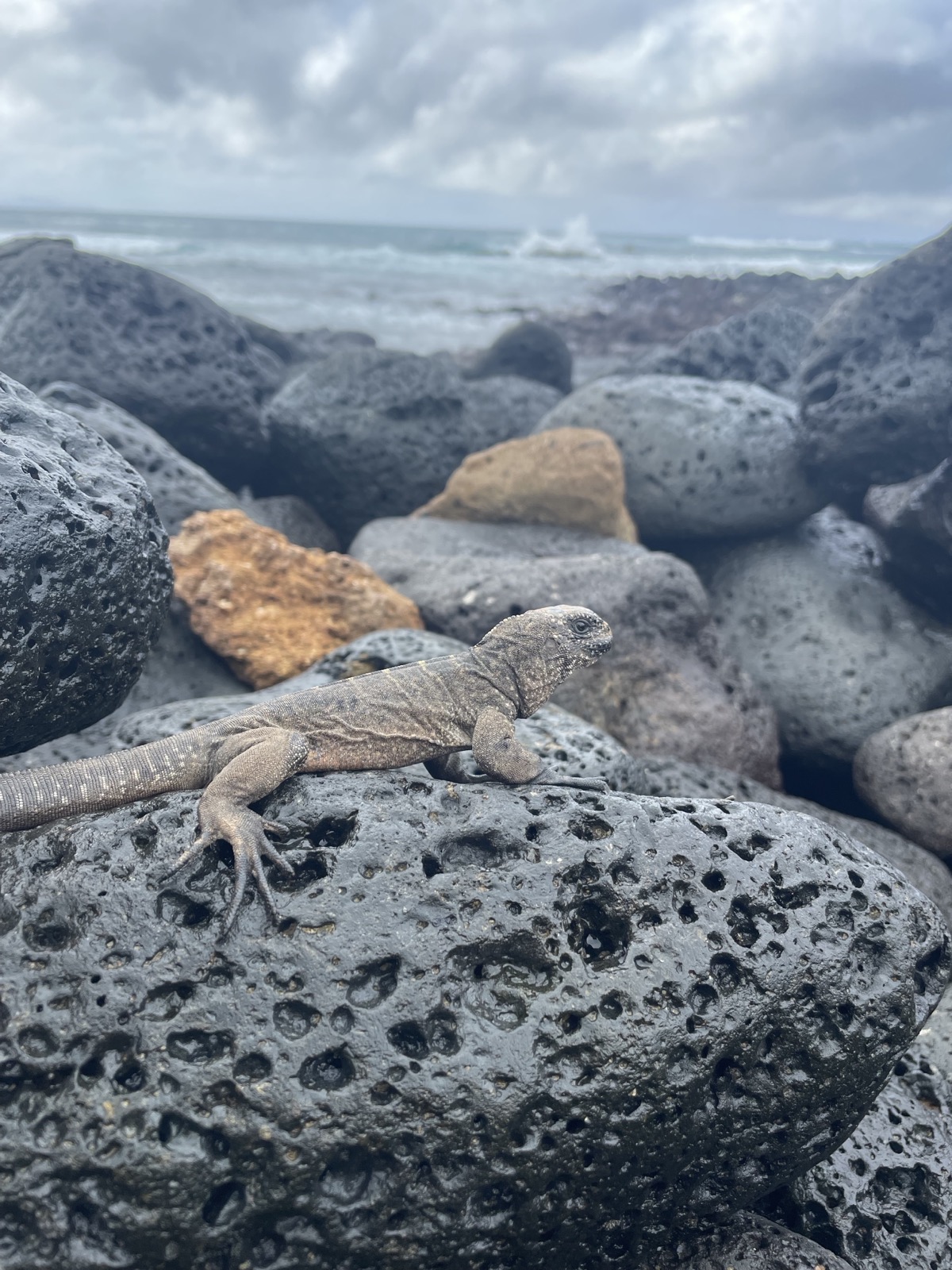
Juvenile marine iguana basking on porous black lava rock with ocean waves crashing behind it

Iguana, Galápagos

Marine Iguana (Amblyrhynchus cristatus) The world’s only ocean-foraging lizard, this juvenile is soaking up heat on volcanic rock before its next dive into the cold Cromwell Current to graze on algae. Endemic to the Galápagos and found on every island in the archipelago, year-round. Wikipedia | iNaturalist | IUCN Red List

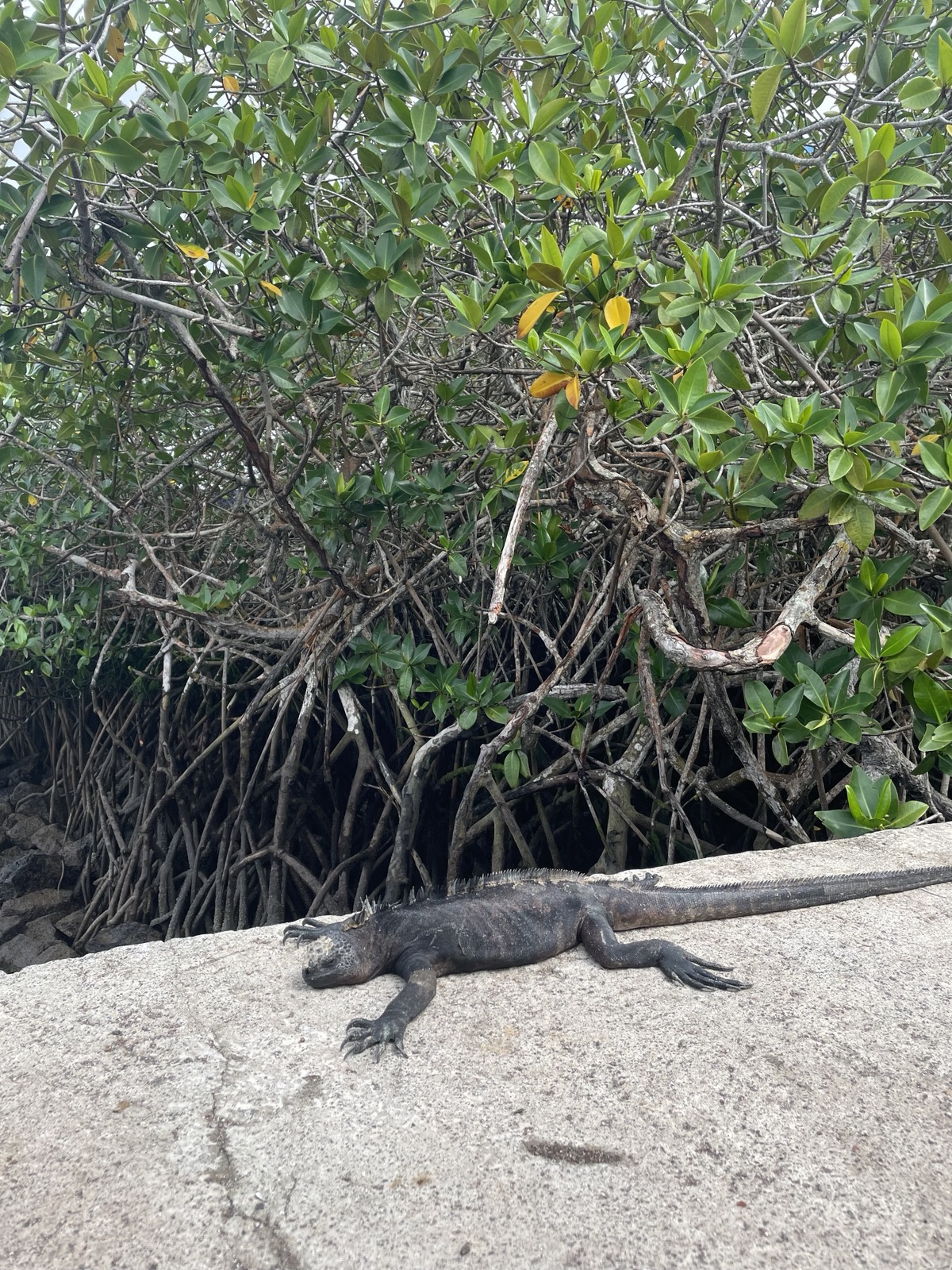
A marine iguana sprawled flat on sun-warmed rock, dead asleep beside a tangle of mangrove roots

Napping iguana

Marine Iguana (Amblyrhynchus cristatus) The world’s only ocean-foraging lizard, diving up to 12 metres to scrape algae off submerged rocks — then hauling out to bask motionless for hours while its body reheats and nasal salt glands purge excess sea salt. Abundant and year-round throughout the Galápagos archipelago, with the largest concentrations on Isabela and Fernandina. Wikipedia | iNaturalist | Galápagos Conservancy