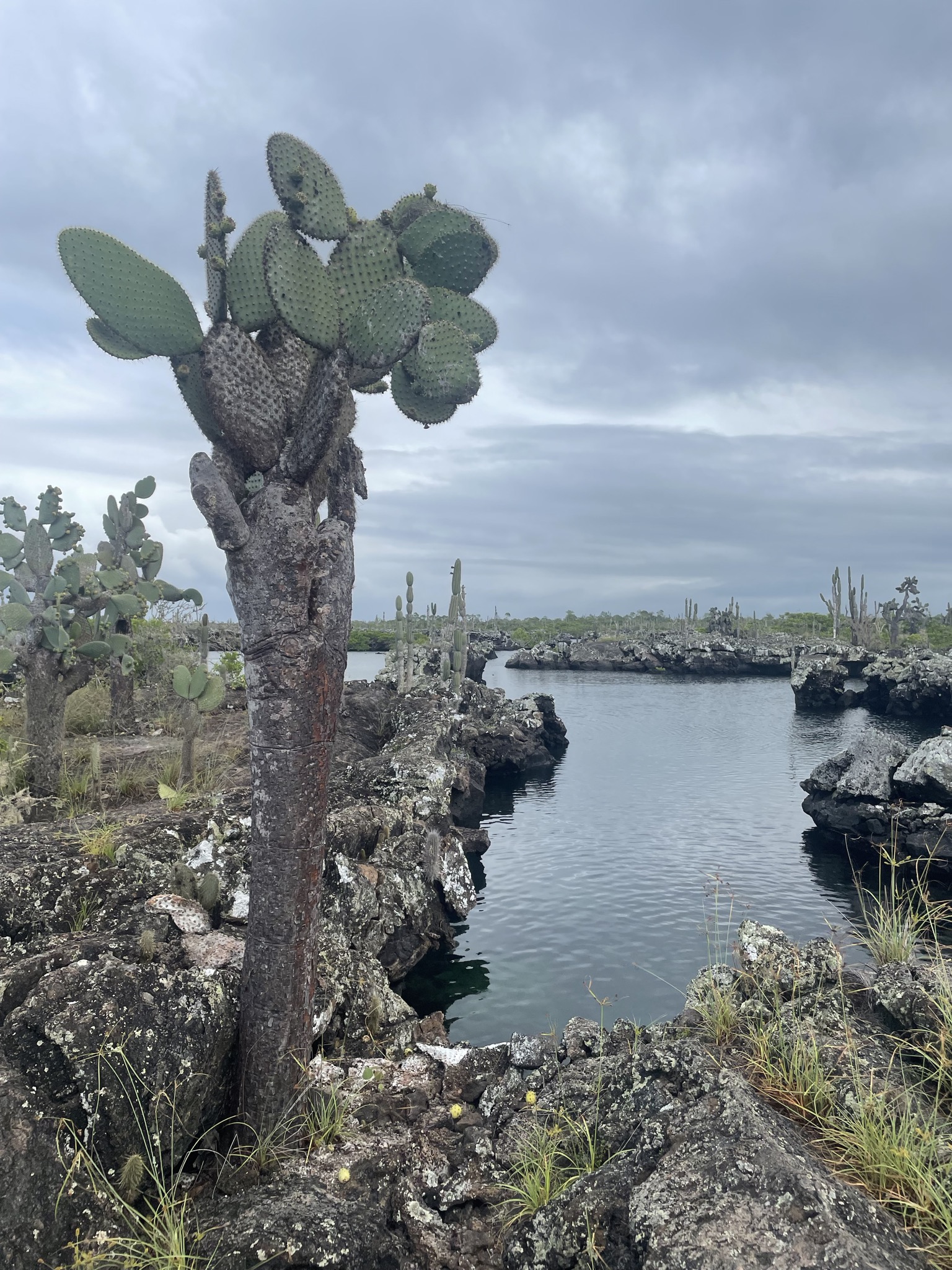
Tall Galápagos prickly pear cactus with a thick woody trunk rising from black lava rock beside a tidal lagoon, more cacti dotting the volcanic landscape under overcast skies

Galápagos prickly pear

📍 Galápagos Islands Galápagos Prickly Pear (Opuntia echios) The largest prickly pear in the world, growing tree-sized trunks up to 12 meters tall — an evolutionary arms race with giant tortoises and land iguanas that graze on the lower pads. Endemic to the Galápagos and found across most of the archipelago; its fruit and pads are a critical food source for tortoises, iguanas, finches, and mockingbirds alike. Wikipedia | iNaturalist
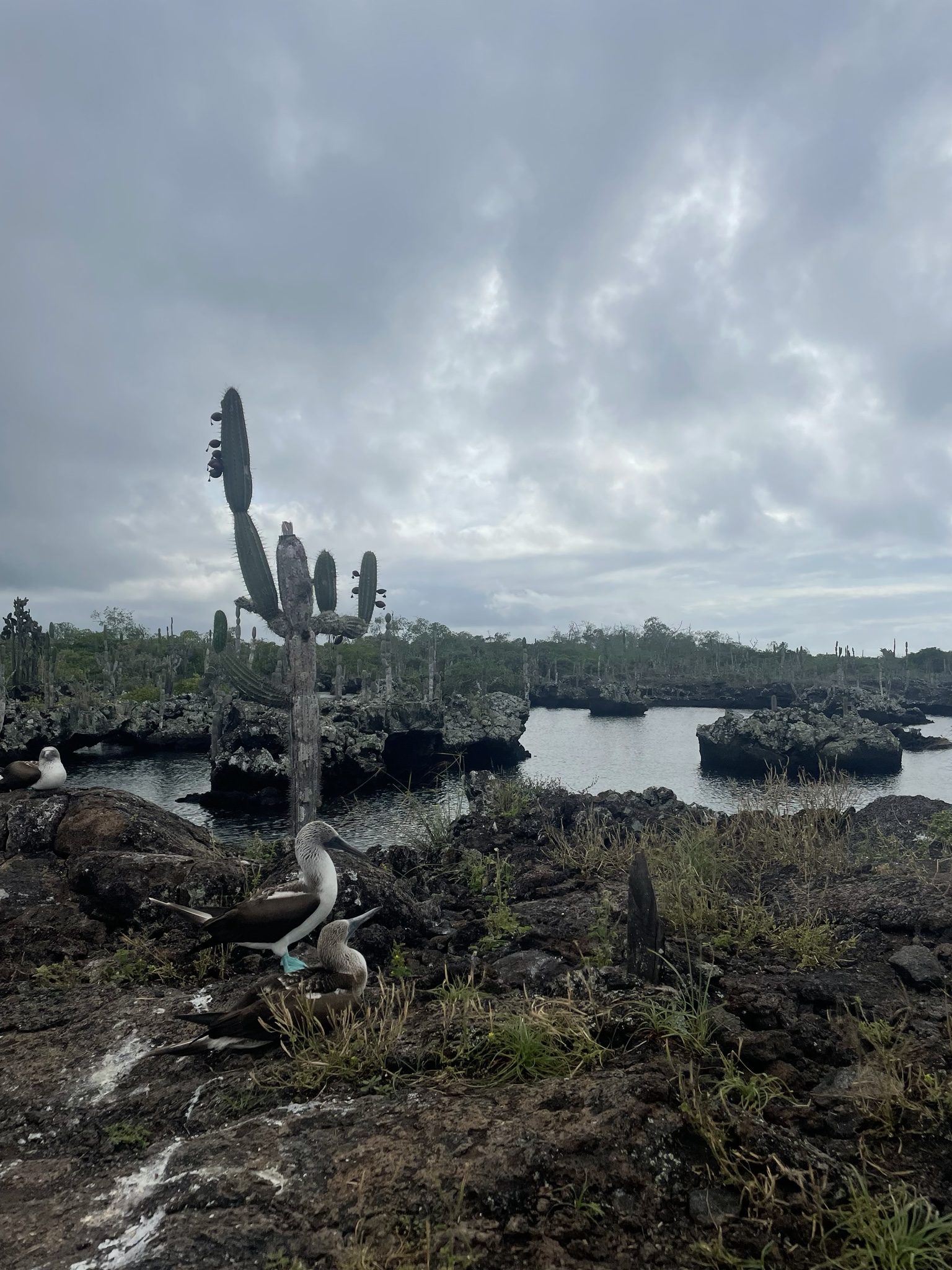
Pair of blue-footed boobies resting on dark volcanic rock at Los Túneles, lava channels and giant cacti behind them under overcast skies

Blue-footed booby, Los Túneles

📍 Los Túneles, Isla Isabela Blue-footed Booby (Sula nebouxii) Their vivid turquoise feet double as a health report: the brighter the blue, the better-fed the bird, and mates choose accordingly. A year-round breeding resident of Isabela Island; Los Túneles is one of the best spots to see them nesting right on the lava. Modeled range · iNaturalist · CC BY 4.0 Wikipedia | iNaturalist | Range map | eBird

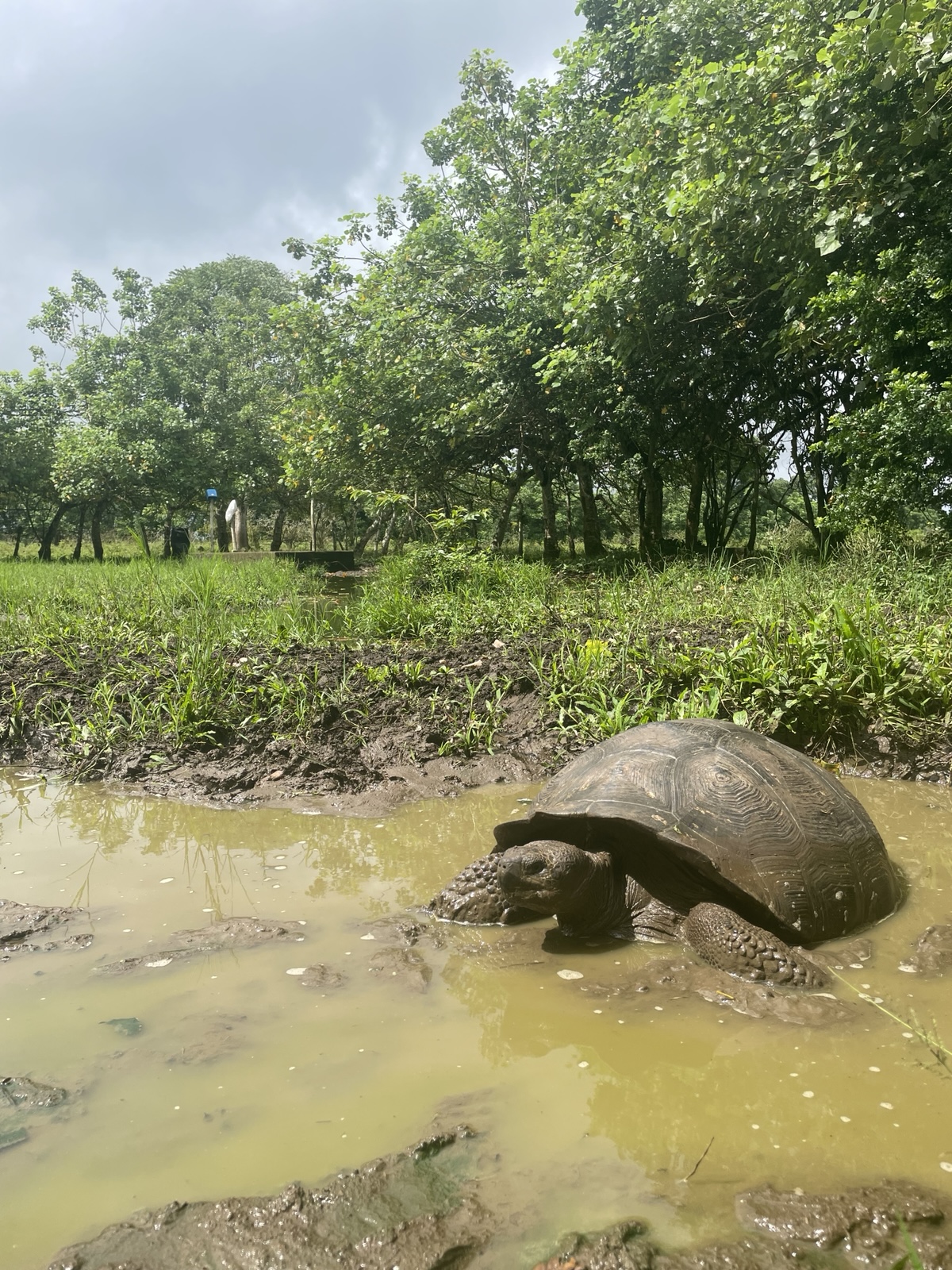
An adult Galápagos giant tortoise soaks chin-deep in a muddy highland wallow surrounded by lush green trees

Giant tortoise, Galápagos

📍 Galápagos Islands Galápagos Giant Tortoise (Chelonoidis porteri) The world’s largest living tortoise — dome-shelled adults can top 400 kg and live well past 100 years, and they love a good mud bath to cool down and shed parasites. Giant tortoises are resident year-round across the Galápagos archipelago; the highland wallows of Santa Cruz Island are one of the easiest places to watch them soak. Wikipedia | iNaturalist | Range map