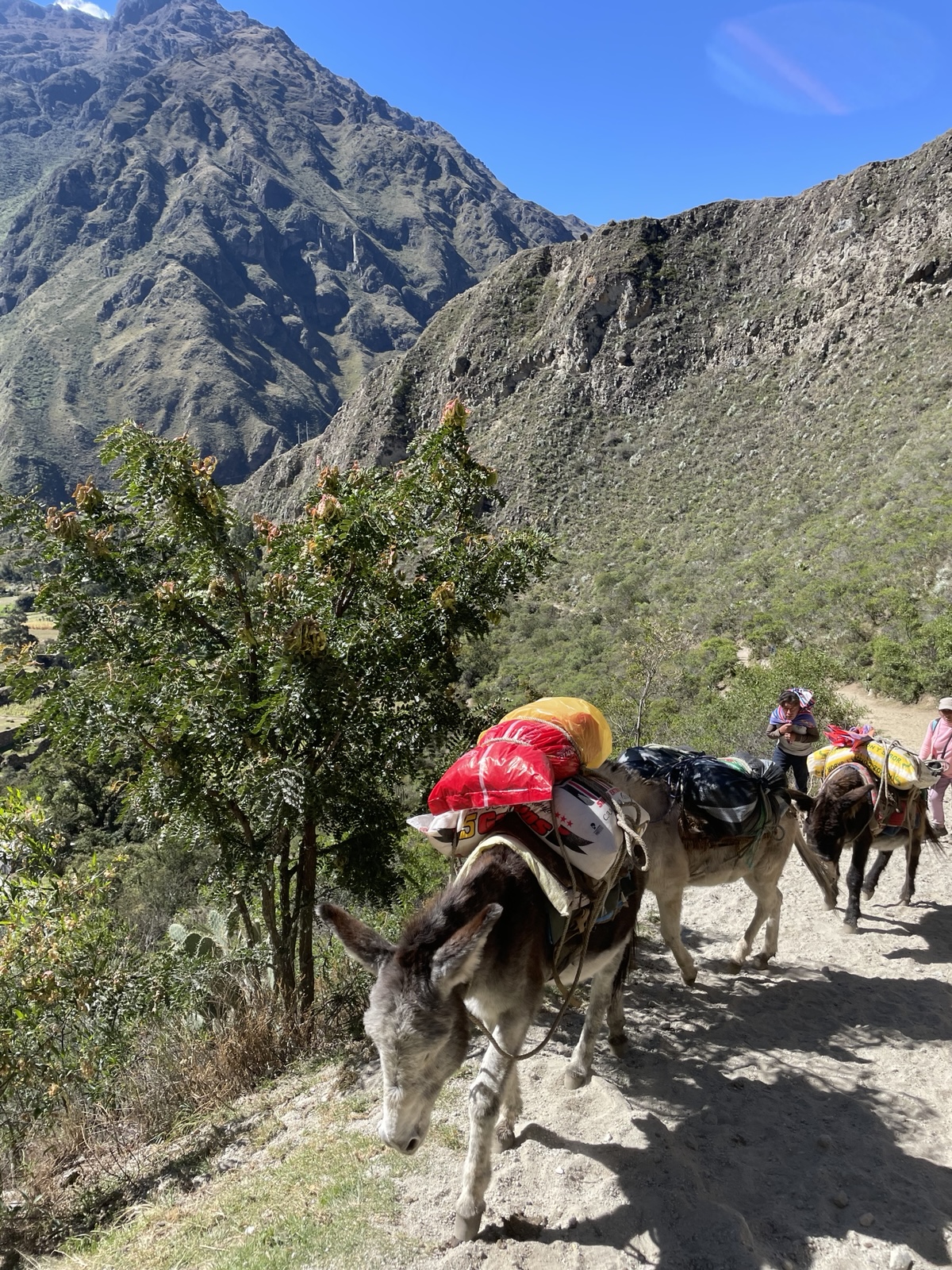
A train of pack donkeys hauls colorful bundles up a dusty switchback on the Inca Trail with steep Andean peaks behind

Donkeys on the Inca Trail

📍 Inca Trail, Peru Donkey (Equus asinus) Hardy, sure-footed, and unfazed by thin air — burros have worked Andean trails for centuries, carrying gear so trekkers don’t have to. Pack donkeys are a common sight year-round on the Inca Trail and throughout the Peruvian highlands, where they remain the preferred transport on paths too narrow or steep for vehicles. Modeled range · iNaturalist · CC BY 4.0 Wikipedia | iNaturalist | Range map
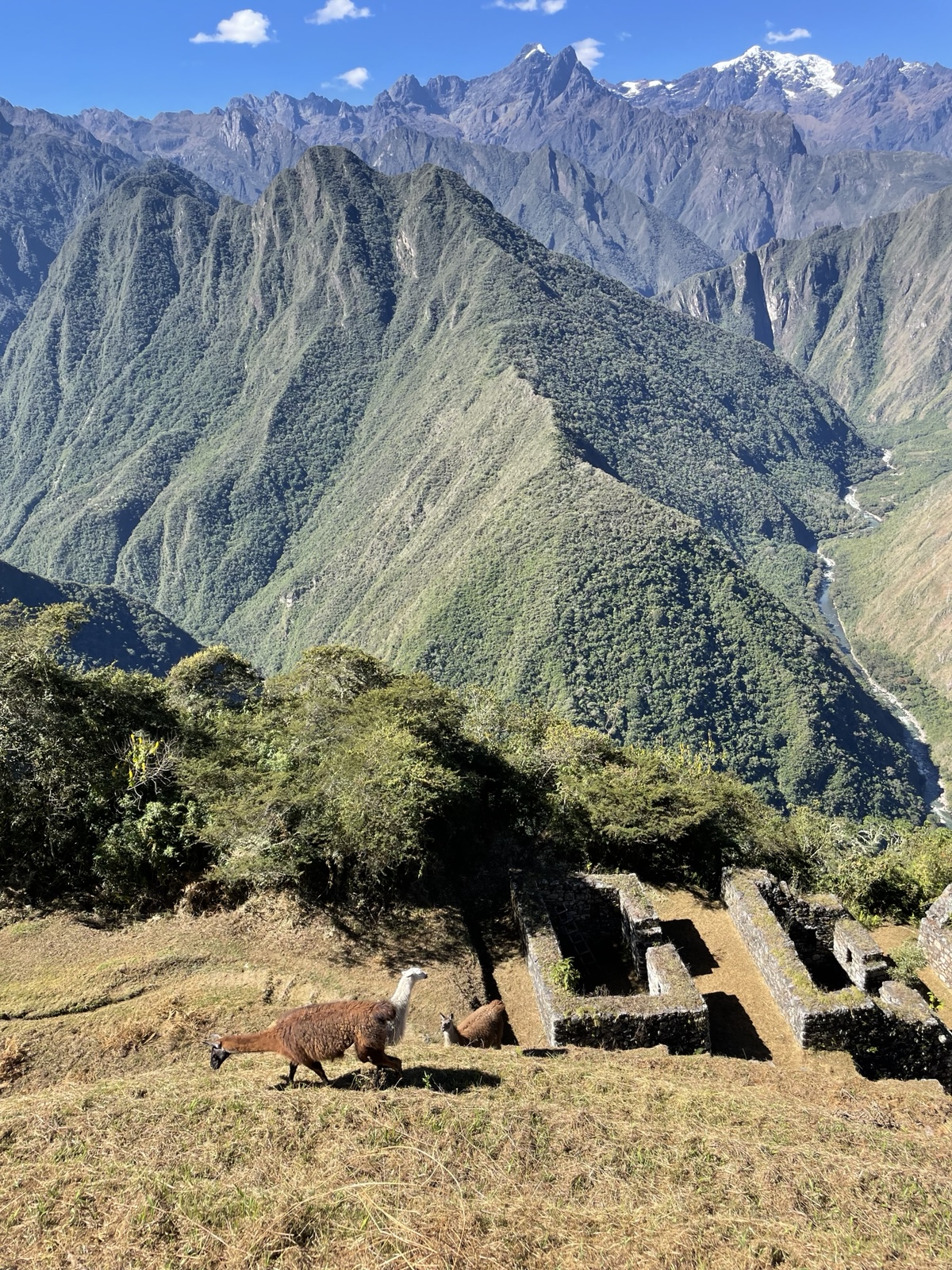
A llama grazes beside Inca stone ruins high above a steep green valley with snow-capped Andean peaks behind

More llamas in the Andes

📍 Andes, Peru Llama (Lama glama) Llamas were bred from the wild guanaco over 5,000 years ago, one of the earliest large animals domesticated anywhere in the Americas and the only one South America produced for carrying loads. They are found throughout the Andean highlands of Peru, Bolivia, and beyond, thriving year-round at elevations above 3,000 meters. Modeled range · iNaturalist · CC BY 4.0 Wikipedia | iNaturalist | Range map
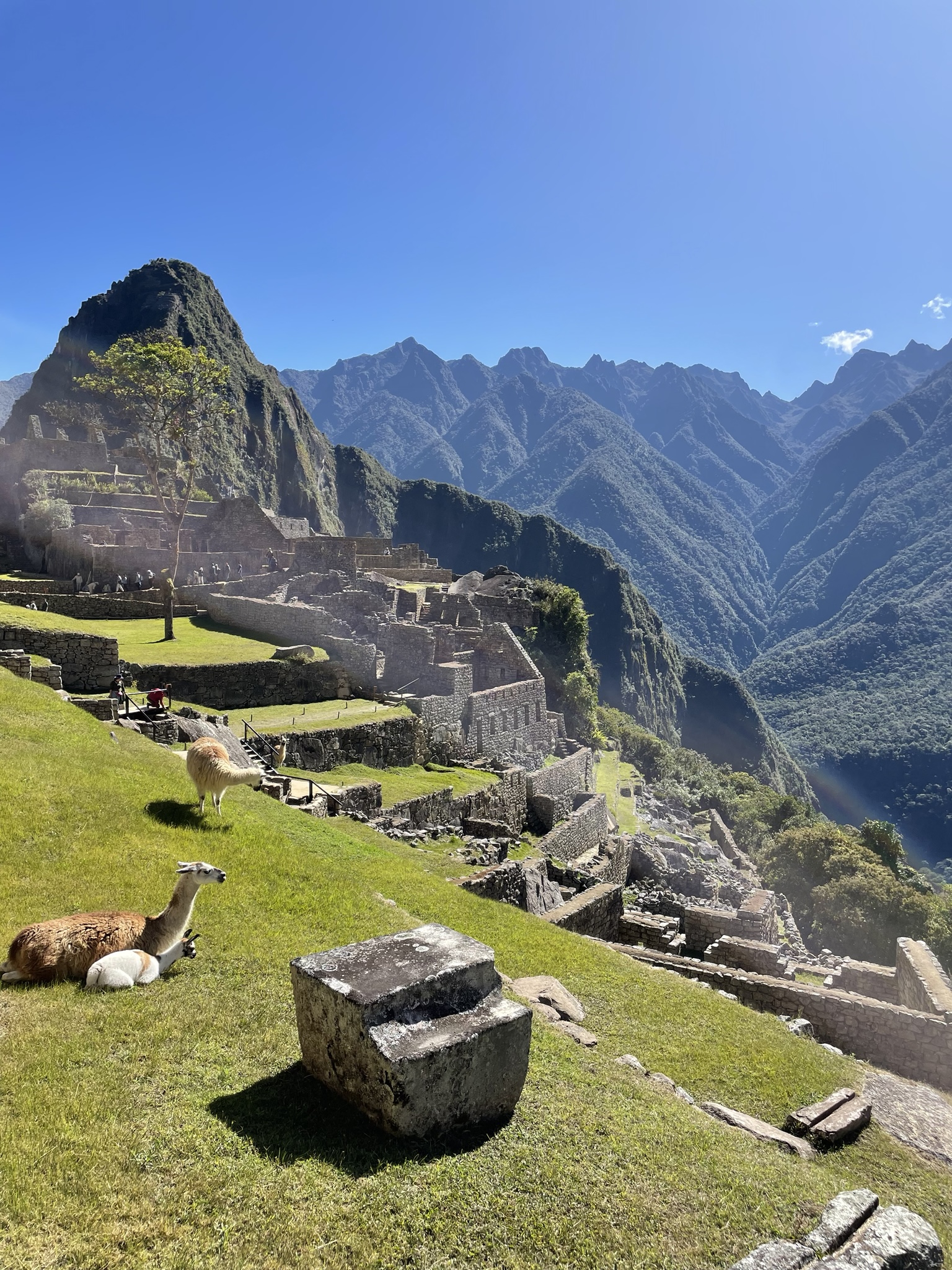
Llamas lounging on the ancient terraces of Machu Picchu with Huayna Picchu towering behind them

Llamas at Machu Picchu

📍 Machu Picchu, Peru Llama (Lama glama) As the Inca Empire’s primary pack animal, llamas hauled goods across a road network that stretched thousands of miles through the Andes, sustaining an empire that never used the wheel. A resident population lives year-round at the citadel, maintained by Peru’s Ministry of Culture as both a conservation nod and a living link to the site’s history. Modeled range · iNaturalist · CC BY 4.0 Wikipedia | iNaturalist | Range map

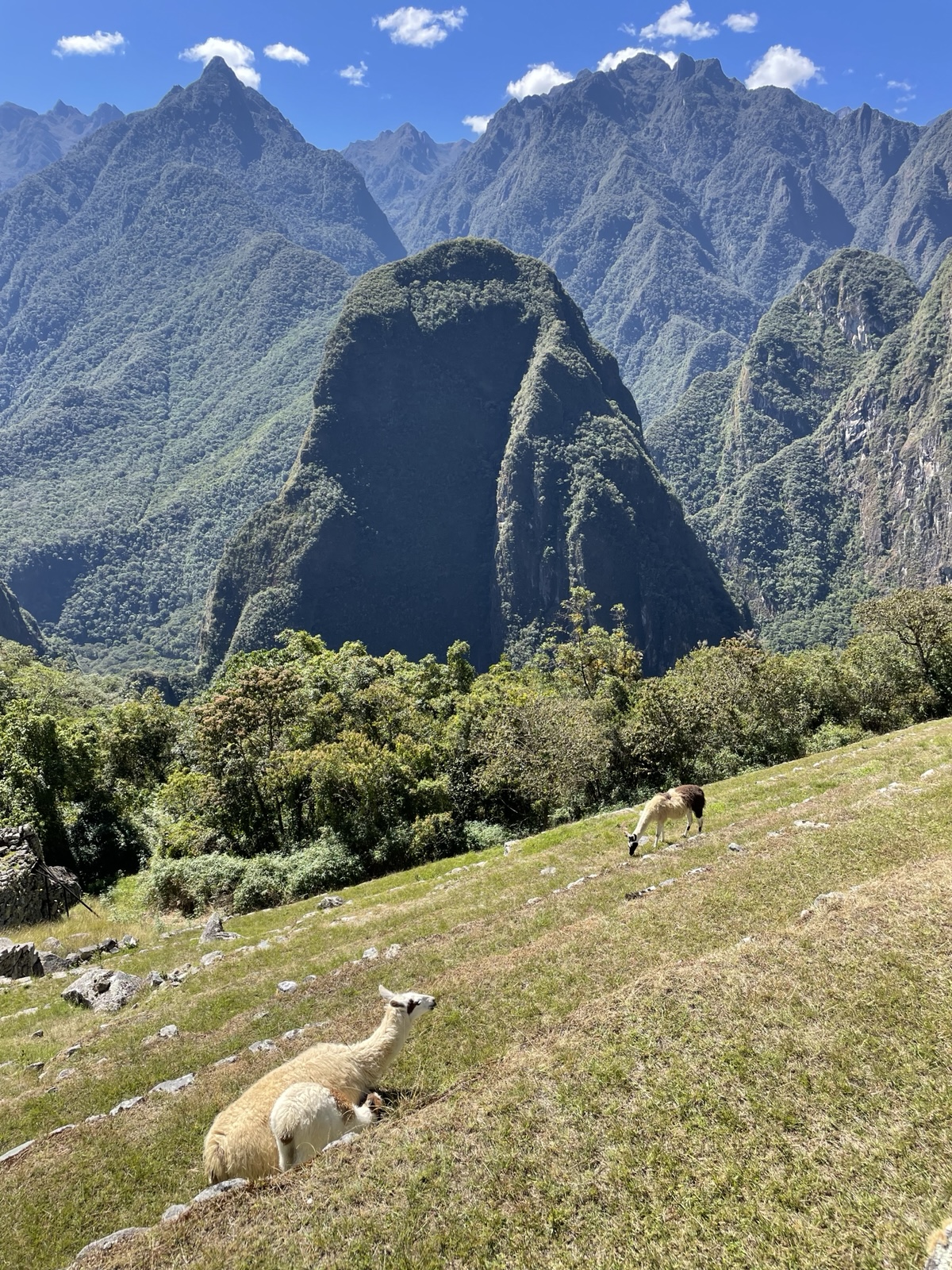
Two llamas graze on a green terrace at Machu Picchu with the jagged peak of Huayna Picchu towering behind them.

Llamas Deep in the Andes

📍 Machu Picchu, Peru Llama (Lama glama) The resident herd doubles as living lawnmowers, trimming the grass on Machu Picchu’s terraces without the hooves-and-blades damage that mowing machines would do to the ancient stonework. Their soft, padded feet and light browsing make them ideal groundskeepers, and visitors now expect to see them grazing among the ruins as much as the ruins themselves. Modeled range · iNaturalist · CC BY 4.0 Wikipedia | iNaturalist | Range map