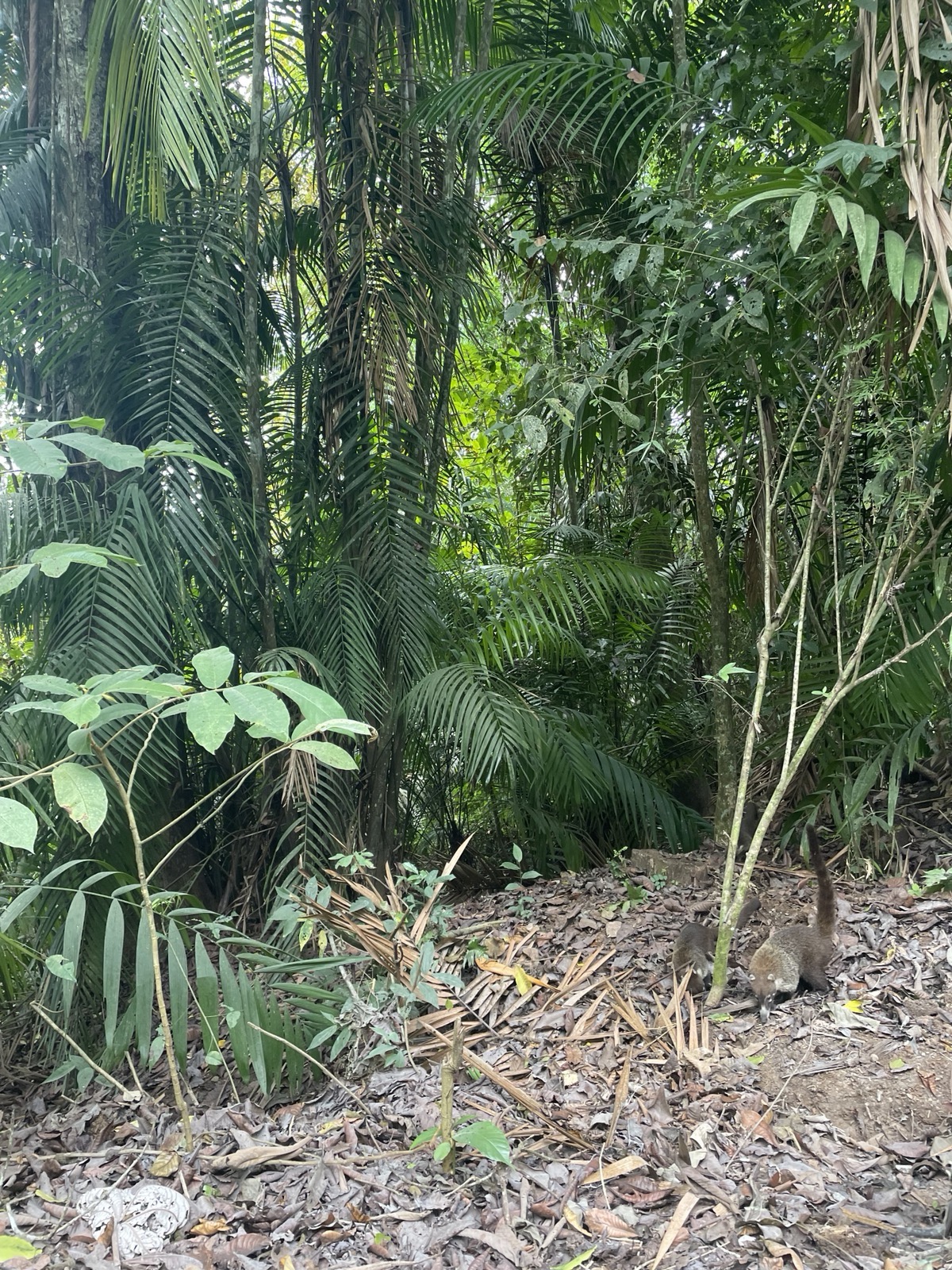
White-nosed coati nosing through leaf litter on a tropical forest floor in Panama City

Coati foraging

📍 Panama City White-nosed Coati (Nasua narica) Females and young travel in noisy bands of up to 30, rooting through leaf litter for insects, fruit, and small vertebrates, while adult males forage alone for most of the year. Common year-round in the forests and parks around Panama City, where they’ve adapted well to the urban-wildland edge. Modeled range · iNaturalist · CC BY 4.0 Wikipedia | iNaturalist | Range map
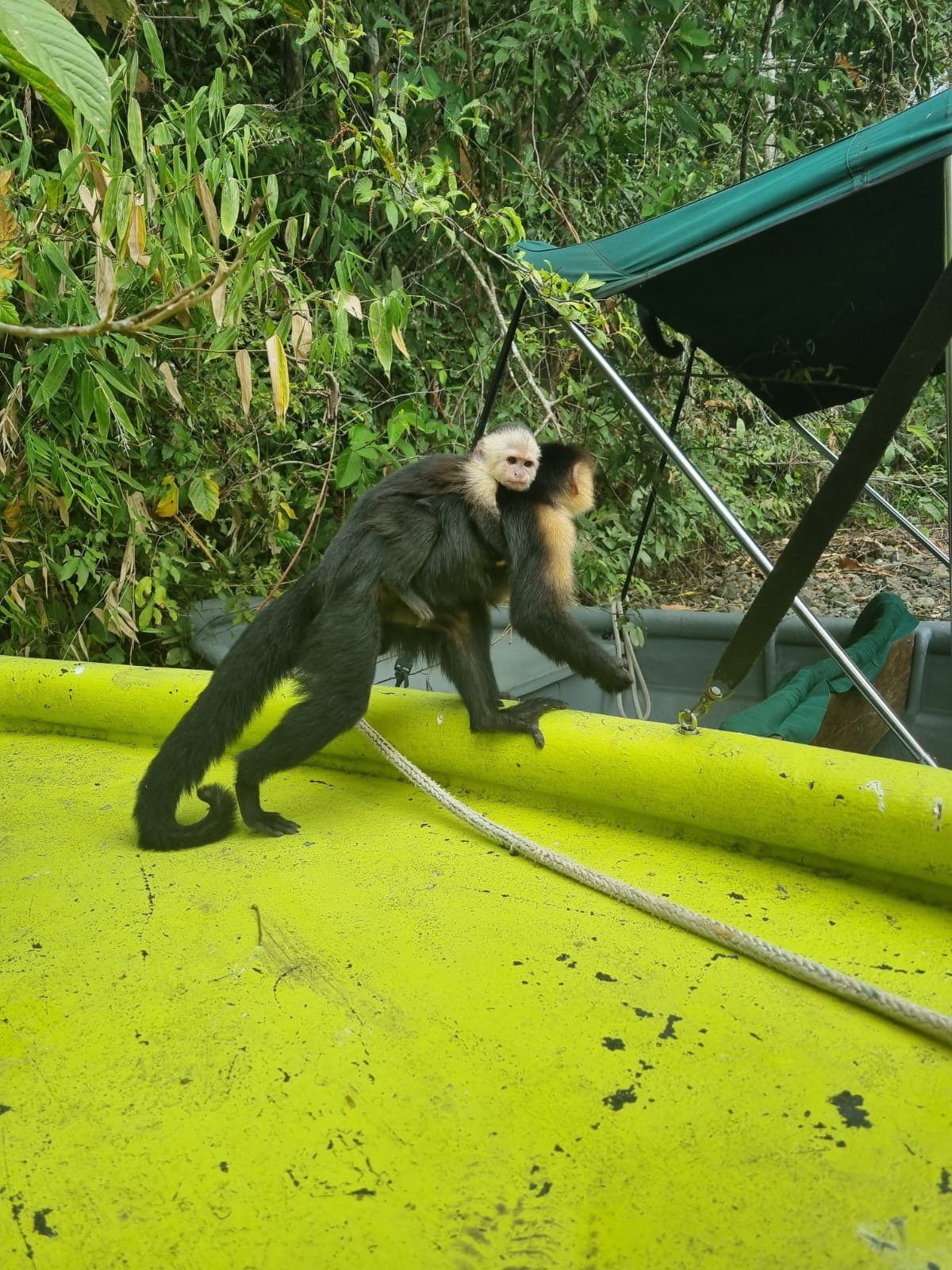
Panamanian white-faced capuchin mother with infant riding on her back, climbing across the hull of a yellow boat

Baby capuchin clinging to mom

📍 Panama Canal Panamanian White-faced Capuchin (Cebus imitator) One of the most intelligent New World monkeys, known for using tools and washing food — and for boldly raiding boats and picnic sites along the canal. A year-round resident of Central American forests from Honduras to Panama, these capuchins thrive in the lush vegetation bordering the Panama Canal and are among the most frequently spotted primates by transiting boaters. Modeled range · iNaturalist · CC BY 4.0 Wikipedia | iNaturalist | Range map

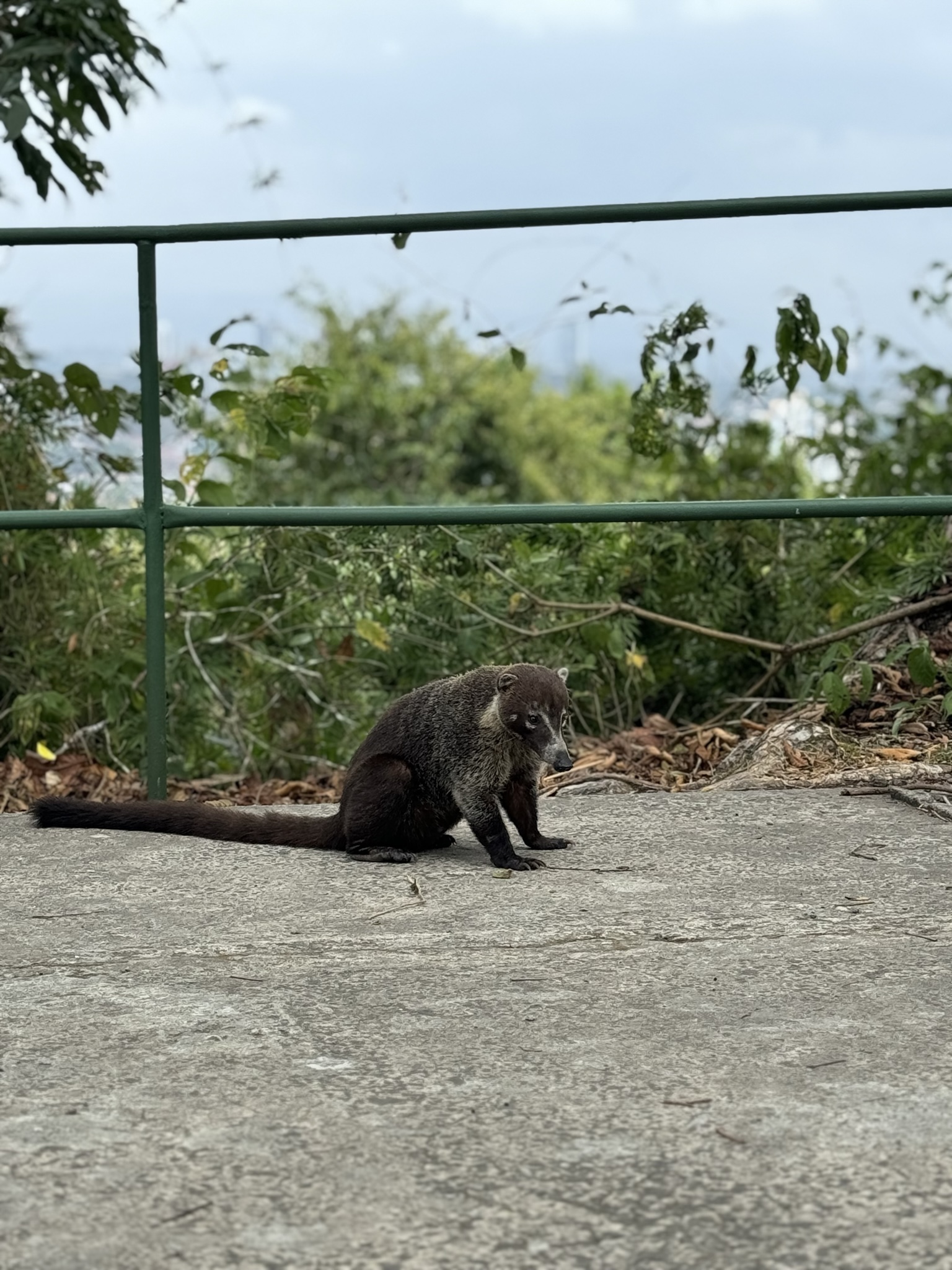
A white-nosed coati lounges on a concrete overlook with its long ringed tail stretched out behind it.

White-nosed coati, Panama City

📍 Panama City White-nosed Coati (Nasua narica) A raccoon relative with a long, flexible snout it uses to root through leaf litter for invertebrates and fruit — and a banded tail nearly as long as its body. Common year-round across Panama, especially around parks, forest edges, and urban green spaces where they scavenge boldly from visitors. Modeled range · iNaturalist · CC BY 4.0 Wikipedia | iNaturalist | Range map