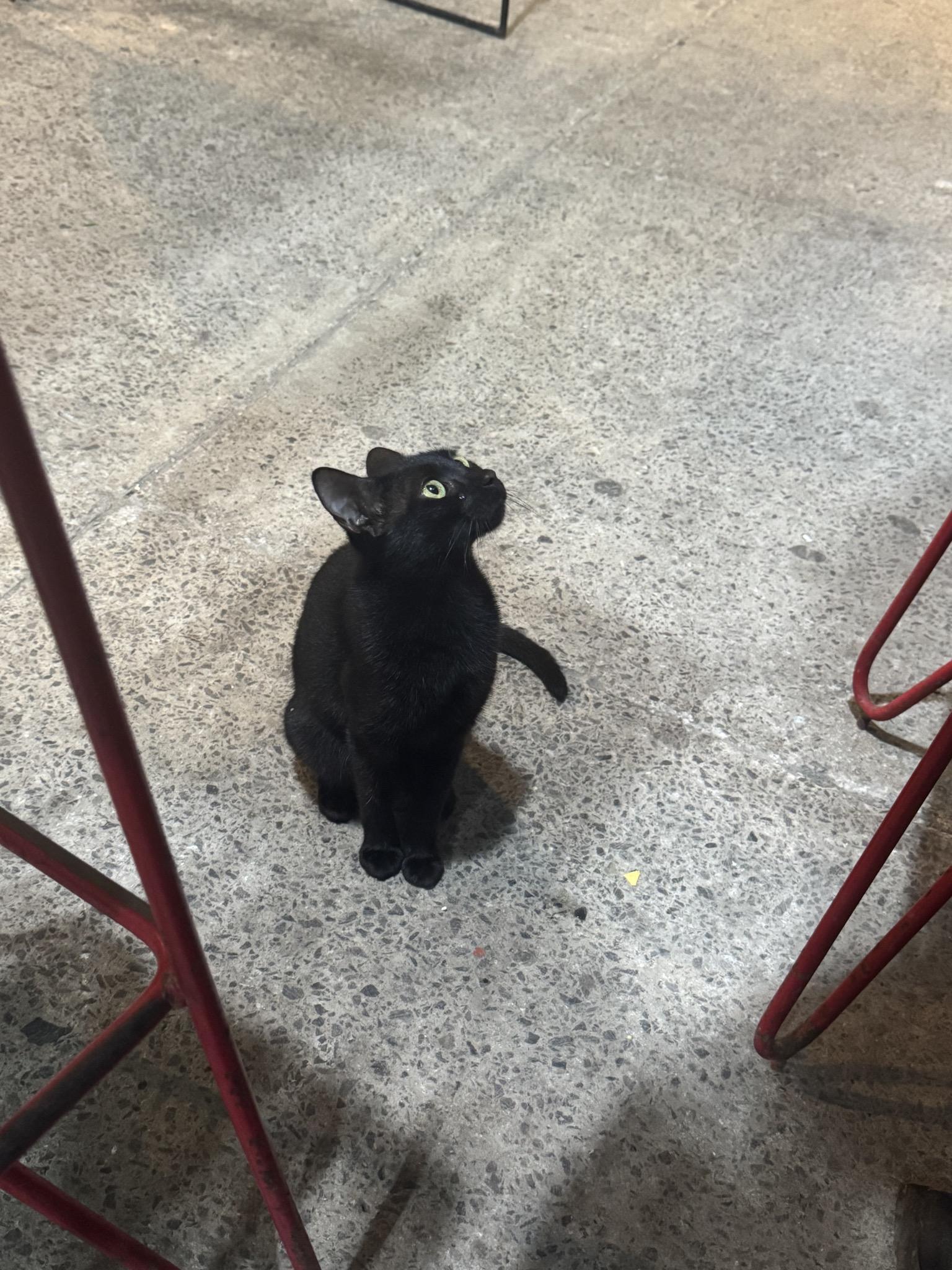
Black cat sitting on polished concrete, looking up with bright green eyes between red café chairs

Black Cat, Jersey City

Domestic Cat (Felis catus) Solid black coats come from a recessive allele in the agouti gene — only about one in twenty-two cats carries the all-black look. Free-roaming and feral cats are year-round residents throughout Jersey City, often found near restaurants and waterfronts. Wikipedia | iNaturalist
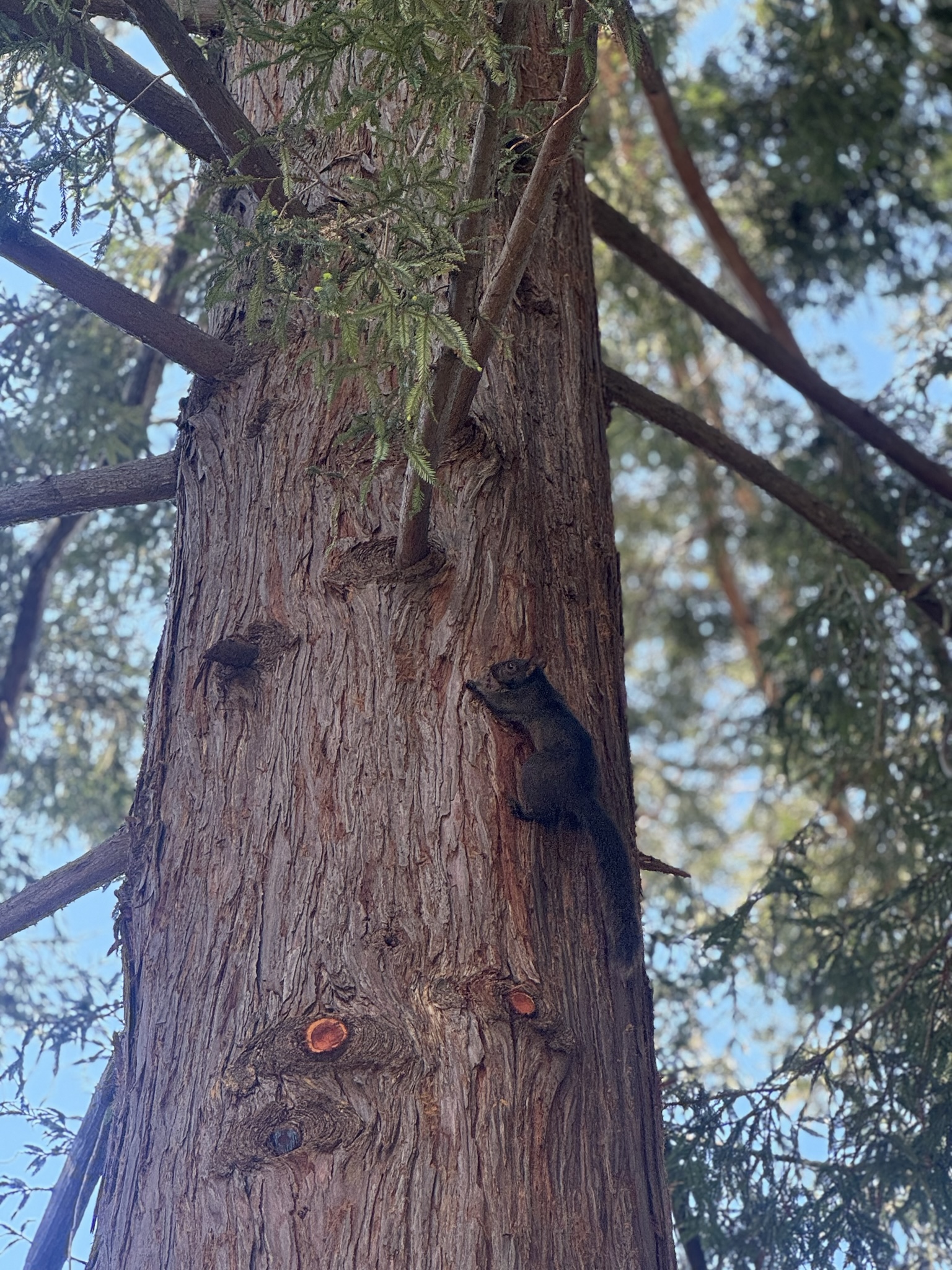
A solidly black Eastern Fox Squirrel clinging to the reddish fibrous trunk of a tall coastal redwood, photographed from below against a blue sky.

Black squirrel hugging a redwood tree

Eastern Fox Squirrel (Sciurus niger) The largest tree squirrel in North America, Bay Area populations frequently express a striking all-black (melanistic) coat that sets them apart from the rusty-orange form seen elsewhere. San Mateo’s parks and neighborhoods are dense with Eastern Fox Squirrels — a non-native species that spread across the Bay Area after introductions in the early 20th century and now outnumbers native Western Gray Squirrels in many urban areas. ...

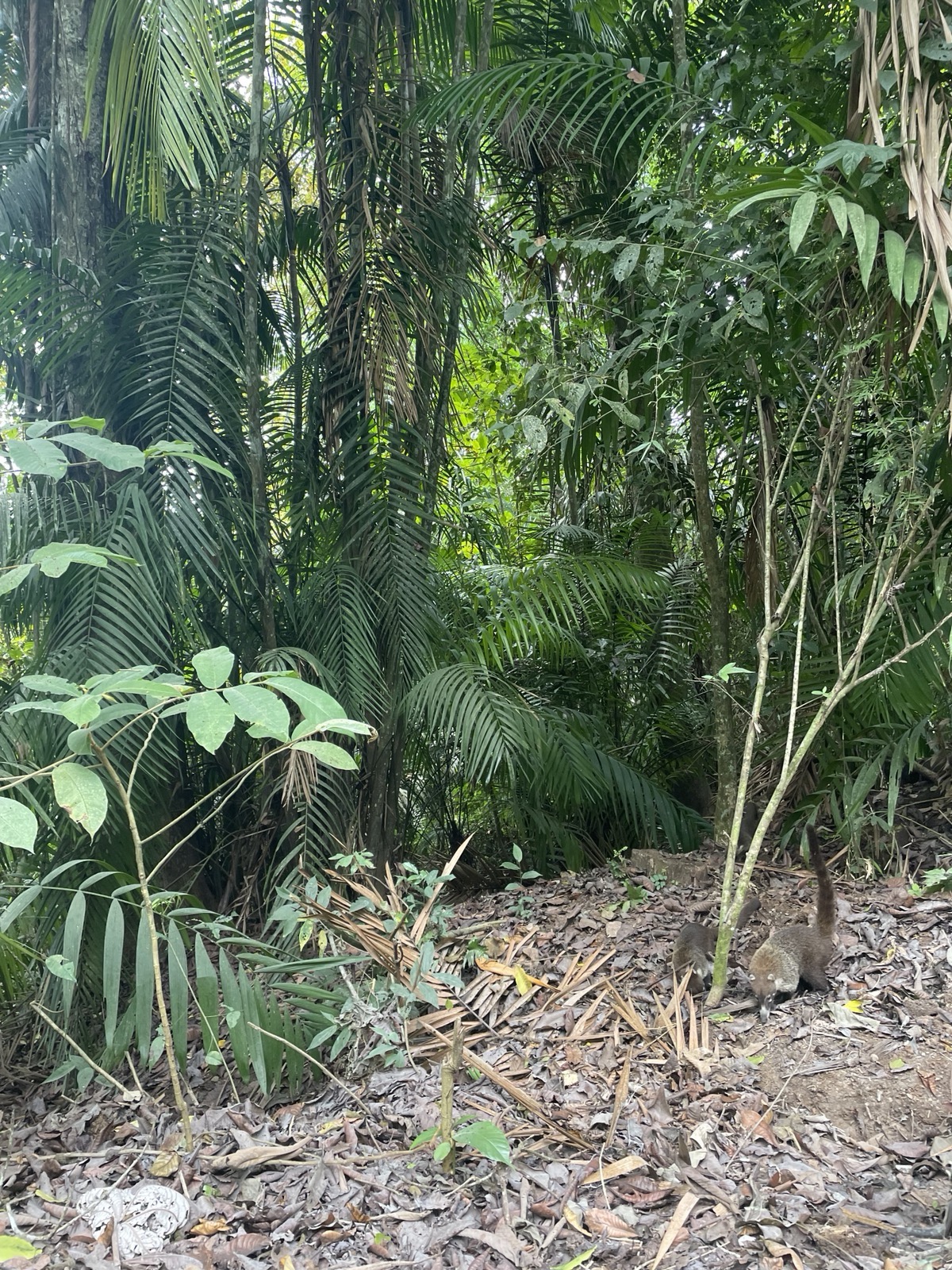
White-nosed coati nosing through leaf litter on a tropical forest floor in Panama City

Coati Foraging

White-nosed Coati (Nasua narica) A raccoon relative with a long flexible snout and an even longer banded tail, coatis travel in noisy bands of up to 30, rooting through leaf litter for insects, fruit, and small vertebrates. Common year-round in the forests and parks around Panama City, where they’ve adapted well to the urban-wildland edge. Wikipedia | iNaturalist

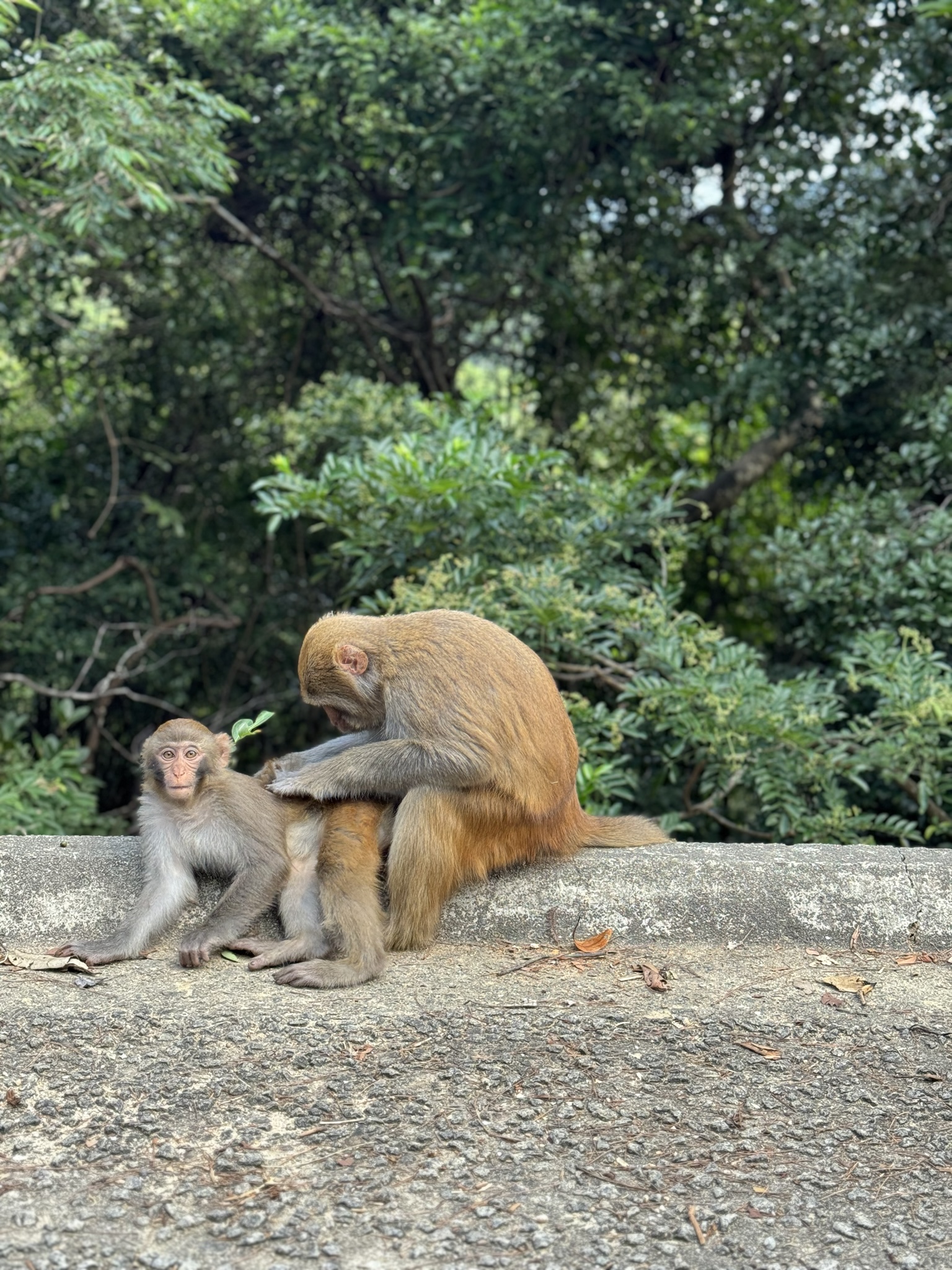
An adult rhesus macaque carefully grooms a young juvenile on a concrete ledge at Kam Shan, Hong Kong, backed by dense tropical greenery.

Grooming Macaques, Kam Shan (金山)

Rhesus Macaque (Macaca mulatta) One of the most widespread primates on Earth, rhesus macaques are highly social Old World monkeys whose mutual grooming reinforces troop bonds and hierarchy. Around 1,800 wild rhesus macaques inhabit Hong Kong’s Kam Shan (金山) Country Park year-round, descendants of a population released in the 1910s that has thrived in the forested hills ever since. Wikipedia | iNaturalist

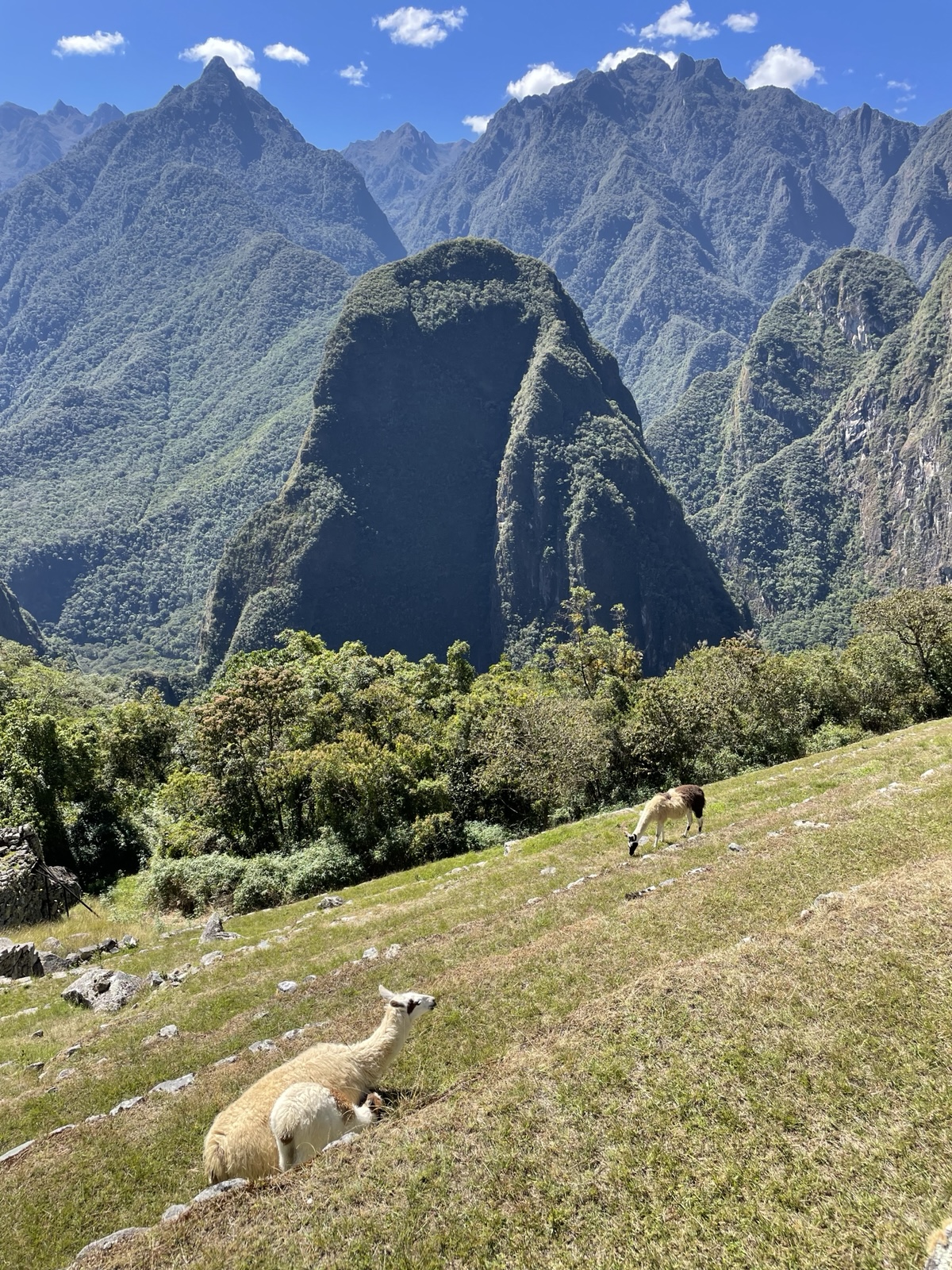
Two llamas graze on a green terrace at Machu Picchu with the jagged peak of Huayna Picchu towering behind them.

Llamas Deep in the Andes

Llama (Lama glama) Domesticated over 4,000 years ago in the Peruvian highlands, the llama is South America’s largest camelid and served as the primary pack animal of the Inca Empire. A small herd is kept year-round on the terraces of Machu Picchu, where they double as living lawnmowers that trim the grass without damaging the ancient stonework. Wikipedia | iNaturalist

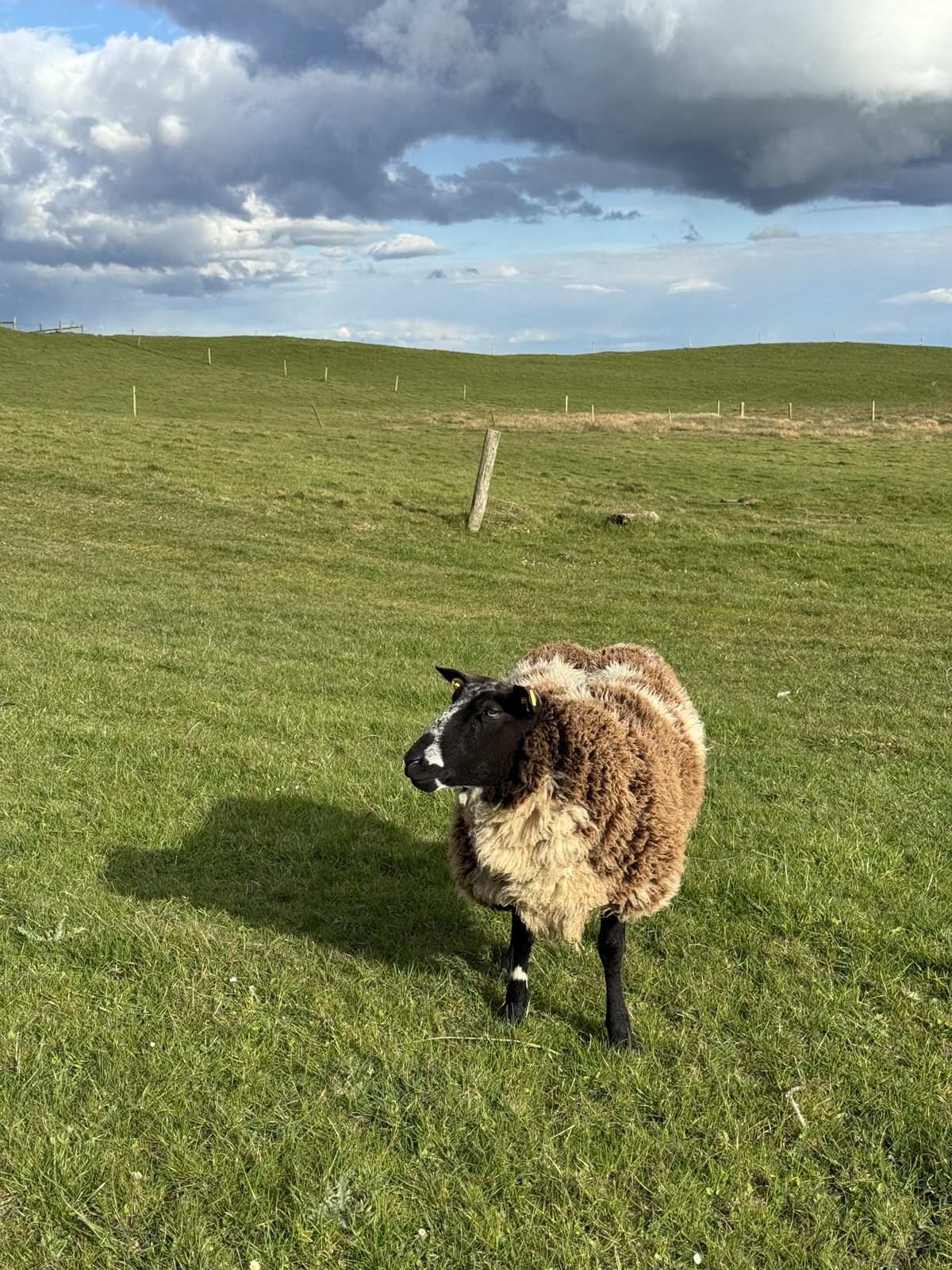
Stocky brown-and-white sheep with a black face standing alone on bright green pasture above the Cliffs of Moher

Sheep, Cliffs of Moher

Domestic Sheep (Ovis aries) Black-faced and shaggy-coated, this is likely a Scottish Blackface cross — the breed that has grazed Ireland’s Atlantic cliffs for centuries, bred to handle wet, windy hillsides where other livestock won’t thrive. Scottish Blackface and their crosses are the most common sheep along the west coast of Ireland, grazing year-round on the exposed karst and cliff-top pastures of County Clare. Wikipedia | iNaturalist

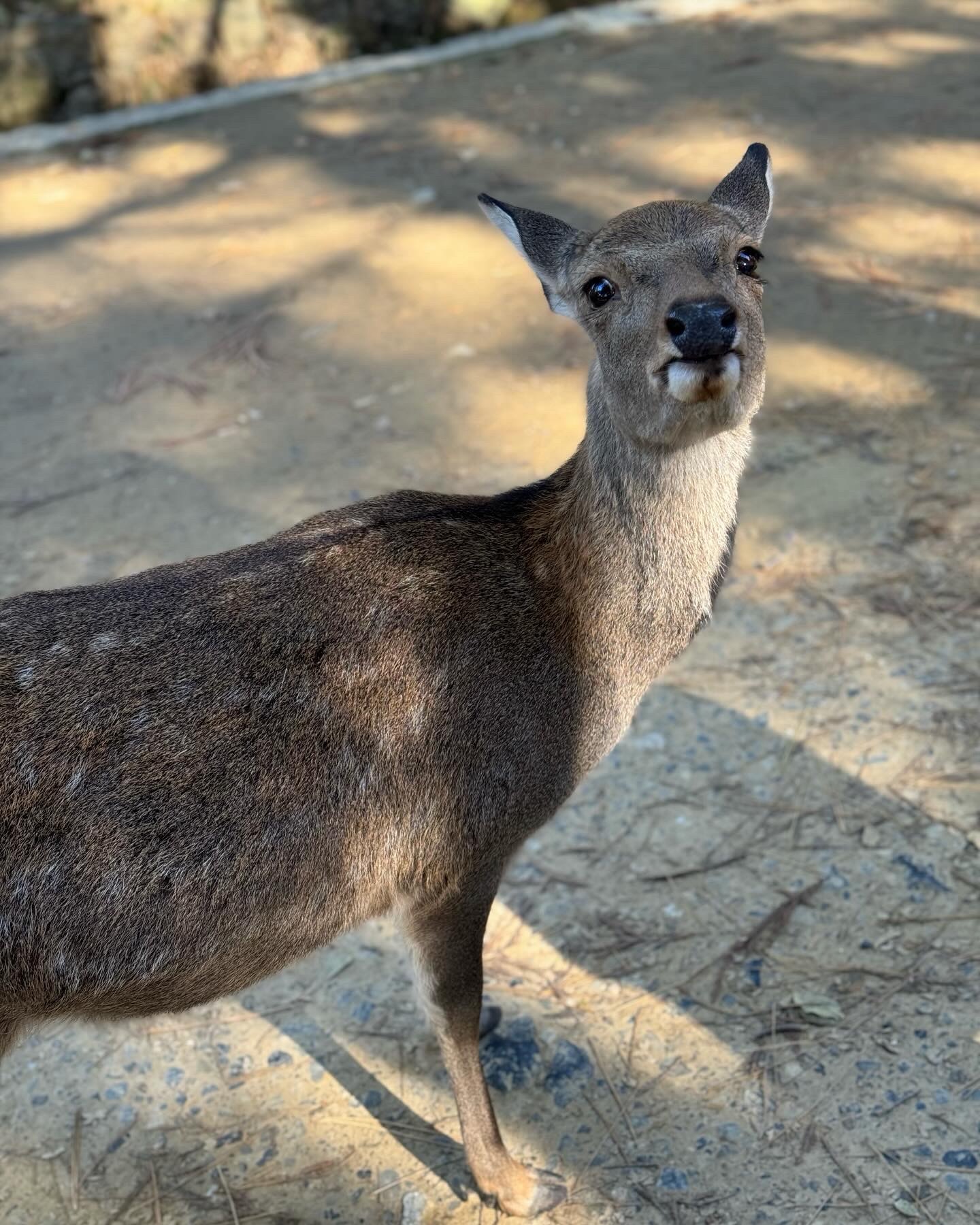
A female sika deer stares straight into the camera on a sun-dappled path in Nara Park, Japan.

Sika Deer, Nara

Sika Deer (Cervus nippon) A medium-sized deer native to East Asia, named for the Japanese word for deer — and one of the few deer species that keeps its spots into adulthood. Over 1,000 sika deer roam freely through Nara Park year-round, protected since 1957 as national natural treasures; they famously bow to tourists in exchange for shika senbei crackers. Wikipedia | iNaturalist

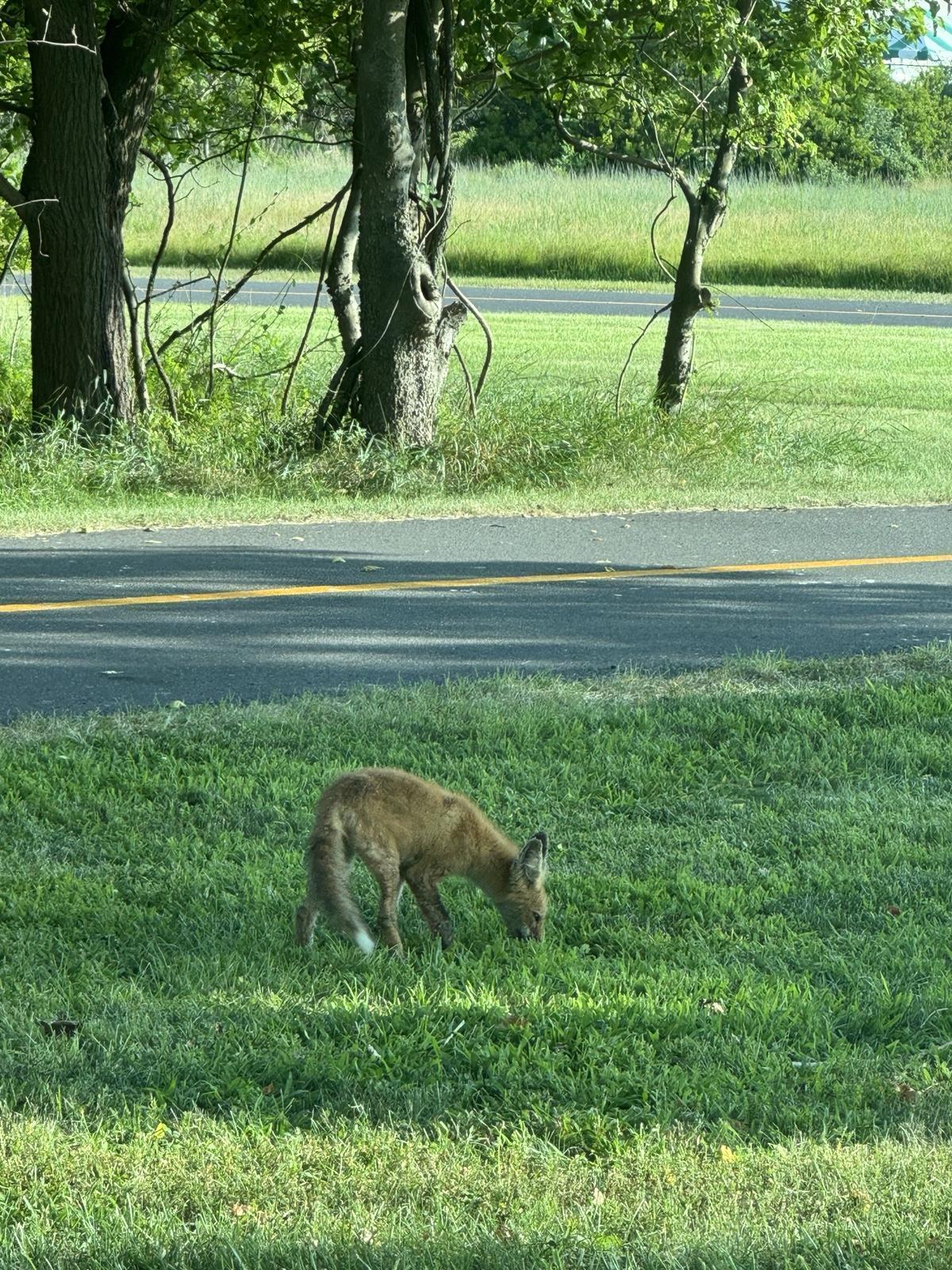
Juvenile red fox nosing through roadside grass on Sandy Hook

Small Fox on Sandy Hook

Red Fox (Vulpes vulpes) This juvenile, likely from a spring litter, is out foraging on its own in midsummer — tawny coat not yet turned fully red. Red foxes are year-round residents of Sandy Hook and common throughout the Gateway National Recreation Area. Wikipedia | iNaturalist

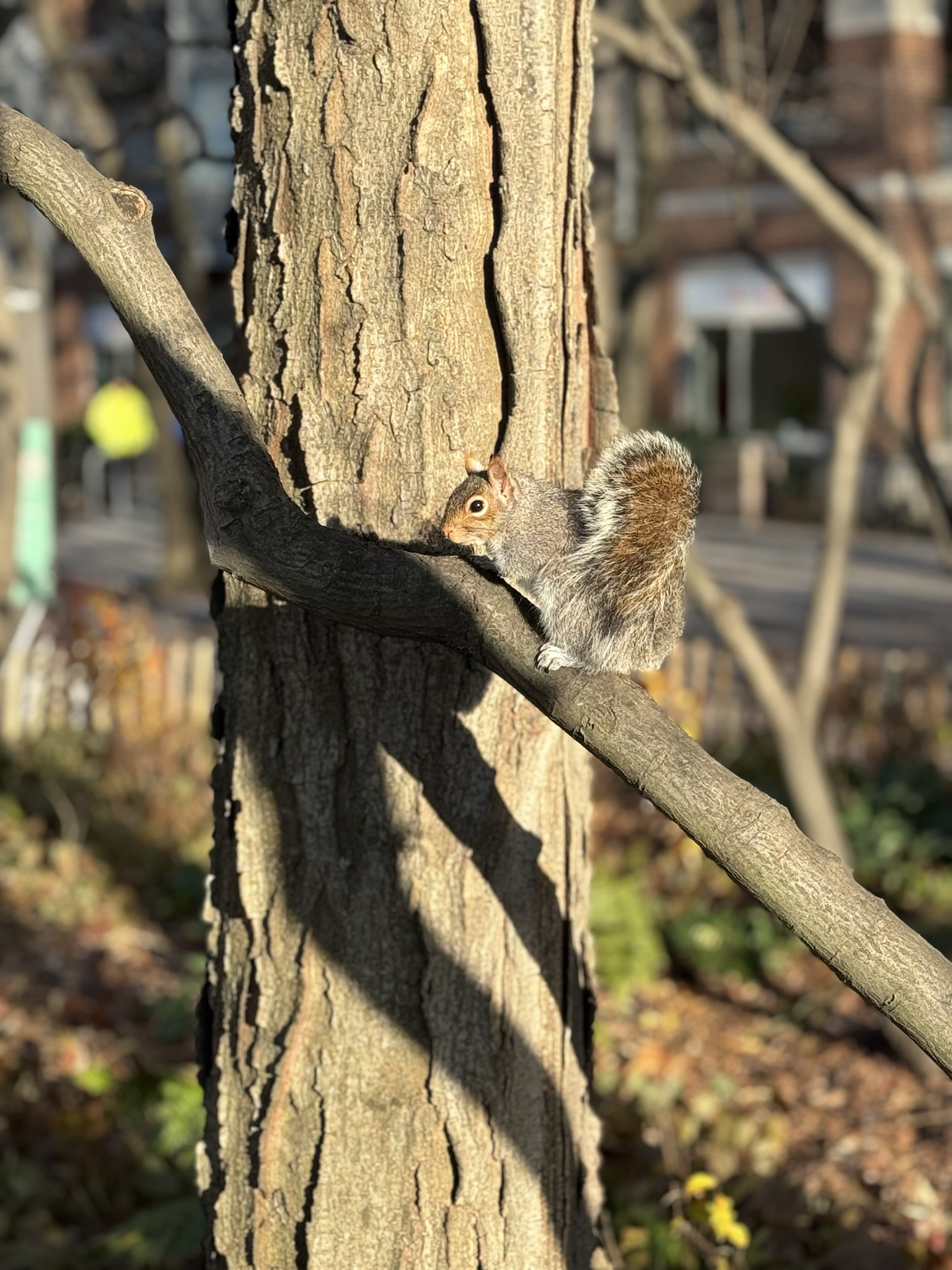
An eastern gray squirrel perches on a bare branch against a thick tree trunk in a New York City park.

Squirrel, New York City

Eastern Gray Squirrel (Sciurus carolinensis) One of the most adaptable urban mammals in North America, thriving in city parks where it caches thousands of nuts each autumn — and forgets enough of them to plant trees. Ubiquitous year-round in New York City parks, sidewalks, and backyards; the city’s population is estimated in the tens of thousands. Wikipedia | iNaturalist

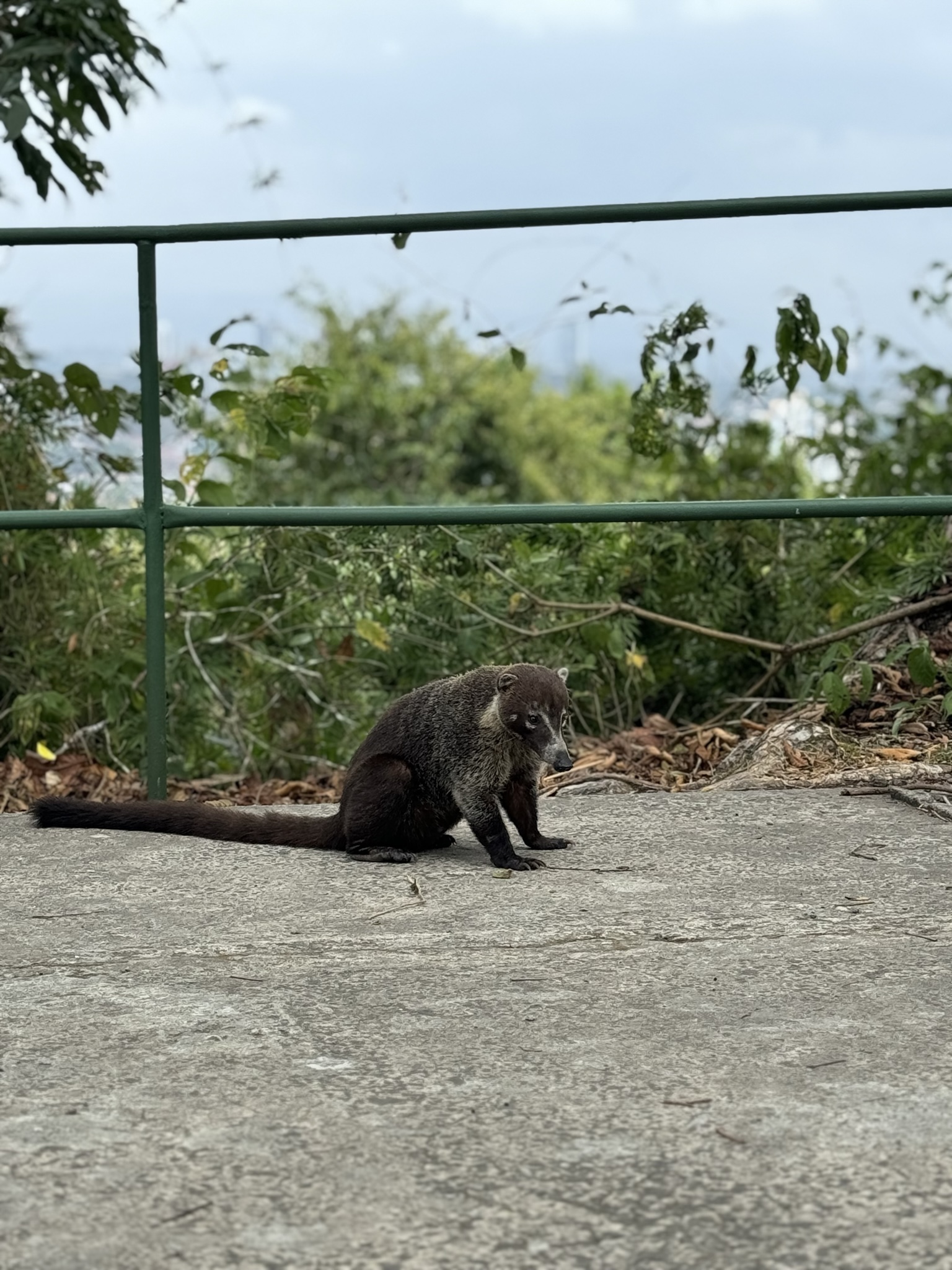
A white-nosed coati lounges on a concrete overlook with its long ringed tail stretched out behind it.

White-nosed Coati, Panama City

White-nosed Coati (Nasua narica) A raccoon relative with a long, flexible snout it uses to root through leaf litter for invertebrates and fruit — and a banded tail nearly as long as its body. Common year-round across Panama, especially around parks, forest edges, and urban green spaces where they scavenge boldly from visitors. Wikipedia | iNaturalist

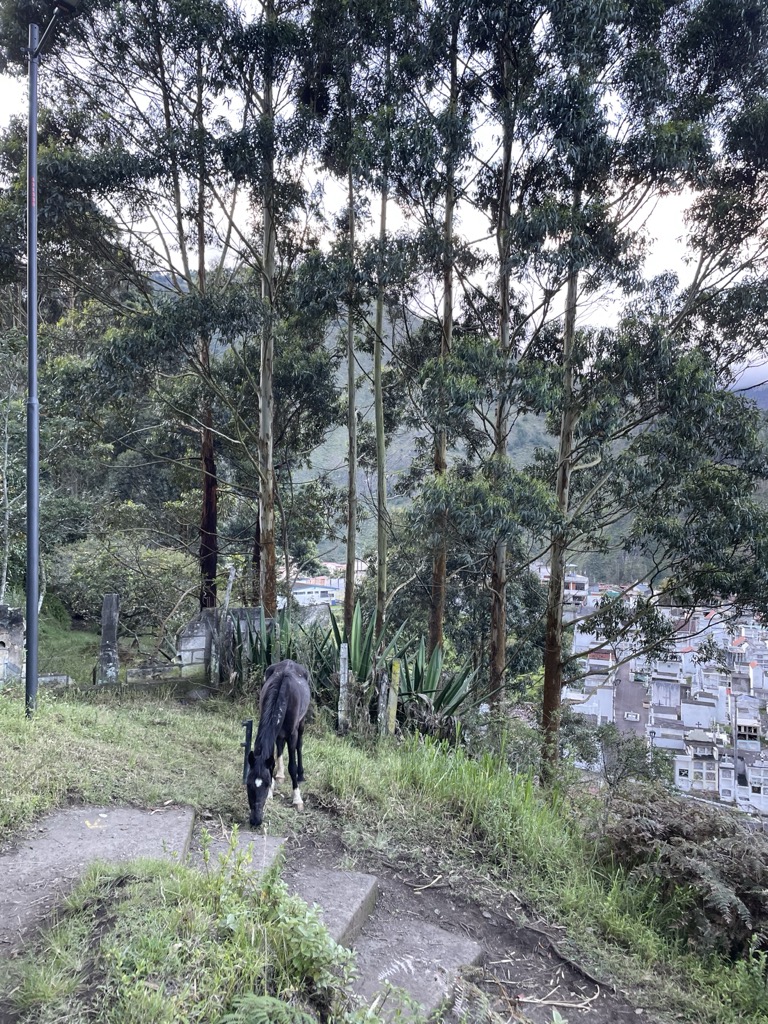
A dark feral horse grazes on a misty hillside among eucalyptus trees overlooking Baños de Agua Santa, Ecuador

Wild Horse, Baños de Agua Santa

Feral Horse (Equus caballus) Descendants of horses brought by Spanish colonists, feral horses roam freely through Ecuador’s highlands, grazing unfenced hillsides and wandering among towns with little human interference. Feral and semi-feral horses are a common sight around Baños de Agua Santa year-round, navigating the steep Andean terrain with sure-footed ease. Wikipedia | iNaturalist

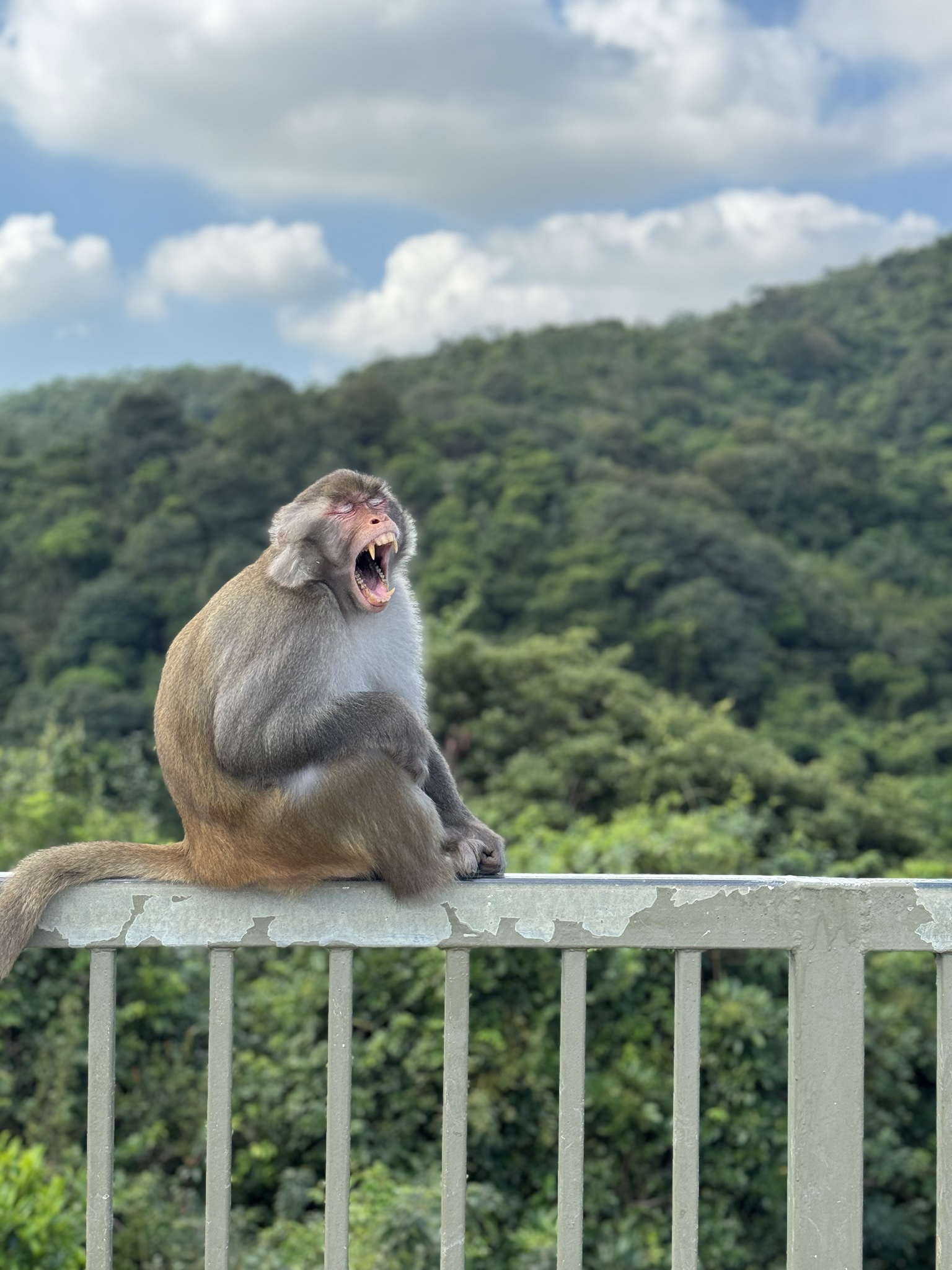
A rhesus macaque yawns wide on a bridge railing, flashing its canines against the green hills of Hong Kong.

Yawning Monkey

Rhesus Macaque (Macaca mulatta) Bold, adaptable, and not shy about showing teeth — yawning is a common stress-relief or dominance signal, but those canines say “keep your distance” all on their own. Abundant year-round in Hong Kong’s country parks, especially the Kam Shan and Shing Mun areas, where troops have thrived since a 1910s introduction. Wikipedia | iNaturalist