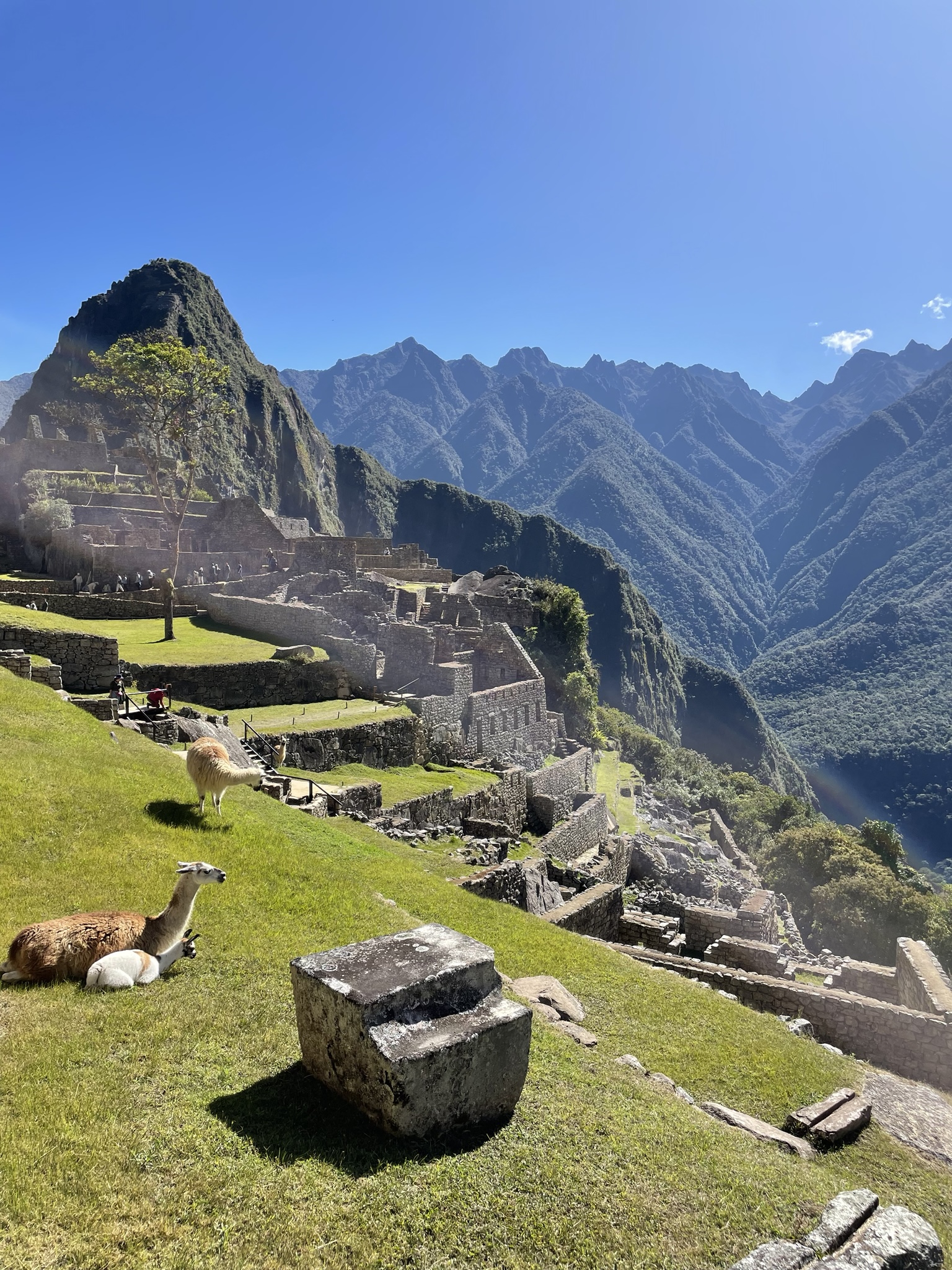
Llamas lounging on the ancient terraces of Machu Picchu with Huayna Picchu towering behind them

Llamas at Machu Picchu

Llama (Lama glama) Domesticated from wild guanacos thousands of years ago, llamas were the Inca Empire’s primary pack animal — and a small herd still roams Machu Picchu’s terraces today, keeping the grass trimmed the old-fashioned way. A resident population lives year-round at the citadel, maintained by Peru’s Ministry of Culture as both a conservation nod and a living link to the site’s history. Wikipedia | iNaturalist

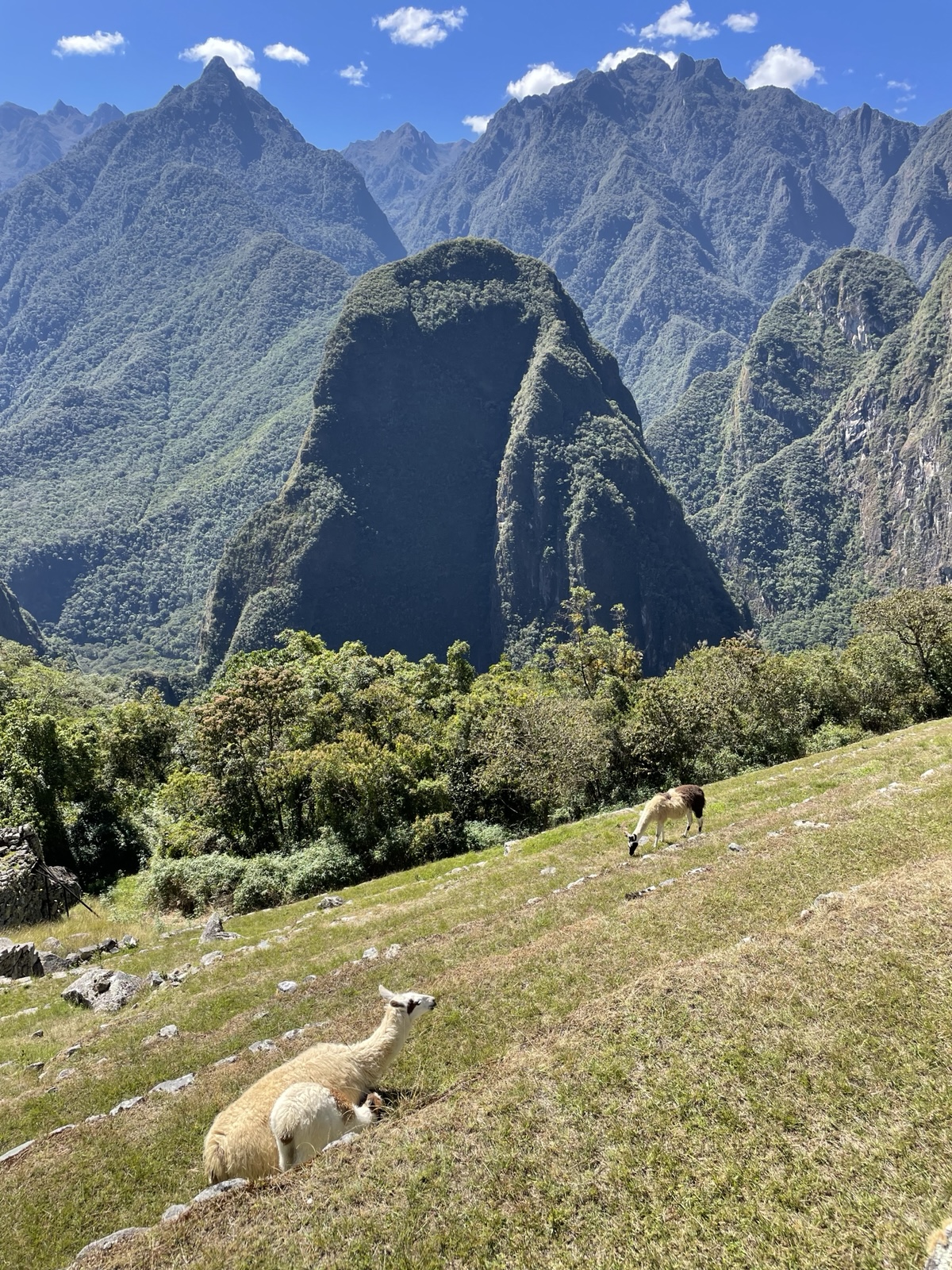
Two llamas graze on a green terrace at Machu Picchu with the jagged peak of Huayna Picchu towering behind them.

Llamas Deep in the Andes

Llama (Lama glama) Domesticated over 4,000 years ago in the Peruvian highlands, the llama is South America’s largest camelid and served as the primary pack animal of the Inca Empire. A small herd is kept year-round on the terraces of Machu Picchu, where they double as living lawnmowers that trim the grass without damaging the ancient stonework. Wikipedia | iNaturalist

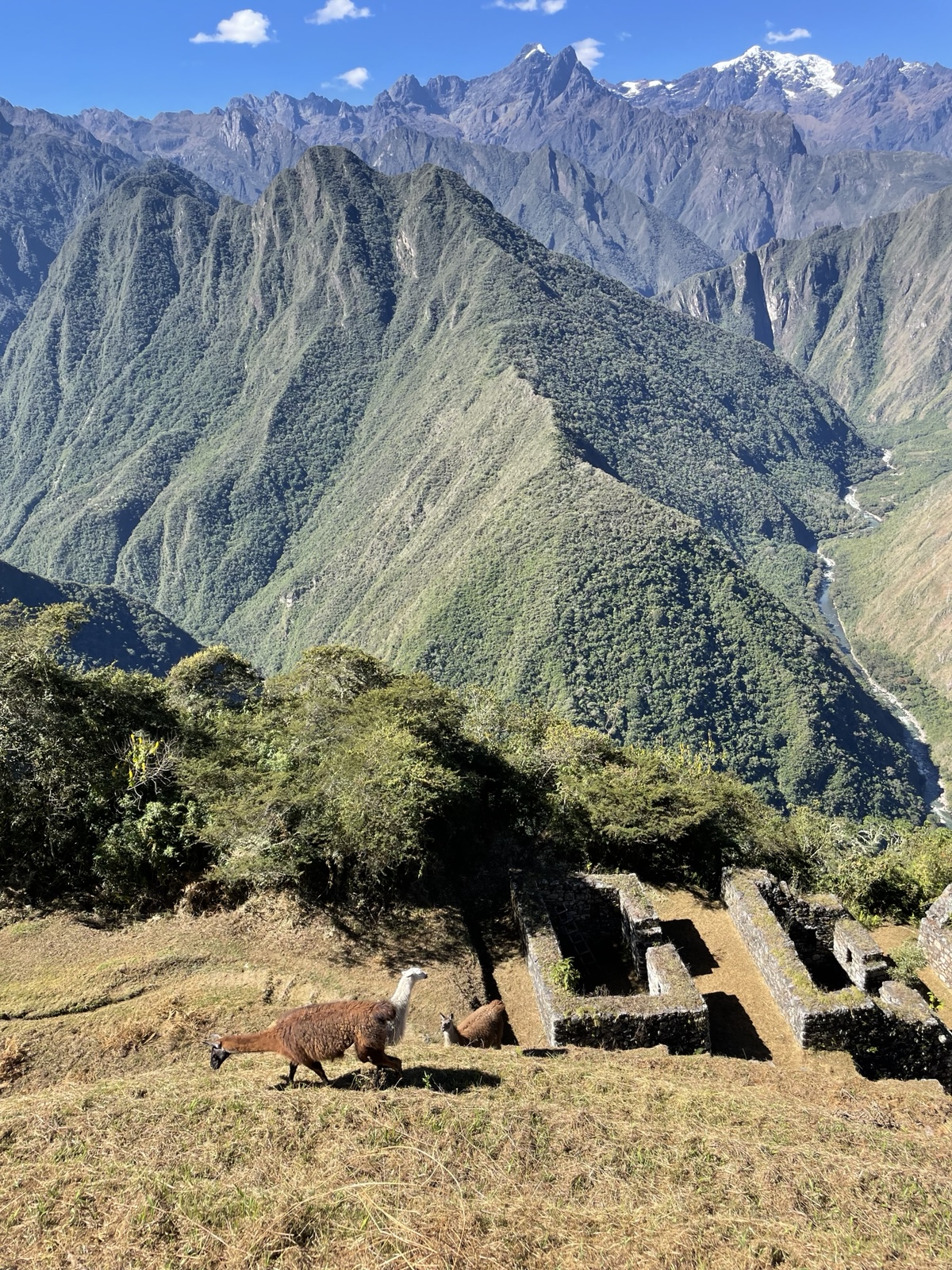
A llama grazes beside Inca stone ruins high above a steep green valley with snow-capped Andean peaks behind

More Llamas in the Andes

Llama (Lama glama) South America’s original beast of burden, domesticated from wild guanacos over 5,000 years ago — llamas carried supplies across the Inca road network and still wander freely among the ruins today. Llamas are found throughout the Andean highlands of Peru, Bolivia, and beyond, thriving year-round at elevations above 3,000 metres. Wikipedia | iNaturalist