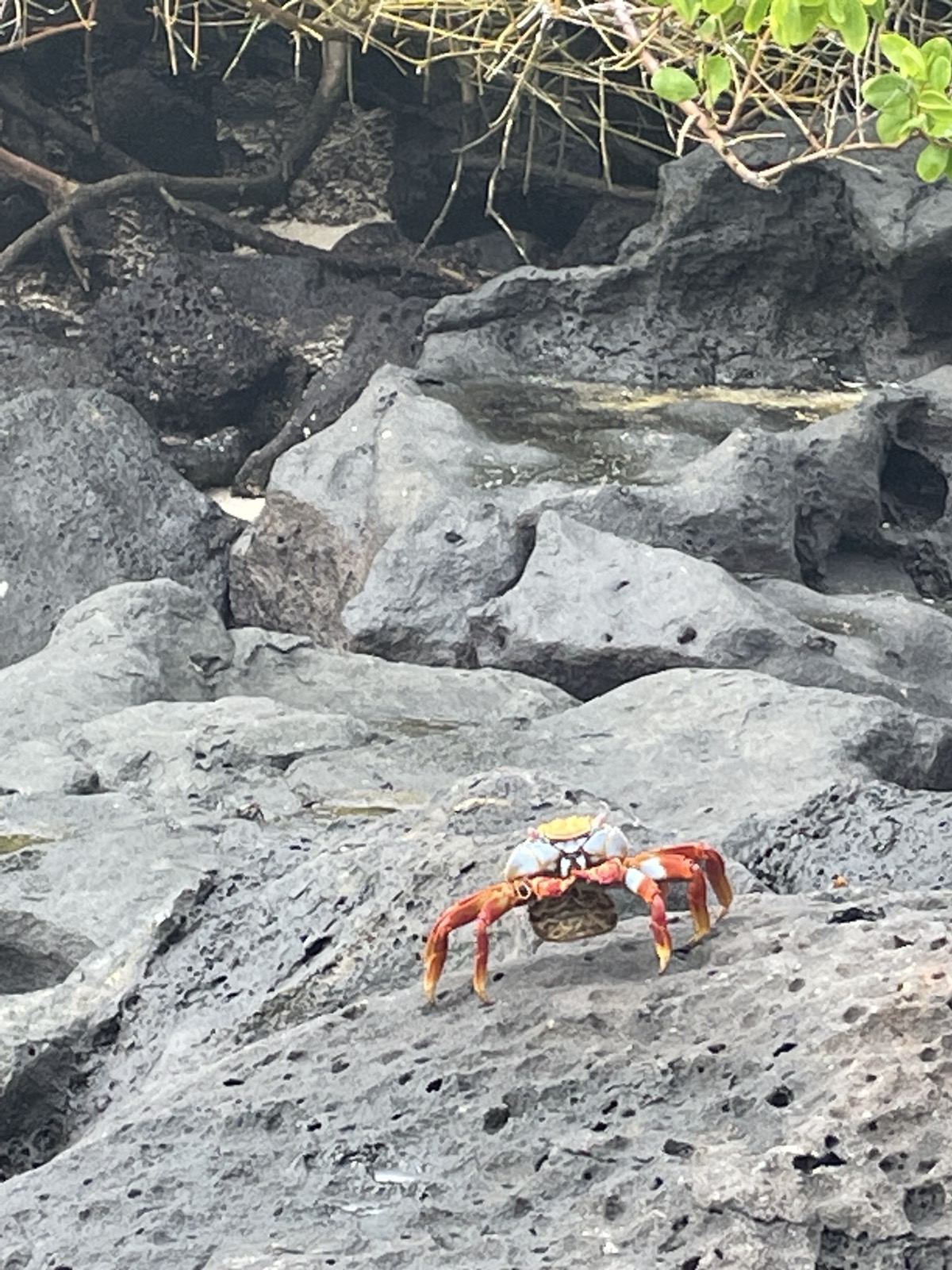
Adult Sally Lightfoot Crab in fiery red-orange stands its ground on black volcanic lava rock

Angry Crab

Sally Lightfoot Crab (Grapsus grapsus) One of the most vibrantly colored crabs in the world, juveniles start jet-black to camouflage against lava rock, then turn blazing red-orange as adults. Abundant year-round across the Galápagos shoreline, found on virtually every rocky coast in the archipelago. Wikipedia | iNaturalist
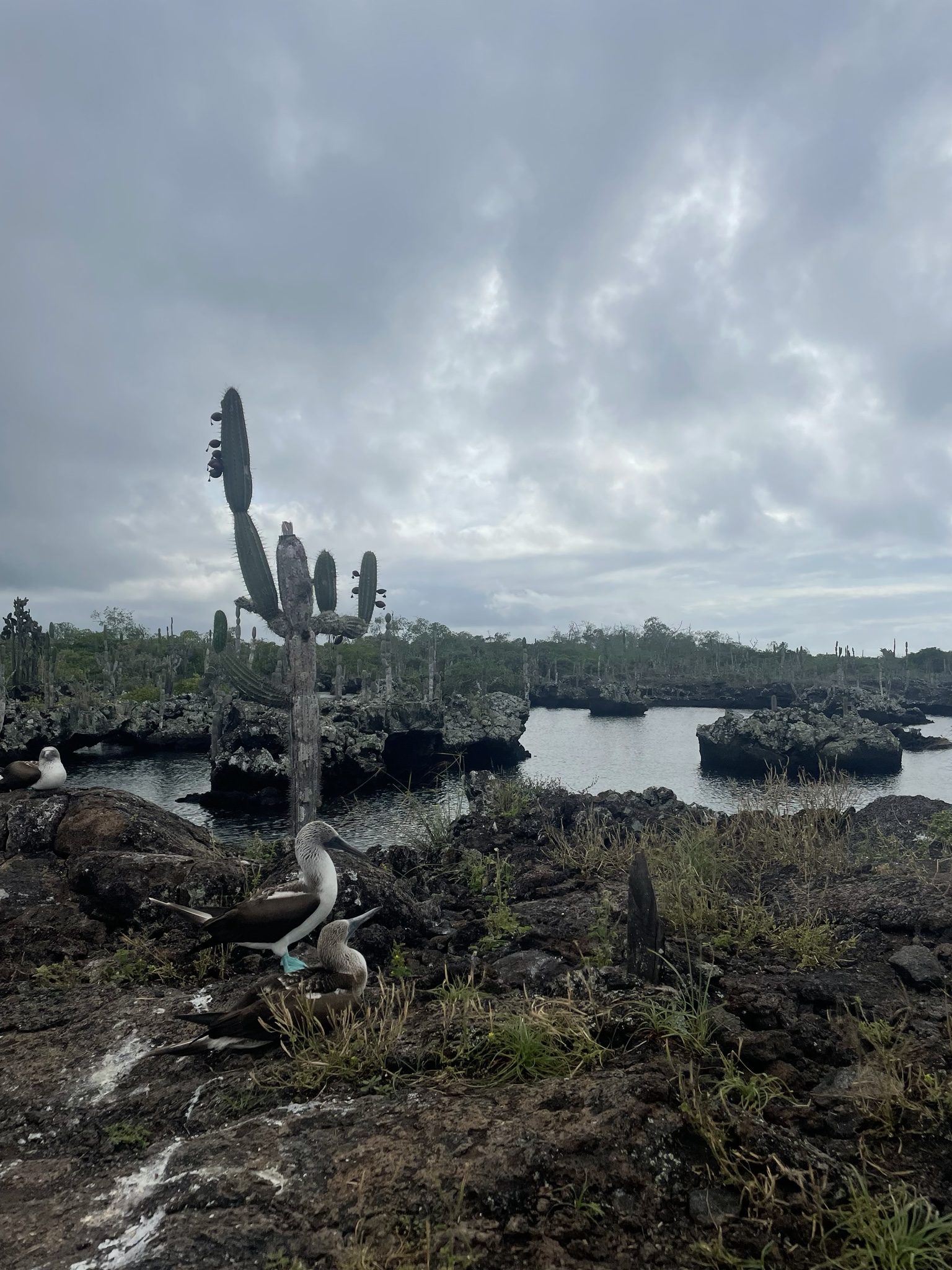
Pair of blue-footed boobies resting on dark volcanic rock at Los Túneles, lava channels and giant cacti behind them under overcast skies

Blue-Footed Booby, Los Túneles

Blue-Footed Booby (Sula nebouxii) Famous for their vivid turquoise feet — the brighter the blue, the healthier the bird, and mates choose accordingly. A year-round breeding resident of Isabela Island; Los Túneles is one of the best spots to see them nesting right on the lava. Wikipedia | iNaturalist | eBird

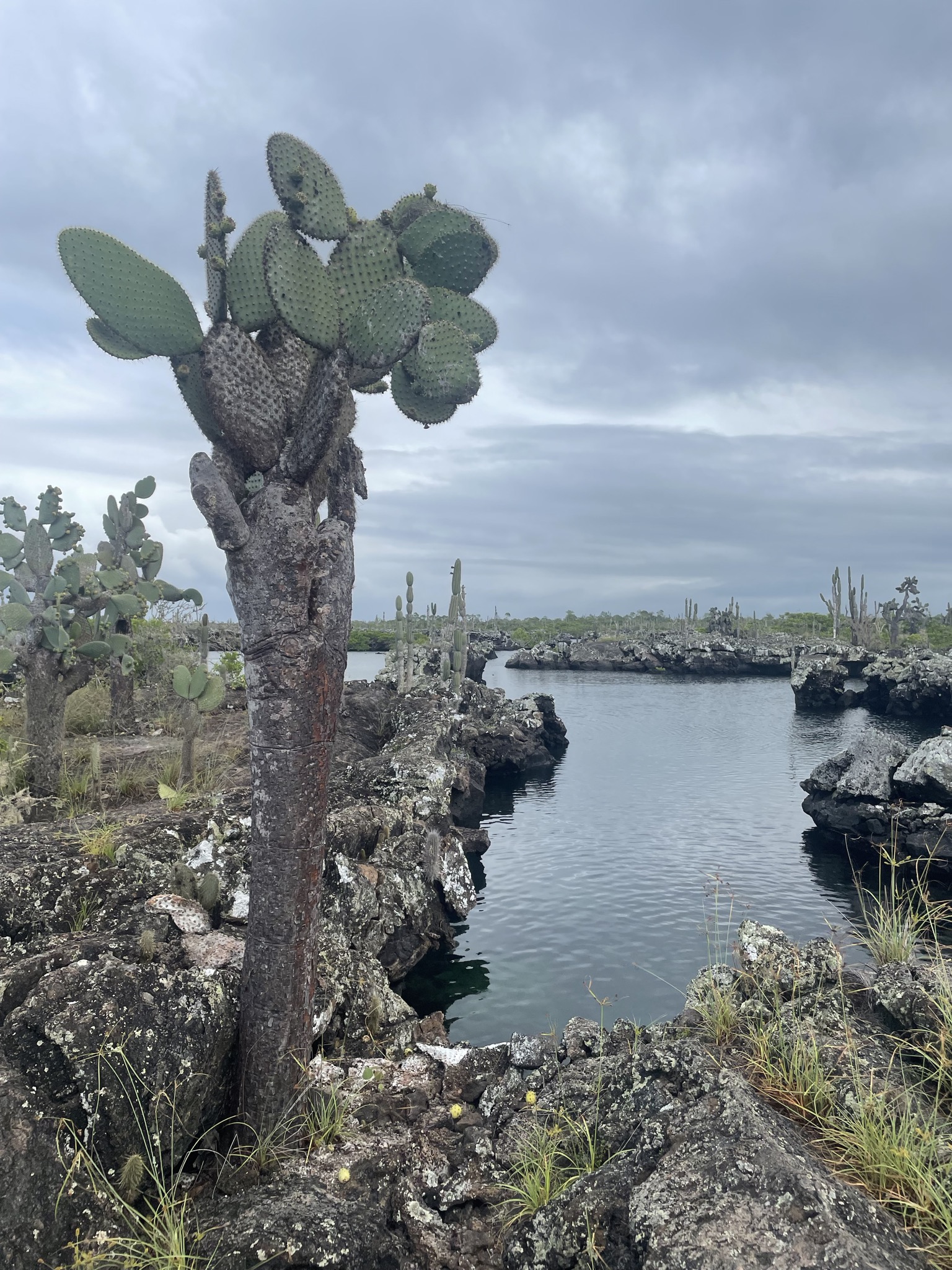
Tall Galápagos prickly pear cactus with a thick woody trunk rising from black lava rock beside a tidal lagoon, more cacti dotting the volcanic landscape under overcast skies

Galápagos Prickly Pear

Galápagos Prickly Pear (Opuntia echios) The largest prickly pear in the world, growing tree-sized trunks up to 12 metres tall — an evolutionary arms race with giant tortoises and land iguanas that graze on the lower pads. Endemic to the Galápagos and found across most of the archipelago; its fruit and pads are a critical food source for tortoises, iguanas, finches, and mockingbirds alike. Wikipedia | iNaturalist