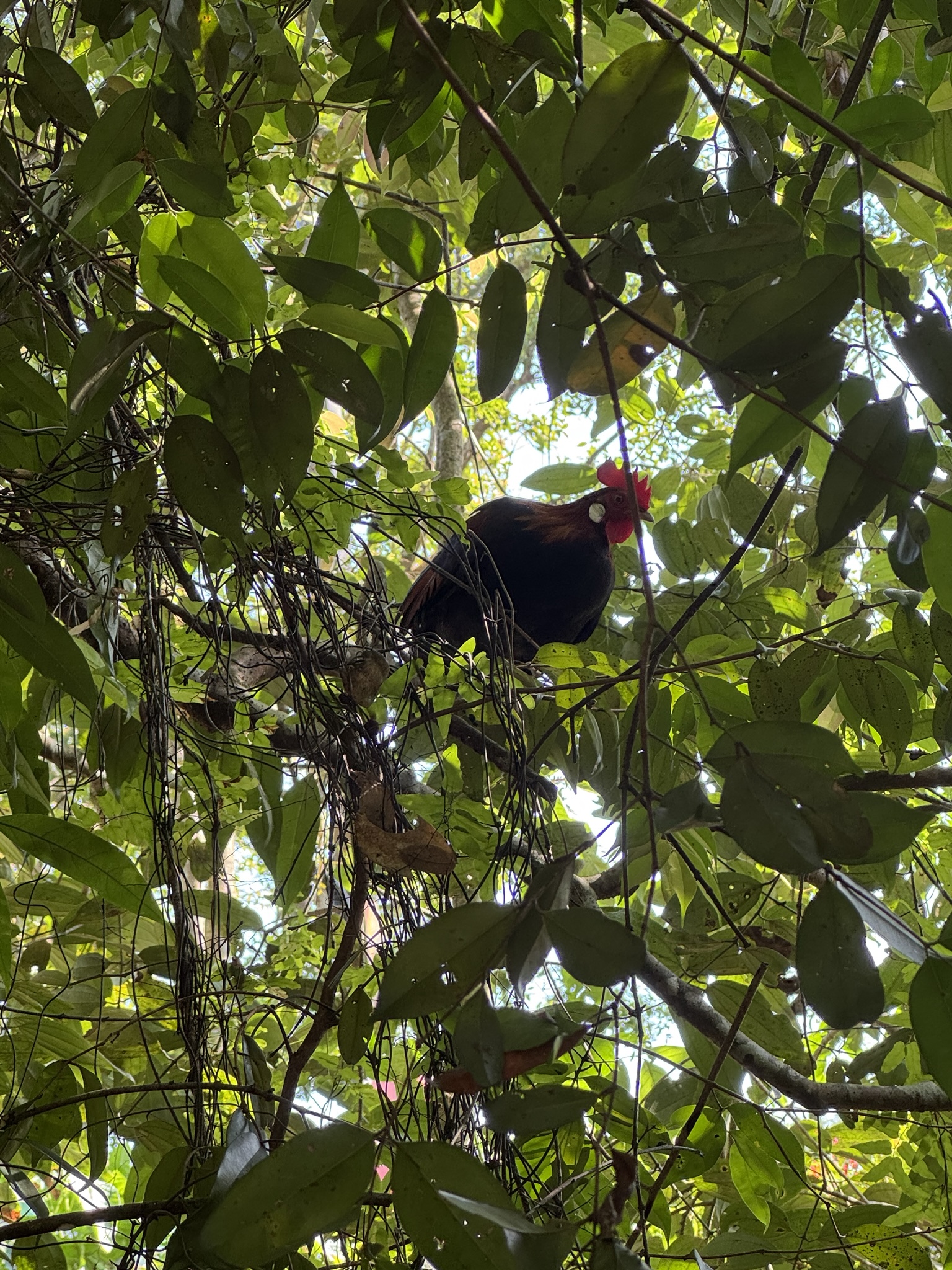
Feral rooster perched high in a tropical tree, red comb poking through dense green canopy

Chicken in a tree

Red Junglefowl / Feral Chicken (Gallus gallus) Domestic chickens descend from the Red Junglefowl, and feral populations worldwide revert to ancestral habits like roosting in trees — exactly what this rooster is doing. Free-ranging and feral chickens are a common sight across the tropics, thriving anywhere warm weather and scattered food let them nest and roost in the open. Modeled range · iNaturalist · CC BY 4.0 Wikipedia | iNaturalist | Range map
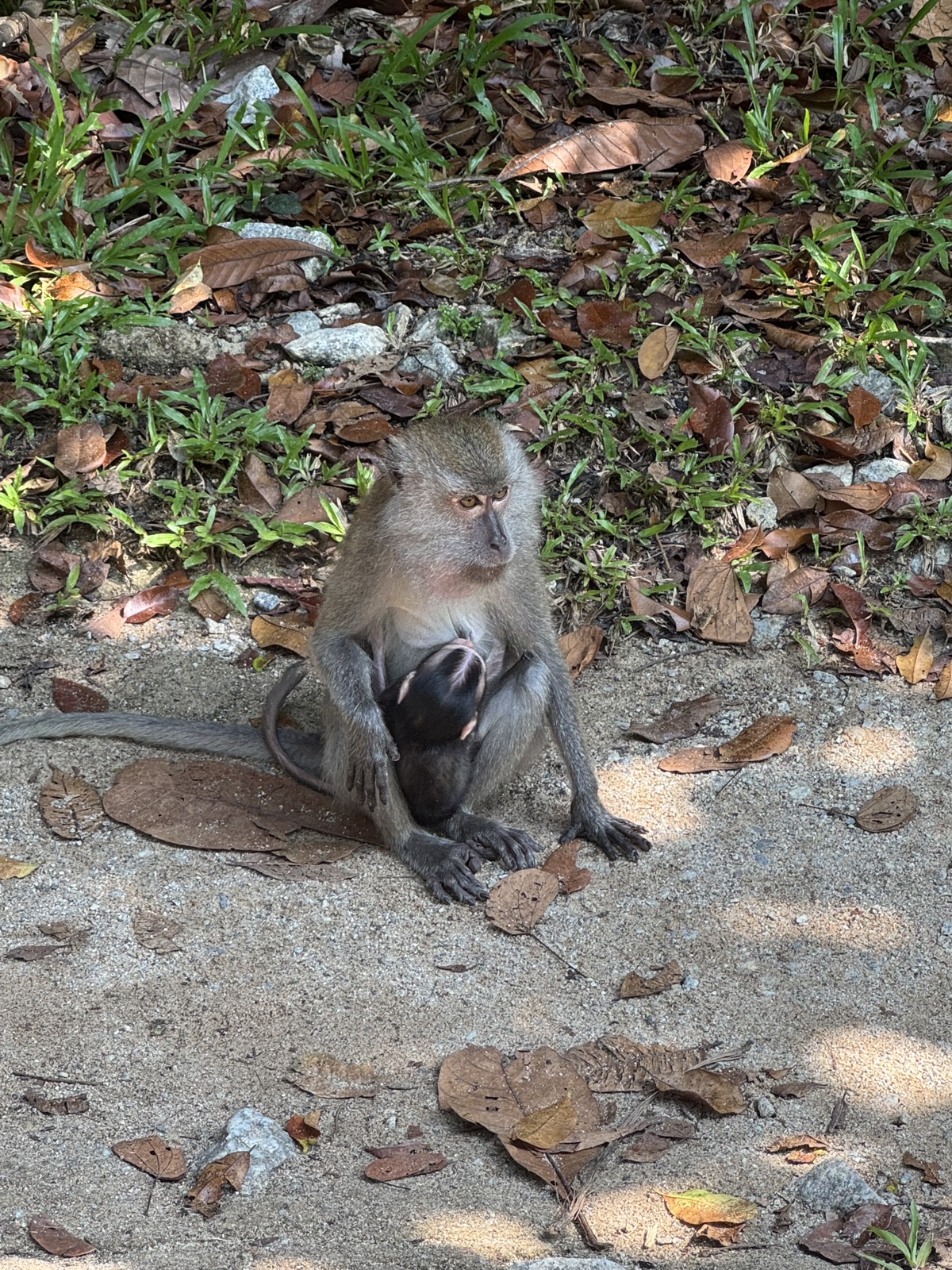
A long-tailed macaque mother sits on a forest path nursing her clinging infant

Mother monkey nursing her baby

📍 Singapore Long-tailed Macaque (Macaca fascicularis) Also called the crab-eating macaque, this adaptable primate thrives in forests, mangroves, and urban edges across Southeast Asia. One of Singapore’s most commonly encountered wild mammals, long-tailed macaques are resident year-round and especially visible along nature trails like MacRitchie Reservoir and Bukit Timah. Modeled range · iNaturalist · CC BY 4.0 Wikipedia | iNaturalist | Range map
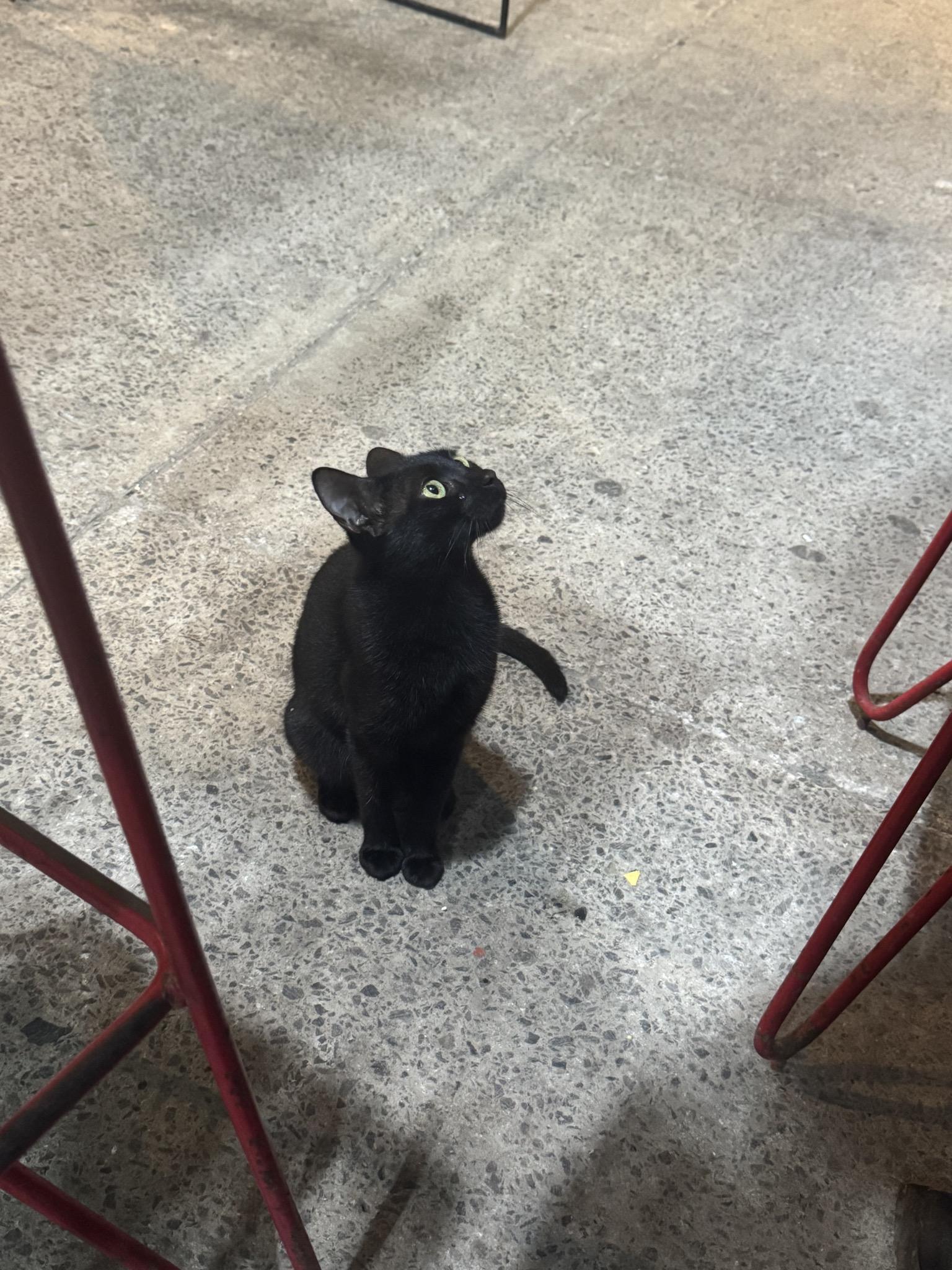
Black cat sitting on polished concrete, looking up with bright green eyes between red café chairs

Black cat, Jersey City

📍 Jersey City Domestic Cat (Felis catus) A solid black coat comes from a recessive variant of the agouti gene (ASIP) that switches off the tabby banding on each hair, leaving the fur uniformly dark. Free-roaming and feral cats are year-round residents throughout Jersey City, often found near restaurants and waterfronts. Modeled range · iNaturalist · CC BY 4.0 Wikipedia | iNaturalist | Range map
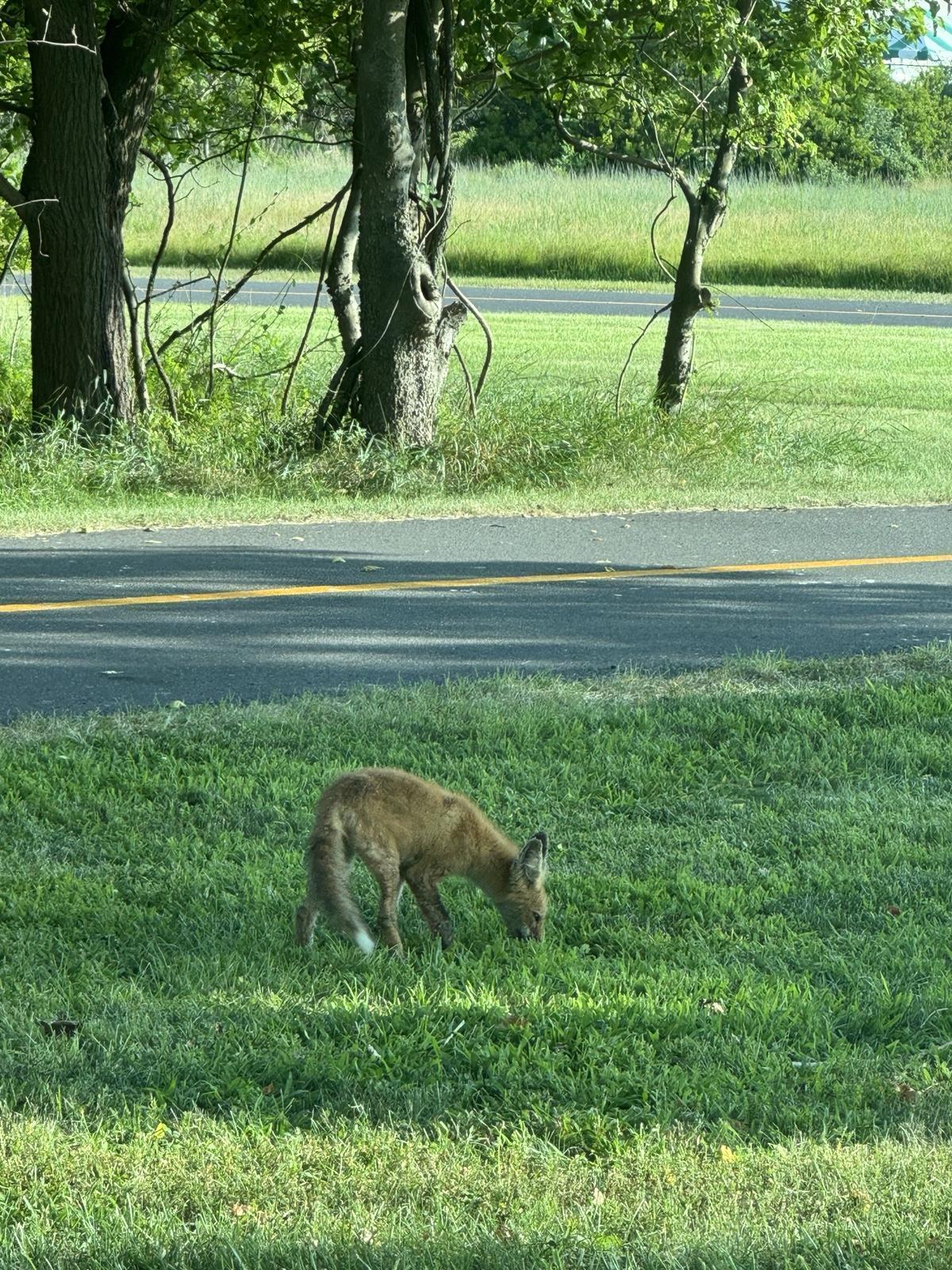
Juvenile red fox nosing through roadside grass on Sandy Hook

Small fox on Sandy Hook

📍 Sandy Hook Red Fox (Vulpes vulpes) This juvenile, likely from a spring litter, is out foraging on its own in midsummer — tawny coat not yet turned fully red. Red foxes are year-round residents of Sandy Hook and common throughout the Gateway National Recreation Area. Modeled range · iNaturalist · CC BY 4.0 Wikipedia | iNaturalist | Range map
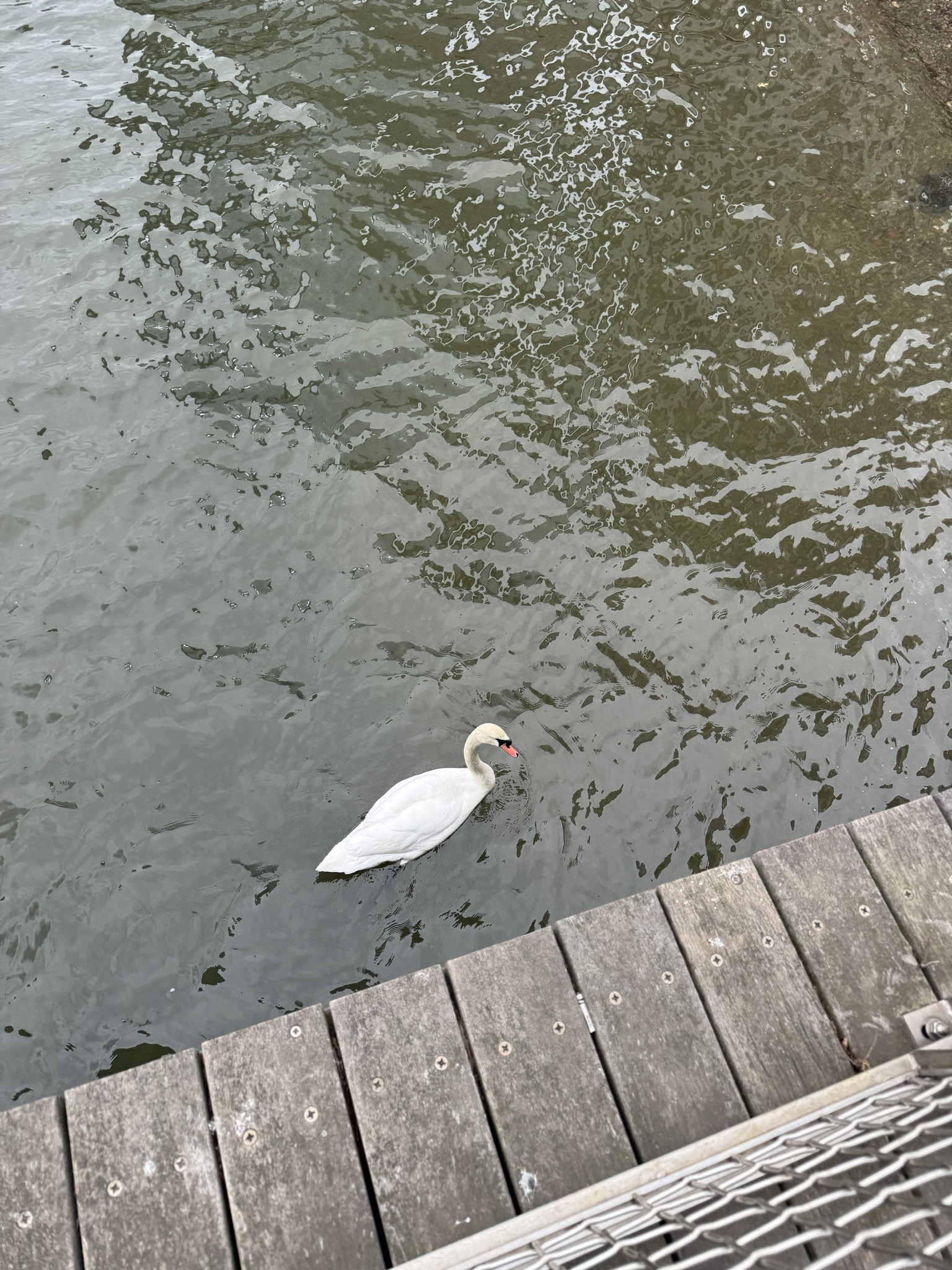
A massive white Mute Swan gliding alongside a wooden dock on the Hudson River

Mute swan on the river

📍 Hudson River, New York City Mute Swan (Cygnus olor) One of the heaviest waterfowl in North America — a Eurasian species identified by its all-white plumage, long S-curved neck, and orange bill with a distinctive black knob at the base. Mute swans are year-round residents along the Hudson River and throughout New York City’s waterways, introduced from Europe in the 19th century and now firmly established. Modeled range · iNaturalist · CC BY 4.0 Wikipedia | iNaturalist | Range map | eBird
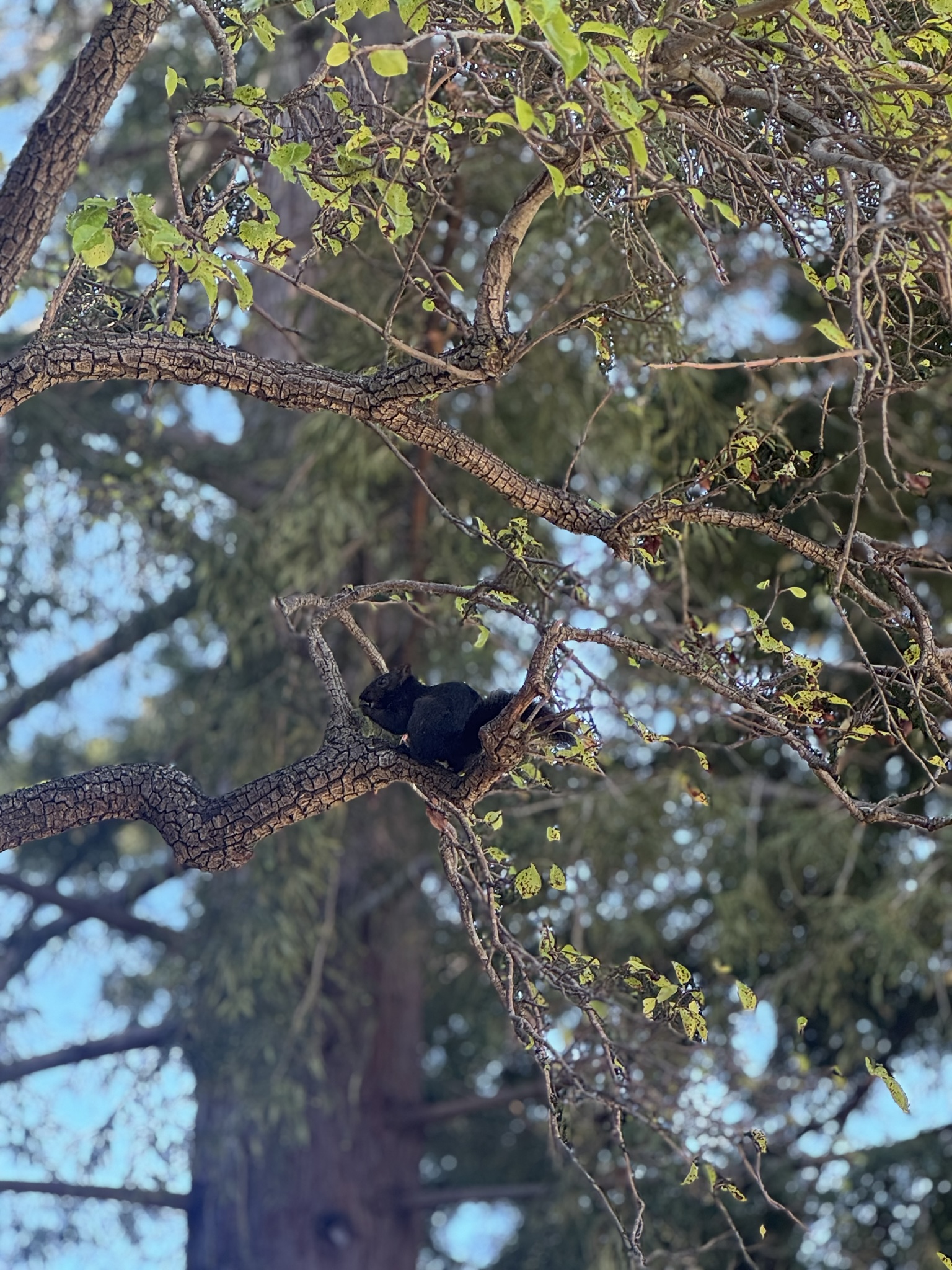
A fully melanistic black squirrel perched on a bare branch high in a large tree against a blue sky

Black squirrel in a tree

📍 San Mateo Eastern Fox Squirrel (Sciurus niger) North America’s largest tree squirrel, it spends more time foraging on the ground than most tree squirrels and scatter-hoards nuts across dozens of small caches to get through winter. Melanistic individuals are usually rare, but in parts of San Mateo they are so common that an all-black coat is practically the local norm rather than the exception. Modeled range · iNaturalist · CC BY 4.0 Wikipedia | iNaturalist | Range map
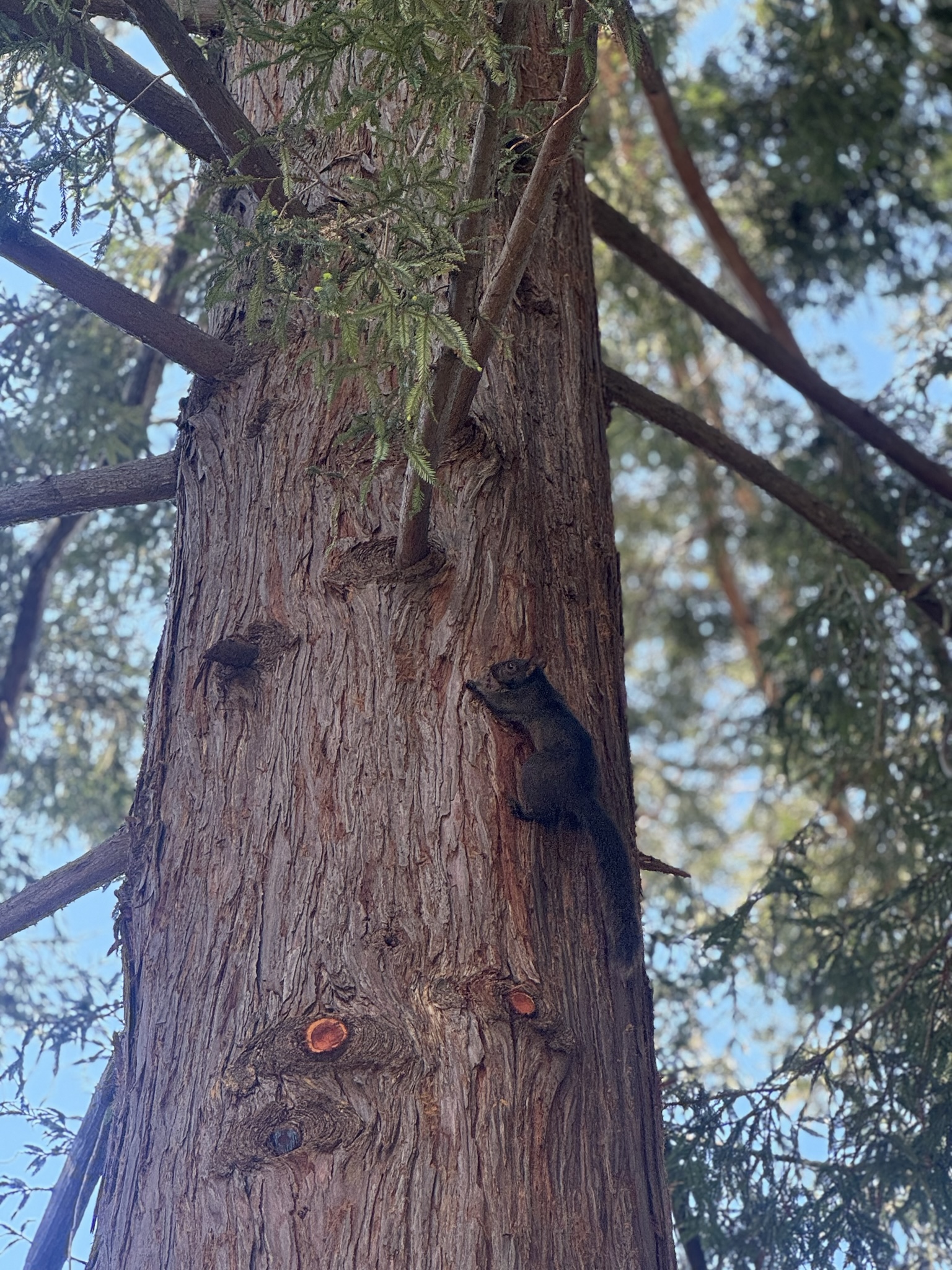
A solidly black Eastern Fox Squirrel clinging to the reddish fibrous trunk of a tall coastal redwood, photographed from below against a blue sky.

Black squirrel hugging a redwood tree

📍 San Mateo Eastern Fox Squirrel (Sciurus niger) The all-black coat comes from a recessive melanistic variant that switches off the usual rusty-orange pigment, leaving individuals uniformly dark from nose to tail. Fox squirrels are not native to California — they spread across the Bay Area after introductions in the early 20th century and now outnumber the native Western Gray Squirrel across much of San Mateo’s parks and neighborhoods. Modeled range · iNaturalist · CC BY 4.0 Wikipedia | iNaturalist | Range map