Two llamas graze on a green terrace at Machu Picchu with the jagged peak of Huayna Picchu towering behind them.

Llamas Deep in the Andes

Llama (Lama glama) Domesticated over 4,000 years ago in the Peruvian highlands, the llama is South America’s largest camelid and served as the primary pack animal of the Inca Empire. A small herd is kept year-round on the terraces of Machu Picchu, where they double as living lawnmowers that trim the grass without damaging the ancient stonework. Wikipedia | iNaturalist

A llama grazes beside Inca stone ruins high above a steep green valley with snow-capped Andean peaks behind

More Llamas in the Andes

Llama (Lama glama) South America’s original beast of burden, domesticated from wild guanacos over 5,000 years ago — llamas carried supplies across the Inca road network and still wander freely among the ruins today. Llamas are found throughout the Andean highlands of Peru, Bolivia, and beyond, thriving year-round at elevations above 3,000 metres. Wikipedia | iNaturalist

A long-tailed macaque mother sits on a forest path nursing her clinging infant

Mother monkey nursing her baby

📍 Singapore Long-tailed Macaque (Macaca fascicularis) Also called the crab-eating macaque, this adaptable primate thrives in forests, mangroves, and urban edges across Southeast Asia. One of Singapore’s most commonly encountered wild mammals, long-tailed macaques are resident year-round and especially visible along nature trails like MacRitchie Reservoir and Bukit Timah. Wikipedia | iNaturalist

A massive white Mute Swan gliding alongside a wooden dock on the Hudson River

Mute Swan on the River

Mute Swan (Cygnus olor) North America’s largest waterfowl — easily mistaken for an enormous goose — identified by its all-white plumage, long S-curved neck, and the orange bill with a distinctive black knob at the base. Mute Swans are year-round residents along the Hudson River and throughout NYC waterways, introduced from Europe in the 19th century and now firmly established. Wikipedia | iNaturalist | eBird

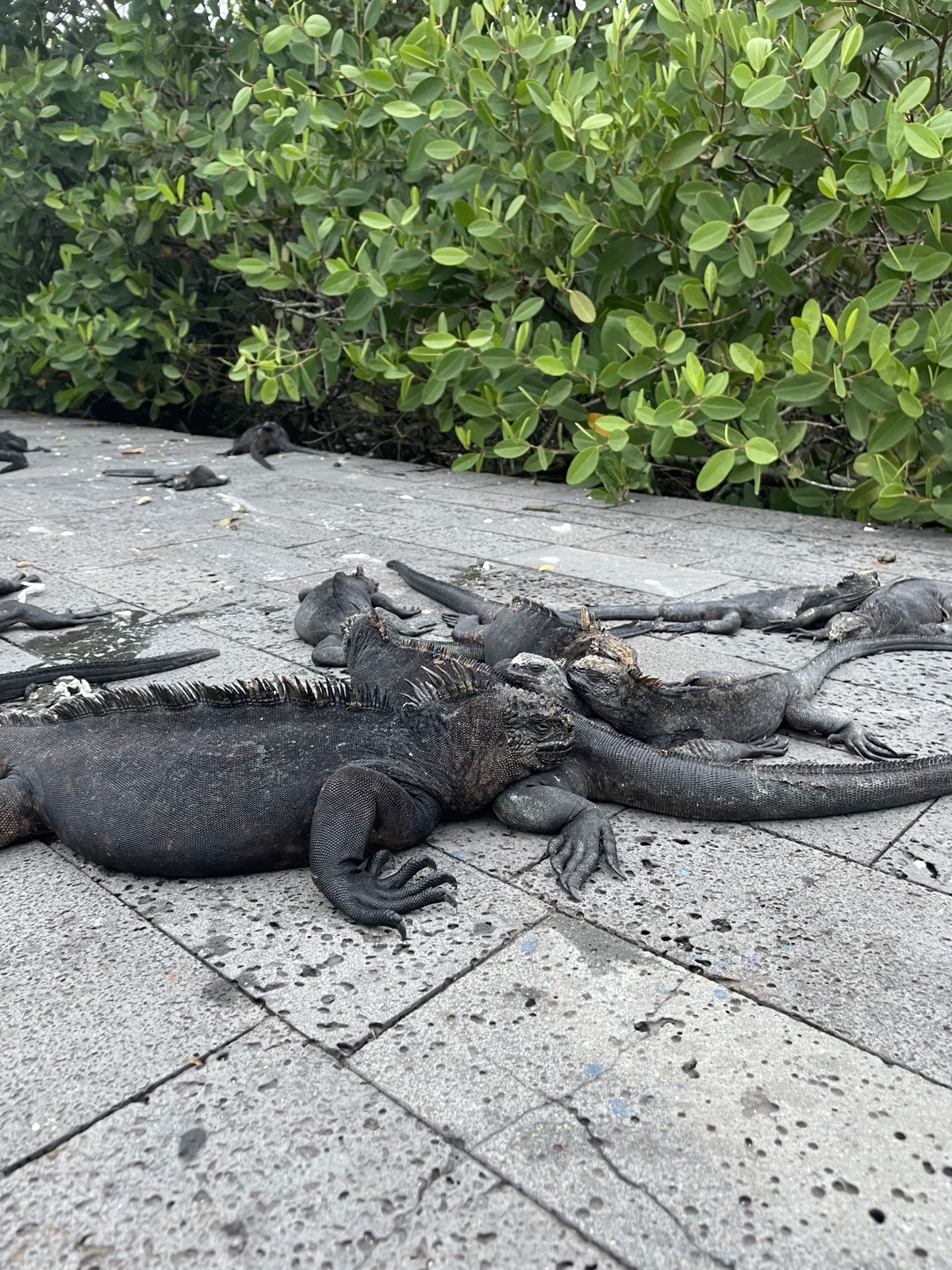
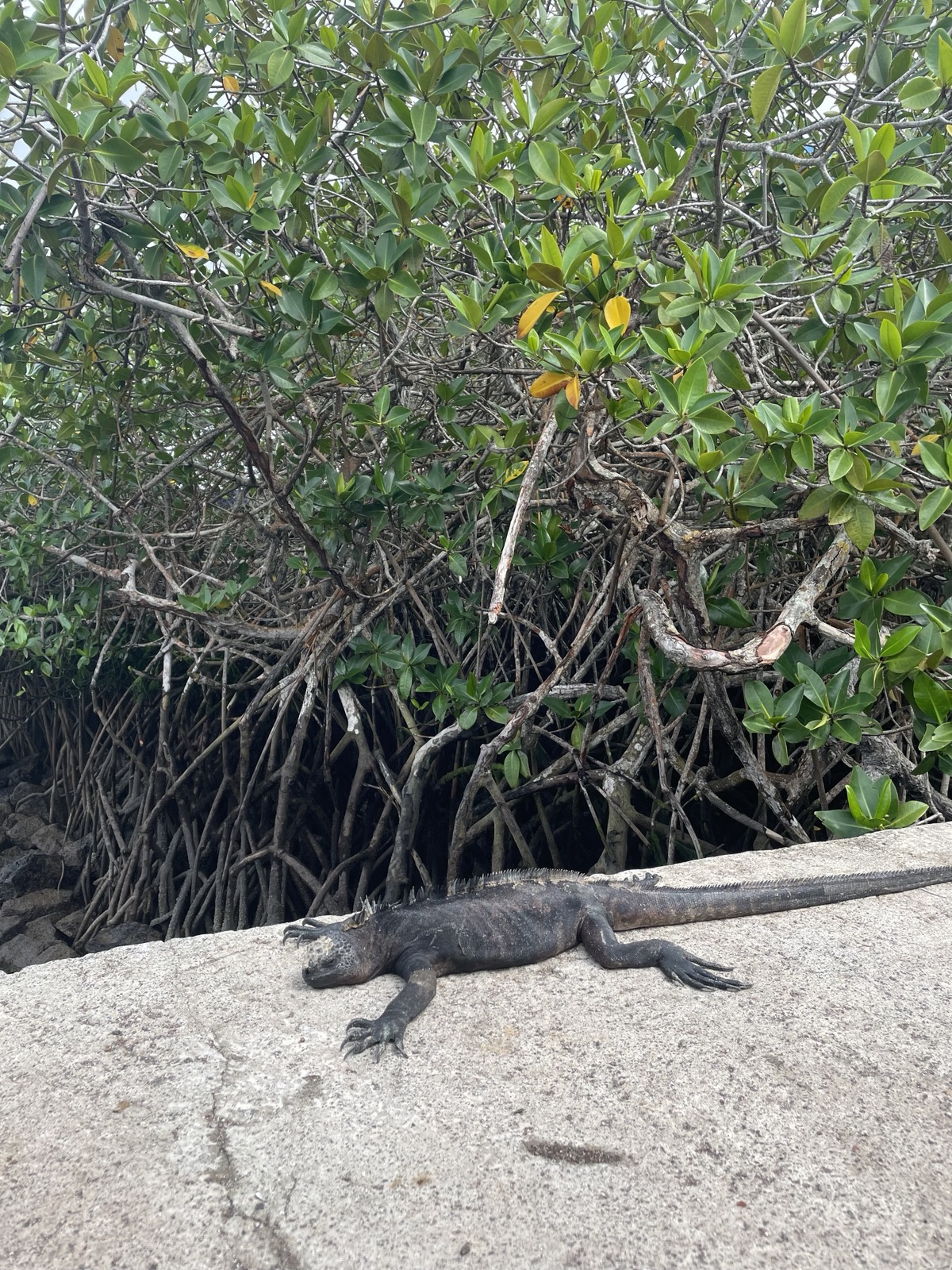
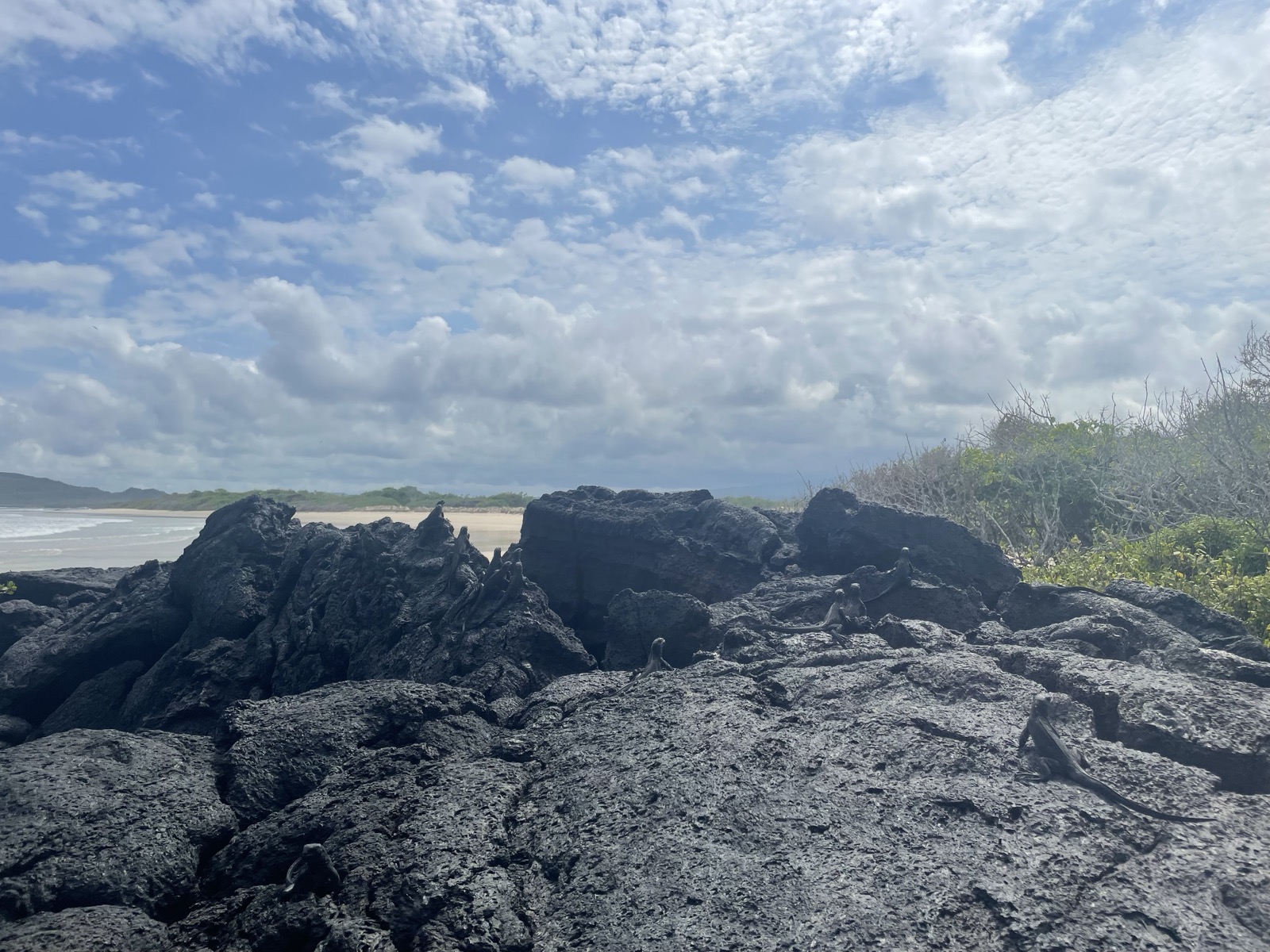
A marine iguana sprawled flat on sun-warmed rock, dead asleep beside a tangle of mangrove roots

Napping iguana

Marine Iguana (Amblyrhynchus cristatus) The world’s only ocean-foraging lizard, diving up to 12 metres to scrape algae off submerged rocks — then hauling out to bask motionless for hours while its body reheats and nasal salt glands purge excess sea salt. Abundant and year-round throughout the Galápagos archipelago, with the largest concentrations on Isabela and Fernandina. Wikipedia | iNaturalist | Galápagos Conservancy

Two Galápagos sea lions sprawled across a park bench under a wooden shelter, backed by mangroves.

Napping sea lions

\ud83d\udccd Gal\u00e1pagos Islands Gal\u00e1pagos Sea Lion (Zalophus wollebaeki) The only sea lion species endemic to the Gal\u00e1pagos, famous for treating park benches, docks, and boat decks as perfectly acceptable beds. Year-round residents of the archipelago, they are one of the most abundant and approachable marine mammals in the islands. Wikipedia | iNaturalist | IUCN Red List

Yellow-crowned Amazon parrot perched on a wooden beam under a thatched roof with lush rainforest greenery behind it

Parrot in the Amazon Rainforest

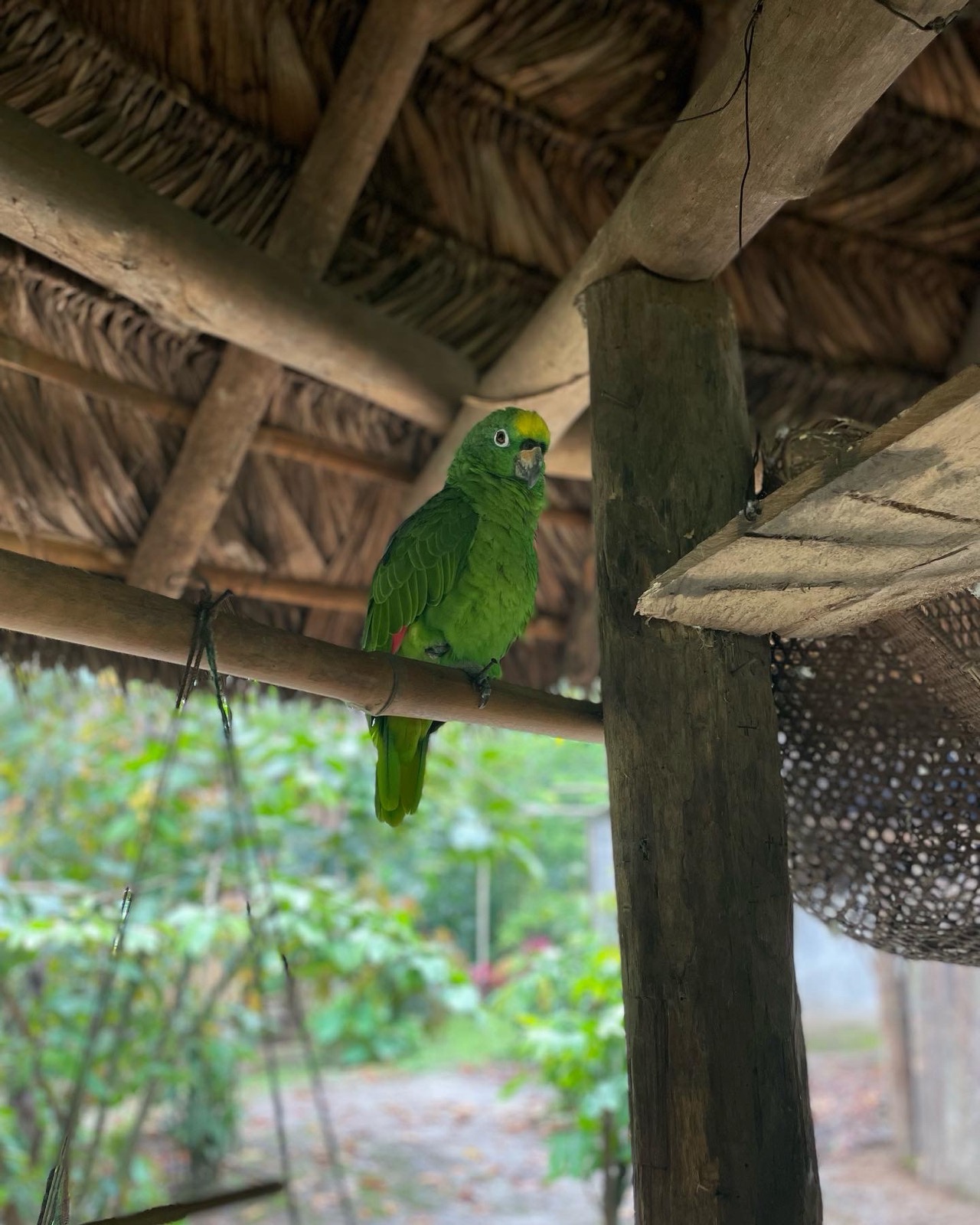
Yellow-crowned Amazon (Amazona ochrocephala) A stocky, bright-green parrot with a signature yellow forehead patch and pale eye ring, this one is sheltering under a thatched palapa — a common sight where rainforest meets human settlement. Widespread and year-round across the Amazon basin, often seen in pairs or small flocks near forest edges and clearings. Wikipedia | iNaturalist | eBird

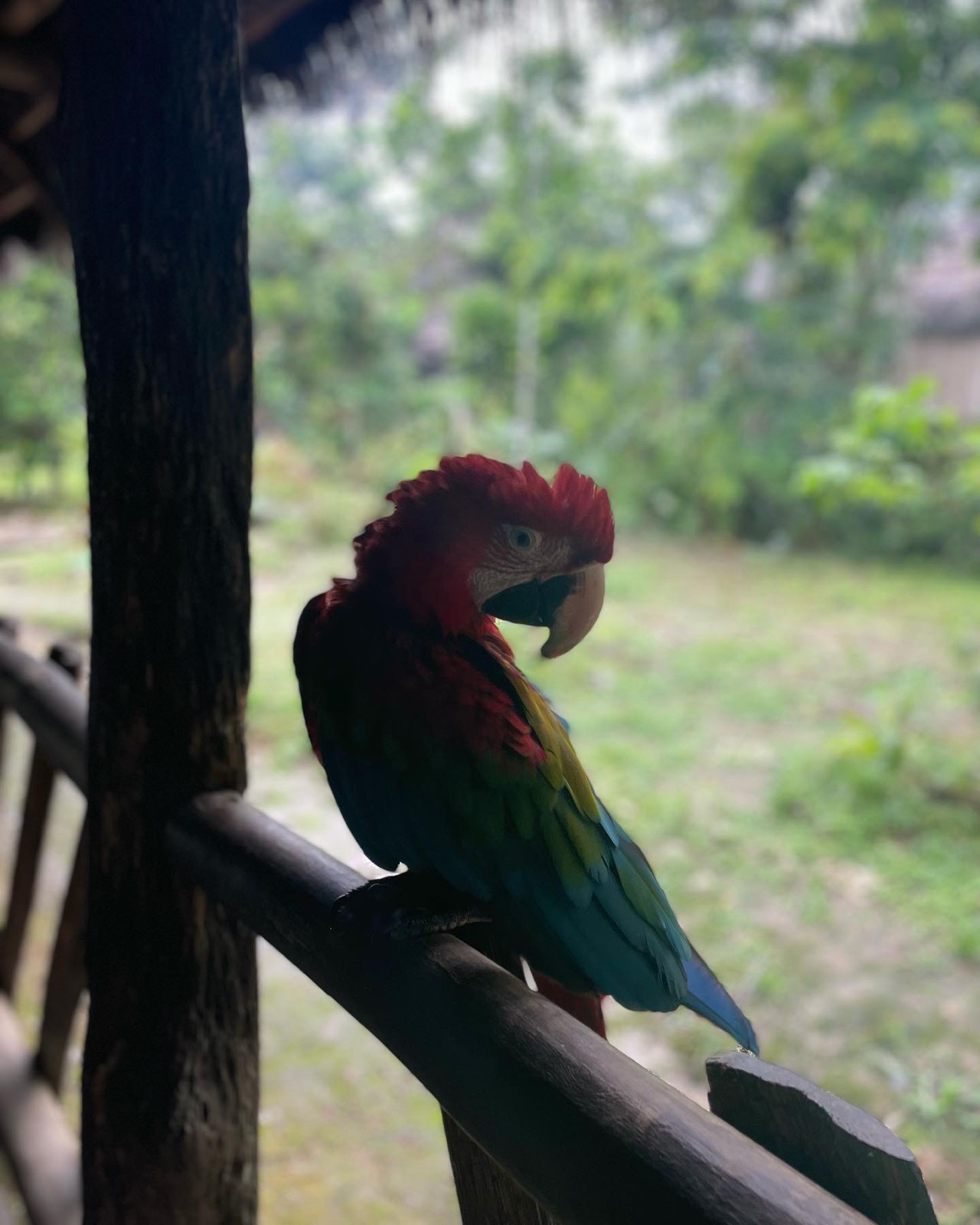
Adult scarlet macaw perched on a wooden railing at a jungle lodge, vivid red plumage catching the overcast light

Scarlet Macaw in the Amazon Rainforest

Scarlet Macaw (Ara macao) One of the largest and most dazzling parrots in the Neotropics, unmistakable with its scarlet body, yellow wing coverts, and long blue-and-red tail that can double its total length. A year-round resident throughout the Amazon basin, commonly seen in pairs or small flocks flying above the canopy or visiting forest-edge clearings and lodge gardens. Wikipedia | iNaturalist | eBird

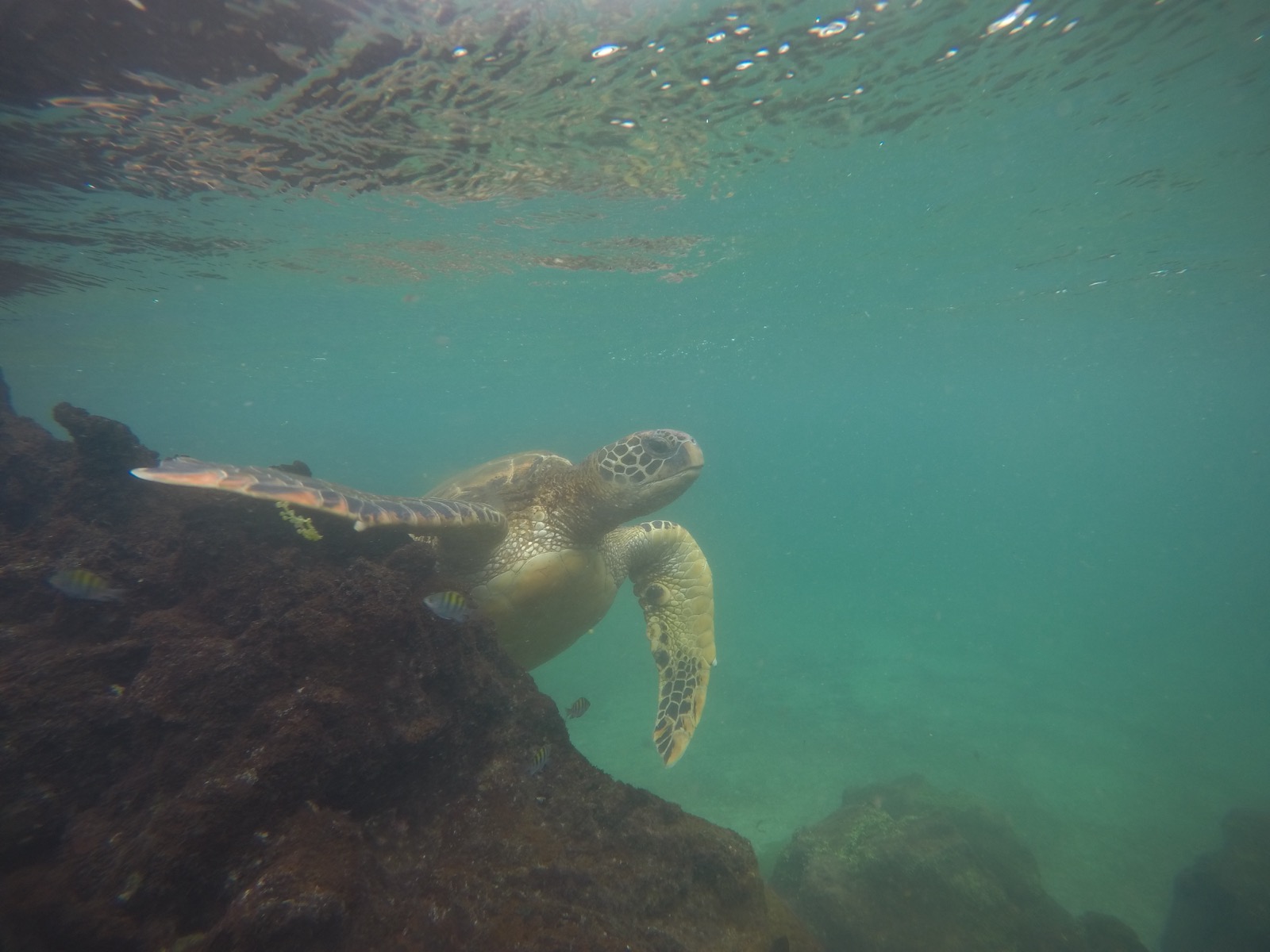
A green sea turtle glides over algae-covered rocks in the shallow turquoise waters of the Galápagos

Sea Turtle

📍 Galápagos Islands Green Sea Turtle (Chelonia mydas) The largest hard-shelled sea turtle in the world, named not for its shell but for the green colour of its body fat — tinted by an adult diet of seagrass and algae. Resident year-round in the Galápagos, where the archipelago’s nutrient-rich upwelling supports one of the Eastern Pacific’s most important nesting and foraging populations. Wikipedia | iNaturalist | SWOT Map

Stocky brown-and-white sheep with a black face standing alone on bright green pasture above the Cliffs of Moher

Sheep, Cliffs of Moher

Domestic Sheep (Ovis aries) Black-faced and shaggy-coated, this is likely a Scottish Blackface cross — the breed that has grazed Ireland’s Atlantic cliffs for centuries, bred to handle wet, windy hillsides where other livestock won’t thrive. Scottish Blackface and their crosses are the most common sheep along the west coast of Ireland, grazing year-round on the exposed karst and cliff-top pastures of County Clare. Wikipedia | iNaturalist

A female sika deer stares straight into the camera on a sun-dappled path in Nara Park, Japan.

Sika Deer, Nara

Sika Deer (Cervus nippon) A medium-sized deer native to East Asia, named for the Japanese word for deer — and one of the few deer species that keeps its spots into adulthood. Over 1,000 sika deer roam freely through Nara Park year-round, protected since 1957 as national natural treasures; they famously bow to tourists in exchange for shika senbei crackers. Wikipedia | iNaturalist

Juvenile red fox nosing through roadside grass on Sandy Hook

Small Fox on Sandy Hook

Red Fox (Vulpes vulpes) This juvenile, likely from a spring litter, is out foraging on its own in midsummer — tawny coat not yet turned fully red. Red foxes are year-round residents of Sandy Hook and common throughout the Gateway National Recreation Area. Wikipedia | iNaturalist